Matthew 5:3, 5
In this study, we are looking at the first parallel between Matthew 5:3 and 5. Being poor in spirit and being meek or gentle, and between heaven and earth.

3a – Blessed are the poor in spirit = 5a Blessed are the meek The phrase, “poor in spirit” is often misunderstood. Many mistake it for poverty, and poverty is not a very popular word. It brings up images of being without, living on the streets and being destitute. Instead, we want more. More money, more stuff, more sufficiency… more of everything. We believe in investing in the future and we are always looking for ways to make more and have more. Poverty is not something we strive for. We fear that God would ask us to give up everything like He did the rich young ruler. We also fear that our response would be like the rich young ruler. I do want to clarify something here. The Bible does not teach that wealth is wrong. It says the love of money is wrong. It teaches us to seek first the kingdom of God. To use the things God has blessed us with wisely to glorify Him. This is actually another lesson for another day, because being poor in spirit is deeper than our pockets or wallets. To really see the meaning we need to look at how it parallels with meekness. When we do that, we gain a new perspective. But, before we do that, we must first unpack another misunderstood word… meekness. The word meek often conjures up a picture of someone who is weak or a wimp. How can the weak be blessed? Or better yet, how can being a wimp go along with following God? After all, the word wimp is defined as a cowardly or unadventurous person. I may not know much, but I do know that following God is anything but unadventurous! So the answer is… being wimpy doesn’t go along with following God, so being meek has nothing to do with being a wimp. In fact, being poor in spirit and being meek is NOT a state of passive submission at all. Instead, poverty of spirit and meekness is a state of strong gentleness.
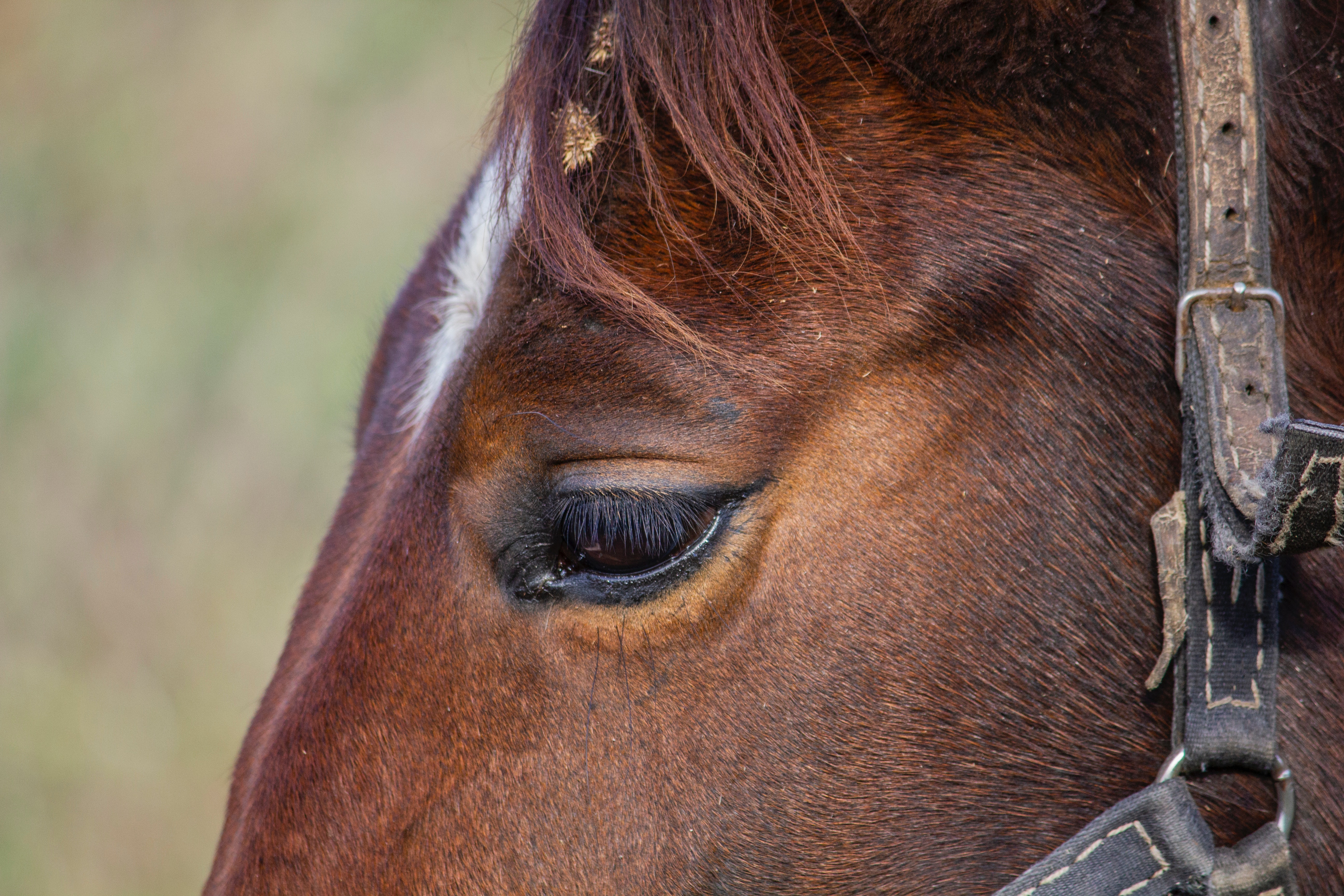
Although strong and gentle seem to be an oxymoron, it really comes down to the choices we make. You see, both poverty of spirit and meekness are states of deliberate choice. We choose to submit to God and allow Him to be strong in our weakness. Paul said in Corinthians 12:9-10, “But He said to me, My grace is sufficient for you, for power is perfected in weakness. Therefore, I will most gladly boast all the more about my weaknesses, so that Christ’s power may reside in me. So I take pleasure in weaknesses, insults, catastrophes, persecutions, and in pressures, because of Christ. For when I am weak, then I am strong.” To be meek is to choose to persevere in the midst of suffering, to choose the hard road in submission to God who is our master. The Greek word, when applied to a wild animal, means to tame. When a horse is tamed or broken, it does not lose its strength or power. On the contrary, it now has the rider, or master, to guide and direct that strength to greater and more focused things. In the same way, when we are meek, we do not lose our abilities or strengths, we allow God to guide and direct them to further His kingdom and glory.

What is the opposite of being poor in spirit and being meek? Pride. Proverbs 16:18-19 says, “Pride comes before destruction, and an arrogant spirit before a fall. Better to be lowly of spirit with the humble than to divide plunder with the proud.” And again in Proverbs 29:23, “A person’s pride will humble him, but a humble spirit will gain honor.” In Psalm 51:17, David says, “The sacrifice pleasing to God is a broken spirit. God, You will not despise a broken and humbled heart.” John the Baptist said it this way in John 3:30, “He must increase, but I must decrease.” This means I have to get rid of pride. I need to come to a place where I empty myself of my spirit, my stuff, me (I have to decrease), so that I can be filled with God’s spirit (He must increase.) Getting rid of pride starts with surrender and humility.
Being poor in spirit and being meek also means I have to die to self so Christ can live in me. What does dying to self really mean? I began to think of examples of people who have done just that. Paul, John the Apostle, Francis of Assisi, George Mueller, Corrie Ten Boon (my spiritual hero) and my other heroes, my parents. What do all these people have in common? First, they all gave up something. Paul gave up safety and instead was persecuted for his faith. John gave up his home and was exiled. Francis of Assisi gave up all his worldly possessions to follow Christ. George Mueller gave up comfort and lived a life of prayer and faith each day. Corrie Ten Boon gave up security, was arrested, put in a concentration camp and was persecuted for following God’s path. Finally, my parents trusted God enough to leave what was knowable and safe for the unknown. Second, each received great blessings and impacted the world around them. Paul and John influenced the first church from Jerusalem and throughout the world. Francis of Assisi influenced the people around him to walk closer with God and influenced heads of the church. George Mueller saved many orphans and inspired a generation to pray and trust. Corrie Ten Boon forgave the unforgivable and changed not only her life, but many lives around her. My parents saw many people come to faith and made a difference in both Idaho and Utah. Third, none of them ceased to exist or lost their identity and disappeared into the woodwork. On the contrary, each of these people were widely admired, books have been written by them and about them, and they are talked about as examples of great faith in God.
From this I began to understand that dying to self doesn’t mean I become insignificant. Nor does it mean I have to be something I’m not. I do have to give up something and open myself up to be a blessing to those around me. I do have to walk in faith, knowing that God can use me and the gifts He has given me to further His kingdom. Dying to self is like a seed’s “death”. A germinating seed doesn’t die in the sense that it rots and disintegrates. When a seed is planted, it dies, giving way to grow into what it is suppose to be. In the same way, like that seed, I need to become pliable and allow God to shape and mold me in the way He wants. That way I grow into the fruit producing person that I was always supposed to be. My spirit becomes poor so that God’s spirit in me becomes rich indeed!
3b – For theirs is the kingdom of heaven; 5b – For they will inherit the earth When we truly die to self and allow God to work in and through us, we are promised the kingdom of heaven. So, what is the kingdom of heaven? Is it something for the future, or is it something for now? The answer to both of these questions is a resounding yes. Jesus said, “theirs is the kingdom of heaven.” Daniel describes the kingdom of God as one that will last forever and ever. In Daniel 7:27, he says,”The kingdom, dominion, and greatness of the kingdoms under all of heaven will be given to the people, the holy ones of the Most High. His kingdom will be an everlasting kingdom, and all rulers will serve and obey Him.” The concept of the kingdom of heaven is in the gospels over 60 times. Jesus described the kingdom of heaven in many ways; as a mustard seed, a treasure, and pearls so great it is worth selling everything to acquire it, just to name a few.
In the Lord’s prayer Jesus teaches us to pray “may God’s kingdom come, God’s will be done on earth as it is in heaven.” This is important because it helps us realize the kingdom of heaven isn’t just for the future, it can be for the here and now. God can work in and through our lives in such a way that His kingdom will become evident where we currently serve. The kingdom is both a present inward kingdom, as God is working in and through us, as well as a future kingdom, a place where we will see Him face to face. The wonderful thing about this is, we don’t have to wait until later to experience God’s kingdom. As we walk with God and become more and more pliable, the more of His kingdom we will experience and see right now.

This segues into inheriting the earth. The meek will inherit the earth. So, is Jesus talking about the current earth or a future earth – the new earth? Again, I would say, yes to both. When we become poor in spirit and meek, we allow God to work in us to be an influencer in the world around us for His glory. We can literally change the world. Look at what 12 guys did when the power of the Holy Spirit came on them! Look what Paul did when he allowed God to take the reins of his life and direct his paths. Just think what can happen if we allow God to take hold of our lives. The earth as we know it would be changed. If we allow our weaknesses to become strengths because the power of the Holy Spirit is in us, we would truly inherit the earth now. I had a friend in London who would pray each day for God to direct her onto the right bus in the morning. Sometimes, a couple of buses would go by before she got on. Then, she would wait in expectation to see what God had in store. Many of us would think this is pretty insignificant. I mean, what does it matter what bus she got on? Well the amazing thing was, each day God would point her in the direction of someone specific who she could minister to. Just by being patient and waiting for God to take the reins and put her where He wanted her, she was able to see heaven on earth.
Inheriting the earth is also about the future new heaven and new earth. Isaiah 65 and 66 speak about the new earth. There will be a judgment on those that have been disobedient, but there will be a remnant that will inherit the earth – there will be a new heaven and a new earth. The words for “new” here is from the root word chadash which means to renew or repair. 2 Peter 3 also talks about the Day of the Lord – when all will be destroyed by fire – but there will be those who are obedient who will come to a new heaven and new earth. Again the Greek word here is kainous which means to renew or refresh. The poor in spirit and meek will enter into the kingdom of God. They will inherit the earth and be renewed and refreshed as they come into the presence of God.
Questions to ponder:
1. What are some things that you need to give up to God – become poor in? 2. What deliberate choices can you make to become weak so that God can be strong in your life? 3. Are there any issues of pride in your life that hold you back from being poor in spirit or meek? 4. Who are your spiritual heroes? What did they have to give up to draw closer to God and become an influencer for the kingdom? 5. How can you wait on God to direct your paths – waiting in expectation for the people He will bring into that path. 6. Who are the people around that you can influence for the kingdom of heaven?
 Bible Study Blog