Matthew 5:7-8
The next parallel we are going to look at are verses 7-8. Looking at how being merciful and having a pure heart will result in receiving mercy and seeing God.
Blessed are the merciful for they will receive mercy. Blessed are the pure in heart for they will see God.
7a Blessed are the merciful; 8a Blessed are the pure in heart

The dictionary defines mercy as compassion, or forbearance, shown especially to an offender, or to one subject to one’s power. It defines the word pure as being free from what is faulty or defective, what weakens or pollutes. So to be merciful, one must have a compassion that is free from defects, forbearance free from fault. Mercy is not real if it is out to get a reward, or just to look good. In order to receive a blessing from God, mercy must be extended from a pure heart. It must be free from anything that would lessen it’s sincerity. At the same time, in order to really have a pure heart, one must be willing, able and desirous to extend mercy to all, even to an enemy. This does not mean that you excuse what is wrong. It means you are allowing God to work in your life as well as their life. Most of all, a pure heart is an obedient heart, a heart that follows God’s direction and will instead of our own.
Matthew 6:33 says, “seek first the kingdom of God and His righteousness.” The promise is that, “all these things will be provided for you.” We do not look for our reward here on earth, but in heaven. In Matthew 9:13 and 12:7 Jesus says, “If you had known what this means: I desire mercy and not sacrifice. In 9:13 he continues the phrase with, “for I didn’t come to call the righteous, but sinners,” and in 12:7 he continues by saying, “you would not have condemned the innocent.” In both these chapters, Jesus is speaking to the Pharisees. In 9:13 he is eating with the tax collectors and in 12:7 the Pharisees have just criticized the disciples for plucking grain to eat on the Sabbath. Jesus’ meaning is clear: Mercy is more desirable than sacrifice. He says, “if you had known what this means.” With this statement, Jesus is stopping the Pharisees in their tracks and bringing to their minds specific scriptures: Micah 6:6-8 and Hosea 6:6.
Hosea 6:6 states, “For I desire loyalty and not sacrifice, the knowledge of God rather than burnt offerings.” Micah 6:6-8 expands this concept further: “What should I bring before the Lord when I come to bow before God on high? Should I come before Him with burnt offerings, with year-old calves? Would the Lord be pleased with thousands of rams or with ten thousand streams of oil? Should I give my firstborn for my transgression, the child of my body for my own sin? Mankind, He has told you what is good and what it is the Lord requires of you: to act justly, to love faithfulness, and to walk humbly with your God.” The NIV says, act justly and love mercy. Both are a call to repentance. Hosea 6:1-3 says, “Come, let us return to the Lord. For He has torn us, and He will heal us; He has wounded us, and He will bind up our wounds. He will revive us after two days, and on the third day He will raise us up so we can live in His presence. Let us strive to know the Lord. His appearance is as sure as the dawn. He will come to us like the rain, like the spring showers that water the land.” This is a beautiful picture of God’s great mercy. We have been torn and wounded. God will heal and bind those wounds. He desires that we return to Him and give Him our undying loyalty. In other words, a pure heart toward Him. In return, we will receive mercy. Luke 6:36 sums it up this way, “Be merciful, just as your Father also is merciful.” God wants us to extend the same kind of mercy He has extended us from a pure and faithful heart. He wants us to be more concerned with people’s needs around us rather than the letter of the law. 1 Timothy 1:5-6 says, “Now the goal of our instruction is love that comes from a pure heart, a good conscience, and a sincere faith. Some have deviated from these and turned aside to fruitless discussion.” So often, we have have fruitless discussions on what brand of theology to pursue, or we throw a bit of money into the offering plate without any real sincerity. Instead, let us be about extending mercy from a pure heart. When we do this, we are open to all that God has for us. He will extend even more mercy to us and then, as it says in Hosea 6:2-3, we will live in His presence and He will come to us – we will see God.
7b For they shall receive mercy; 8b for they shall see God.
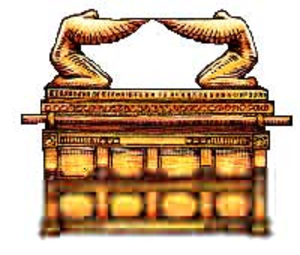
From Exodus 25:22, we learn that God will “meet with you there above the mercy seat, between the two cherubim that are over the ark of the testimony.” And where is the ark of the testimony (or covenant)? And how are we to approach the mercy seat of God? Psalm 24:3-4 gives us the answer. “Who may ascend the mountain of the Lord? Who may stand in His holy place? The one who has clean hands and a pure heart, who has not set his mind on what is false, and who has not sworn deceitfully.” It goes on to tell us that when we come to him with clean hands and a pure heart we will, “receive blessing from the Lord, and righteousness from the God of his salvation. Such is the generation of those who seek Him, who seek the face of the God of Jacob. Where is the mercy seat? “They put the mercy seat on the ark of the testimony in the most holy place”, Exodus 26:34. So the ark of the testimony (the covenant) is behind the curtain in the holy of holies, Which was entered one time a year, on Yom Kippur (the Day of Atonement), by the high priest, and before he could enter the holy of holies he had to purify himself. Do you see the connection between mercy and purity of heart? Once we come to the Father with a pure heart we will indeed receive mercy. Once we receive mercy, we will see God. I am not talking a physical manifestation of God. Our giving and receiving mercy with a pure heart will open our eyes to who God is. He is the One who is Merciful. He is the One who meets us above the mercy seat. He is the One whose love is everlasting and who loves us so much that He sent His only Son, the giver of mercy, so we might be able to reconnect to Him. We broke the covenant, but He made a way through Jesus who established a permanent covenant between us and the Father. In God’s great mercy, He provided us a way. He allowed us to come to the mercy seat with the promise that we would receive mercy. When we receive mercy, we can then give mercy to those around us freely and sincerely with pure hearts.
Earlier I said that in order to extend mercy with a pure heart one must be willing to extend it even to their enemy. An example of this is from the book “Tramp for the Lord” by one of my spiritual heroes, Corrie Ten Boon. In a chapter entitled Love your Enemy, she recounts an experience she had while speaking in a church in Munich after WWII. She had just finished giving a talk on forgiveness. As people were leaving, a man walked up the aisle toward her. She recognized him as one of the prison guards at Ravensbruck concentration camp where she and her sister Betsie had been held. He had been a particularly cruel guard. He approached her and told her that since the war, he had become a Christian and he knew God had forgiven him. He was now asking her to forgive him. She describes it this way: “And I stood there – I whose sins had again and again to be forgiven – and could not forgive. Betsie had died in that place – could he erase her slow terrible death simply for asking? It could not have been many seconds that he stood there – hand held out – but to me it seemed hours as I wrestled with the most difficult thing I had ever had to do. For I had to do it – I knew that. The message that God forgives has a prior condition: that we forgive those who have injured us…I knew it not only as a commandment of God, but as a daily experience. Since the end of the war I had had a home in Holland for victims of Nazi brutality. Those who were able to forgive their former enemies were able also to return to the outside world and rebuild their lives, no matter what the physical scars. Those who nursed their bitterness remained invalids. It is as simple and as horrible as that. And still I stood there with the coldness clutching my heart…I prayed silently, “I can lift my hand. I can do that much. You supply the feeling” And so woodenly, mechanically, I thrust my hand into the one stretched out to me. And as I did, an incredible thing took place. The current started in my shoulder, raced down my arm, sprang into our joined hands. And then this healing warmth seemed to flood my whole being, bringing tears to my eyes. I forgive you my brother, I cried. With all my heart. For a long moment we grasped each other’s hands, the former guard and the former prisoner. I had never known God’s love so intensely as I did then.”
In that moment of obedience, when her will was set aside for the will of God, she was able to extend mercy with a pure heart. As soon as she did that, the blessing of mercy came back to her. And not only that, she saw God. She saw him in the forgiveness that was both asked for and extended. She saw God in the miracle of restoring a right relationship between brother and sister in Christ in spite of the giant wall that was set between them. She saw God and now helps us to see Him too. He is the one who is able to do what we can’t do. If we seek Him first, obey Him in spite of what is going on around us, extend mercy with a pure heart to those around us, it is then that we will have mercy bestowed on us and we will see Him at work in the world around us.
Questions to Ponder:
- Are there people that you need to extend mercy to?
- What are the things that prevent you from having a pure heart?
- When was the last time that you saw God at work?
 Bible Study Blog