The Founding of the Church
Before beginning a verse by verse study of the book of Ephesians, I wanted to do a little research about the church and background on the city of Ephesus itself.
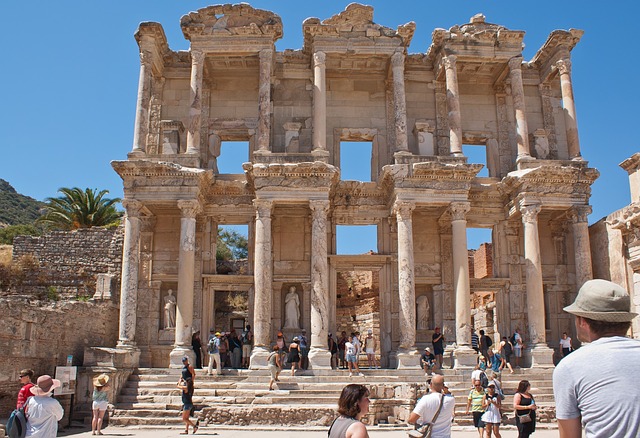
Several years ago, I had the wonderful opportunity of visiting the ancient city of Ephesus on one of my trips to Turkey. It was a fascinating city to experience. The once great city is now in ruins, but you can see why it was a thriving and important city at one time. Originally, it was a coastal city, but, over the centuries, silt has built up around the city and it is now several miles from the sea. The most famous ruin in Ephesus is probably the Library of Celsus. It was the third largest library in the Roman world and it is thought that over 12,000 scrolls were kept there. The amphitheater mentioned in Acts 19 is also still there. It holds around 25,000 people. The most famous site in Ephesus was the Temple of Artemis. It was one of the 7 wonders of the ancient world as well as the largest building in the ancient world. The temple figures prominently in Acts. Today, the temple is in total ruins. Barely a trace of it exists.
During the time of Paul, the people of Ephesus had many things going for them. There was a thriving trade, it was a harbor city at the time and the Temple of Artemis provided a huge source of income for artisans of silver. Ephesus was an important city with a very distinct culture, and the worship of Artemis (Greek) or Diana (Roman) played a huge role.
Paul’s first visit to Ephesus was around 53 AD. By then, there had been a Jewish community in the city for over 300 years. The Jewish community was also there long after Paul, as a menorah carving was found on one of the steps of the Celsus Library which was built around 110 AD. As was his practice, Paul went first to the synagogue in Ephesus to begin his teaching. This visit is mentioned in the Bible in Acts 18:18-21. Paul traveled there with Priscilla and Aquila. He enters the synagogue and begins to have discussions with the Jews there. The discussions must have went well because they wanted him to stay longer, but he declined. He leaves for a time, but Priscilla and Aquila stay. In verse 24, Ephesus is mentioned again with the entrance of a preacher by the name of Apollos. He speaks boldly about Jesus in the synagogue, but he has not yet encountered the Holy Spirit as he was introduced to Jesus through John the Baptsit. Priscilla and Aquila encounter him and are able to bring him up-to-date.
In chapter 19 of Acts we find Paul has returned to Ephesus. He meets several believers who, like Apollos, have not encountered the Holy Spirit. They had also been introduced to Christ through John the Baptist. Paul introduces them to the gospel and they receive the Holy Spirit. He then goes to the synagogue and once again engages the Jews for 3 months. He preached there until those who hardened their hearts began to slander the gospel in front of the crowds. So, Paul withdraws from the synagogue and meets separately with the followers in the lecture hall of Tyrannus for the next 2 years.
God performed many miracles through the hand of Paul. The sick were healed and evil spirits left people. During this time, a few itinerant Jewish exorcists thought they would try their hand at it. They went to a man who had an evil spirit and pronounced the name of Jesus and Paul, ordering the spirit to come out. The spirit said they knew Jesus and recognized Paul, but had no idea who they were. The man with the evil spirit then leaped on them and beat them. This became known throughout Ephesus by both the Jews and Gentiles. Those who had become followers began to confess their own practice of the magical arts. They ended up burning about 50,000 pieces of silver worth of books.

This didn’t go over to well with a man named Demetrius the silversmith who made silver shrines for Artemis. As people began to believe in Jesus, his business was going down. He also saw it as an affront to the goddess Artemis. He got his fellow artisans together and began to stir up trouble. They were outraged and ended up dragging several of Paul’s fellow workers to the amphitheater. Paul wanted to go with them, but his disciples and several of the officials of Asia would not let him. The city was in confusion. Many didn’t even know why they had been gathered. (Remember, the amphitheater held around 25,000 people). Finally they all untied in a cry for Artemis of Ephesus. Finally the city clerk quieted the crowd down and brought back order. He reminds Demetrius that if he has something against the men, to bring it to the court because he could be charged with causing a riot since there was not justification for bringing the crowd there.
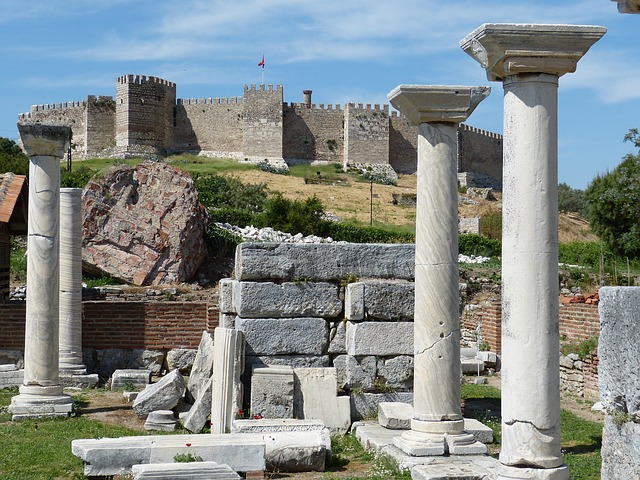
Paul spent a great deal of time weeding out false doctrine and the pagan practices that were such a large part of the culture in Ephesus. The worship of the mother goddess Artemis was the main practice which consisted of incense burning, flute playing, orgies and lots of silver. It was a difficult place to plant a church, but we see the church growing in spite of the challenges. We see the influence of the gospel when several artisans burn 50,000 pieces of silver worth of books on magic and when the desire for silver work for the temple begins to fall off. Peoples lives were being changed and the church was on the rise.
The next time we hear about Ephesus is in Acts 20 when Paul is saying goodbye to the elders of the church while on the island of Miletus. Paul is on his way to Jerusalem and he wants to take the opportunity to see them once again. He knows through the Holy Spirit that chains await him and he will not see them again. He proclaims he knows he has done all God has asked him to do. They pray together and the elders weep and grieve that they will not see Paul again.
About one decade from the time Paul first came to Ephesus, he is writing his letter to them from prison in Rome. As we read through his letter we will find the church in a good place. They have grown and are continuing to be a positive influence for the gospel of Jesus Christ. Unfortunately by AD 96 when John writes his letter, we find the church has begun to deteriorate a bit. The letter can be found in Revelation 2. Although they still are doing good works, they have gone away from their first love. John calls for their repentance lest their lampstand be removed. We are not sure whether the church listened to this warning or not. We do know that by AD 200 the church is dead.
This is a small snapshot of the church we will study through Paul’s letter. It was a a church who grew in spite of all the pagan worship surrounding it. It was a church who became a positive influence for the gospel of Jesus Christ in the region for years. But along the way, the church faltered and then succumbed to an influence that eventually kills it. This is a warning to all of us. We cannot be content with where we are. We can’t sit idle and rely on our past achievements for our future walk. We must always be aware that Satan wants to destroy our witness and relationship with God. It could have been a different story if the church at Ephesus had continued to follow the instructions in Paul’s letter. Perhaps they would still be a strong church today, influencing a world in need of a Savior.
With this in mind, we will dive into Ephesians next week.
 Bible Study Blog