Preparing for the Season – Prophecies part 2
Last week we worked through a few of the Messianic prophecies. We discovered that the Messiah had to be born before 70 AD, the year of the destruction of the temple. We found that the Messiah had to be descended from Abraham, Jacob and the house of David. And we found that there was a forerunner to the Messiah. And one by one, we see Jesus fulfilling these prophecies. He was born, and died, before 70 AD. He was of the house of David. Finally, John the Baptist is found to be the forerunner to the Messiah. As we continue to prepare for the upcoming season, I want to look at three more prophecies. The Messiah must be born of a virgin. The Messiah must be born in Bethlehem. The Messiah was called out of Egypt. These will conclude our time looking at the prophets. As we look at these next three prophecies, let’s keep the first verse of the carol O Come O Come Emmanuel.
O Come O come Emmanuel, and ransom captive Israel that mourns in lonely exile here until the Son of God appear. Rejoice! Rejoice! Emmanuel shall come to thee Oh Israel.
Indeed, Emmanuel has come and this is what we celebrate today!
This prophecy actually has it’s beginnings in Genesis 3:15. After the serpent was thrown out of the garden of Eden, God said, “I will put hostility between you and the woman, and between your seed and her seed. He will strike your head, and you will strike his heel.” This establishes that the Messiah will come from a woman and he will deal a blow to Satan. Several years ago, I had the privilege of visiting Quito Ecuador on a mission trip. It’s a marvelous place, once you get use to the altitude that is. At over 9000 feet, it is the highest capital in the world and breathing can be a chore! It was there that I was introduced to the Virgin of Quito. It’s a statue that overlooks the city on a hill called El Panecillo. The statue is a winged version of the virgin Mary (the description can be found in Revelation 12). She is standing on a serpent in a picture of what has happened because of the Messiah. When Christ was born, he indeed struck a blow to the serpent.
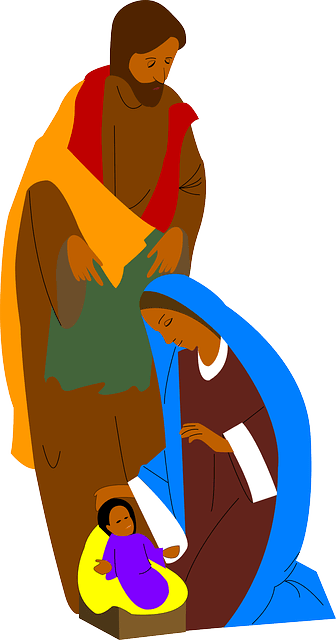
We then move to Isaiah 7:13-14: Isaiah said, “Listen, house of David! Is it not enough for you to try the patience of men? Will you also try the patience of my God? Therefore, the Lord Himself will give you a sign: The virgin will conceive, have a son, and name him Immanuel.” There has been a lot of debate about this scripture. First, is the scripture actually talking about a virgin? Second, some point to the name Immanuel as proof it isn’t about Jesus. Let’s explore! First, the Hebrew word used here for virgin is almah. The word specifically means an adolescent girl of marriageable age. In today’s age this would not mean the girl as necessarily a virgin. But, we can’t look at this scripture based on our current context. We have to look at it through the cultural lens of Isaiah’s day. In that context an almah was a virgin, otherwise, she would not be marriageable material and would have been called something else. We can therefore understand that Isaiah was referring to a virgin. The second point that some say shows it couldn’t be Jesus is that his name would be Immanuel. So what does Immanuel mean? The word Immanuel literally means “God is with us”. In this passage, Isaiah was not giving this child a name – he was establishing that God Himself would be with us. This child, born of a virgin, would be the incarnation of God. We find in Luke 1:26-38 that Mary, a virgin, was visited by Gabriel, an angel of the Lord, and told she would have a child. She was a bit perplexed by this at first. The angel explained that this would be through the Holy Spirit – the power of the Most High. In faith, she excepted this news. And it did take a lot of faith. She had to believe that God would walk with her in this difficult time. She had to believe that Joseph would accept this as well, or she faced being ostracized or worse, stoning. This is something we really don’t understand in this day. An engagement nowadays is just a promise to marry and can be broken at any time. An engagement in Biblical days was a binding promise. Breaking an engagement was a very serious thing. A dowry had been given, promises made and family property had been allotted. If one of the parties, in particular the women, was found to be unfaithful, it would be the same as committing adultery. That is why Joseph, being an upstanding person, was going to divorce Mary. So we can see that both Mary and Joseph were chosen for a reason – and that reason was their great faith in God. Jesus was born of a virgin.
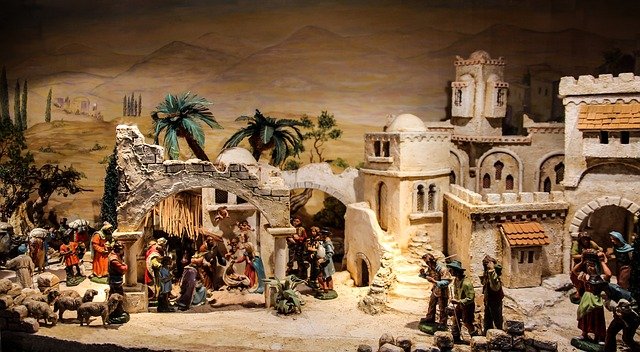
Micah 5:2 says, “Bethlehem Ephrathah, you are small among the clans of Judah; One will come from you to be ruler over Israel for Me. His origin is from antiquity, from eternity.” Bethlehem is the city of David and means “house of bread”. I always found it neat that the bread of life was born in this small city. If all had been normal, Jesus would have been born in Nazareth. This is where Mary and Joseph lived and planned to settle. But interesting circumstances bring them to Bethlehem. There is a census and they must go to the place of their ancestors. Both were of the house of David, so they went to Bethlehem. We know the story – they came and there was no room for them. Jesus was born in a manger and visited by shepherds who were out in the fields. Mary and Joseph settled in Bethlehem for a time until they were visited by wise men from the east bearing gifts. It is actually at that time that this passage comes to life – and out of the mouths of the chief priests and scribes of the day no less. When Herod asked them where the Messiah would be born, they sited this passage. The wise men followed the star and found Jesus – in Bethlehem.

So, when the wise men came to Bethlehem, Jesus was probably around 2 years old. After their audience with Herod, they traveled to Bethlehem where, according to Matthew 2:11, they entered a house. This suggests that Mary and Joseph, at least for a time, settled in Bethlehem. The wise men were suppose to return to Herod to tell him where the child was, but, after being warned in a dream, they went home another way. This did not sit well with Herod who was a very jealous man. In response, he ordered that all male children ages 2 and under would be killed in Bethlehem and the surrounding area. Joseph was warned in a dream to leave Bethlehem and go to Egypt to hide out until Herod died. This massacre fulfilled a prophecy out of Jeremiah 31:15, “This is what the Lord says: A voice was heard in Ramah, a lament with bitter weeping Rachel weeping for her children, refusing to be comforted for her children because they are no more.” Ramah can be two things. First, it is a town about 5 miles from Bethlehem and thought, by some, to be where Rachel was buried. It would have been a part of the surrounding area. Second, Ramah also means “on high” and so it could be a voice was heard on high as a lament. We may not be sure what Ramah is referring to, but we do know there was much weeping in Bethlehem and the surrounding area after the massacre. After Herod’s death, the threat had passed so Mary and Joseph were able to go back to Israel. Instead of going back to Bethlehem, they went to Nazareth. Matthew 2:13-15 tells the story: “After they were gone, an angel of the Lord suddenly appeared to Joseph in a dream, saying, “Get up! Take the child and His mother, flee to Egypt, and stay there until I tell you. For Herod is about to search for the child to destroy Him.” So he got up, took the child and His mother during the night, and escaped to Egypt. He stayed there until Herod’s death, so that what was spoken by the Lord through the prophet might be fulfilled: Out of Egypt I called My Son.” The prophet Matthew speaks of here is Hosea and it comes from 11:1.
One of the things to note is Matthew is not just presenting these scriptures as predictions, but also to show us how Jesus’ life is intertwined with the nation of Israel, and thus, the fulfillment of the covenant. We can look at the history of the nation of Israel and, more specifically, the calling of the nation of Israel, and see how Jesus is the fulfillment of scripture. What is Israel’s calling? Isaiah 42:5-7 says, “This is what God, Yahweh, says: who created the heavens and stretched them out, who spread out the earth and what comes from it, who gives breath to the people on it and life to those who walk on it. “I, Yahweh, have called You for a righteous purpose, and I will hold You by Your hand. I will keep You and appoint You to be a covenant for the people and a light to the nations, in order to open blind eyes, to bring out prisoners from the dungeon, and those sitting in darkness from the prison house.” Again in Isaiah 49:6 it says, ““It is not enough for you to be My Servant raising up the tribes of Jacob and restoring the protected ones of Israel. I will also make you a light for the nations, to be My salvation to the ends of the earth.” Israel was to be a light to the nations. They were to be a righteous people. And we see that the Messiah is the fulfillment of that legacy. He is indeed the light of the world! Blind eyes have been opened. Those imprisoned by sin and death have been given freedom and life. This is what we celebrate this season! This is why Christmas is the season of joy. Christ has come. Hallelujah!
 Bible Study Blog