The Feasts of the Lord – Firstfruits, Counting the Omer and Shavuot – Leviticus 23:9-22
The Lord spoke to Moses: “Speak to the Israelites and tell them: When you enter the land I am giving you and reap its harvest, you are to bring the first sheaf of your harvest to the priest. He will wave the sheaf before the Lord so that you may be accepted; the priest is to wave it on the day after the Sabbath. On the day you wave the sheaf, you are to offer a year-old male lamb without blemish as a burnt offering to the Lord. Its grain offering is to be four quarts of fine flour mixed with oil as a fire offering to the Lord, a pleasing aroma, and its drink offering will be one quart of wine. You must not eat bread, roasted grain, or any new grain until this very day, and until you have brought the offering to your God. This is to be a permanent statute throughout your generations wherever you live.” Leviticus 23:9-14
At the end of Passover the offering of the firstfruits was brought to the Lord. This is an offering we don’t talk about a lot and, since most of us do not live in an agrarian culture, we lack an understanding of what a firstfruit even is. The Hebrew word for firstfruit is bikkurim, which means “promise to come.” By offering their firstfruit to the Lord, the people were investing in their future. Proverbs 3:9-10 says it this way: “Honor the Lord with your possessions and with the first produce of your entire harvest; then your barns will be completely filled, and your vats will overflow with new wine.“
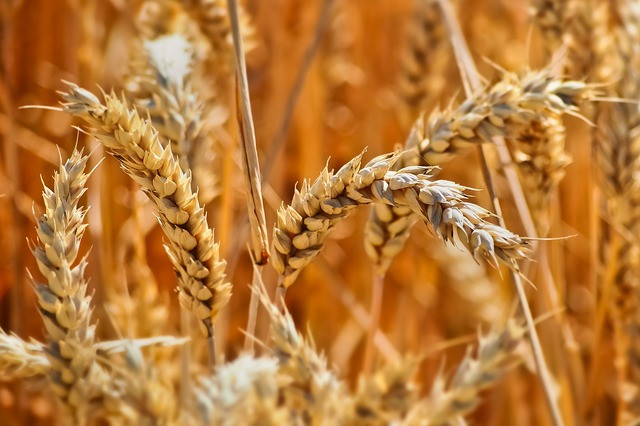
Throughout the Torah Moses mentions the concept of bringing your firstfruits to the Lord 13 times. It was an essential concept for the people of Israel to understand. They were to bring the firstfruits of harvest to the priest who would wave it before the Lord. Firstfruits included grain, wine, honey, animals, etc. When you began to see the firstfruit develop you harvested it and brought it to the Lord. This took place on the Sabbath during Passover and was used to start the calculation of days until Shavuot.
Bringing in the firstfruits, is an acknowledgment that God is creator of all things, and all things belong to Him. God is the actual owner of all we have and we are stewards of His blessings to us. This isn’t a very popular concept in 2021. We like to think of all we have as something we’ve earned through our hard work. Acknowledging that God is the actual owner requires a humble spirit – putting away our pride. So, by bringing in the firstfruits, Israel was expressing thankfulness for God’s provision, and a whole lot of faith that there was a harvest to come. Any farmer will tell you that bad weather, bugs or a host of other things could come along to wipe out the rest of the harvest. So bringing in the firstfruits to the Lord takes faith that He will continue to provide. Firstfruits is similar to the tithe. The first 10% goes to the Lord and we acknowledge that all of it belongs to God. We give the tithe in faith that He will keep His promise to provide for our needs.
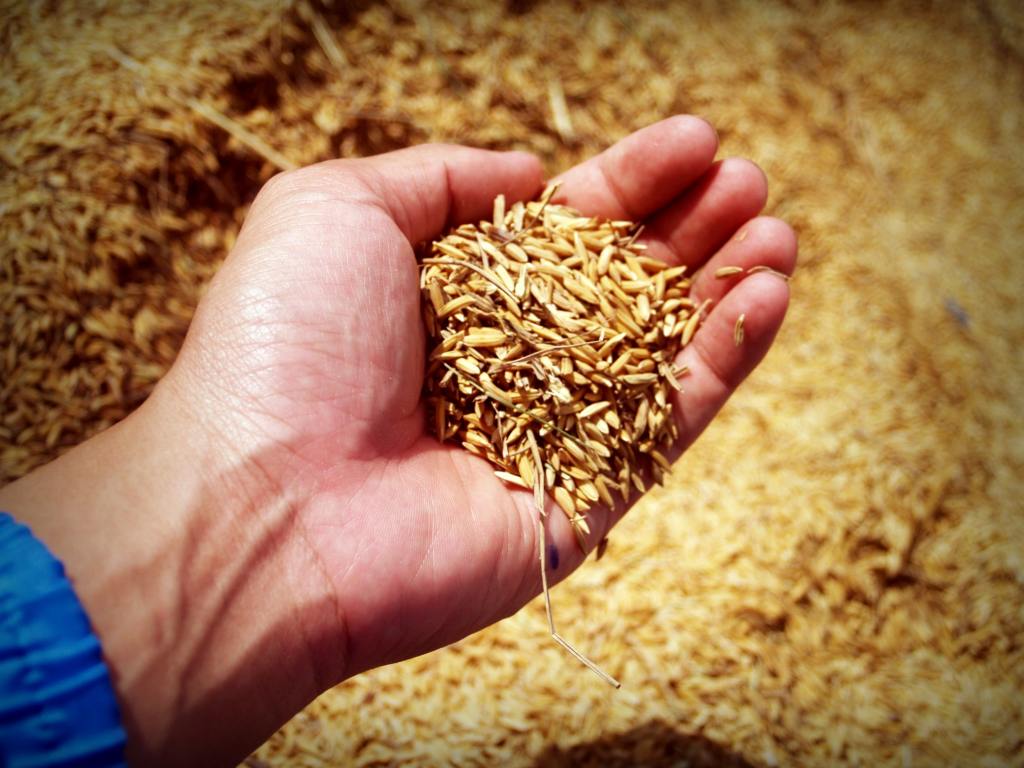
So how does Christ fulfill the firstfruits? Paul gives us the answer: “But now Christ has been raised from the dead, the firstfruits of those who have fallen asleep. For since death came through a man, the resurrection of the dead also comes through a man. For as in Adam all die, so also in Christ all will be made alive. But each in his own order: Christ, the firstfruits; afterward, at His coming, those who belong to Christ. Then comes the end, when He hands over the kingdom to God the Father, when He abolishes all rule and all authority and power.” 1 Corinthians 15:20-24. Jesus then, is the firstfruits of those who have fallen asleep. He has conquered death and thus provides a way for us to have eternal life. We must come to God in faith based on Jesus being the bikkurim – the promise that HAS come.
Now this is where it gets pretty exciting. Let’s look at the timing of all this. The Passover season is 8 days. This means there is always a Sabbath during Passover. Firstfruits was to take place the day after the Sabbath (that would be our Sunday). BTW, I do have to point out that days begin at sunset – not at 12 a.m. Depending on the time of the year it’s around 6-7 p.m. Bear with me here… Passover begins… day two is the Feast of the Unleavened Bread – the seder meal… then Firstfruits comes on the day after the Sabbath during Passover. So let’s look at the seder meal Jesus held with his disciples. It begins at sundown on Th ursday. Jesus goes to the garden, is arrested, “tried” and the next is crucified along with two thieves. According to Jewish law, Jesus would have to be removed from the cross and buried before the Sabbath started, which is before Friday at 6 or 7 p.m. He is in the grave through the Sabbath and on firstfruits day He is resurrected. He is symbolically and literally the firstfruit! Here is a passage from Isaiah 25 that describes this amazing fulfillment: “Yahweh, You are my God; I will exalt You. I will praise Your name, for You have accomplished wonders, plans formed long ago, with perfect faithfulness. For You have turned the city into a pile of rocks, a fortified city, into ruins…For You have been a stronghold for the poor, a stronghold for the needy person in his distress, a refuge from the rain, a shade from the heat. When the breath of the violent is like rain against a wall, like heat in a dry land… The Lord of Hosts will prepare a feast for all the peoples on this mountain a feast of aged wine, choice meat, finely aged wine. On this mountain He will destroy the burial shroud, the shroud over all the peoples, the sheet covering all the nations; He will destroy death forever. The Lord God will wipe away the tears from every face and remove His people’s disgrace from the whole earth, for the Lord has spoken.” (verses 1-2a, 4, 6-8) Paul put it this way – Oh death where is thy sting, Oh death where is thy victory? The Victory is Jesus Christ who is our firstfruit. And through Jesus’ death and resurrection, we are now the firstfruit of His creation. “Every generous act and every perfect gift is from above, coming down from the Father of lights; with Him there is no variation or shadow cast by turning. By His own choice, He gave us a new birth by the message of truth so that we would be the firstfruits of His creatures.” James 1:17-18
Firstfruits is also the day that marks the counting of the Omer to Shavuot. “You are to count seven complete weeks staring from the day after the Sabbath, the day you brought the sheaf of the presentation offering. You are to count 50 days until the day after the seventh Sabbath and then present an offering of new grain to the LORD. Bring two loaves of bread from your settlements as a presentation offering, each of them made from four quarts of fine flour, baked with yeast, as firstfruits to the LORD…On that same day you are to make a proclamation and hold a sacred assembly. You are not to do any daily work. this is to be a permanent statue wherever you live throughout your generations. When you reap the harvest of your land, you are not to reap all the way to the edge of your field or gather the gleanings of your harvest. Leave them for the poor and the foreign resident; I am Yahweh your God.” Leviticus 23:15-17; 21-22. Many have heard of Passover and even some may have heard of Firstfruits, but most have never heard of counting the Omer or Shavuot. One of the reasons for the unfamiliarity is we use the Greek terms instead of the Hebrew. Shavuot literally means “weeks” and the completion of seven weeks is the 50th day. In Greek it is called Pentecost which means “fiftieth”. So Shavuot and Pentecost are the same holiday. Now, let’s get a better understanding of Shavuot.
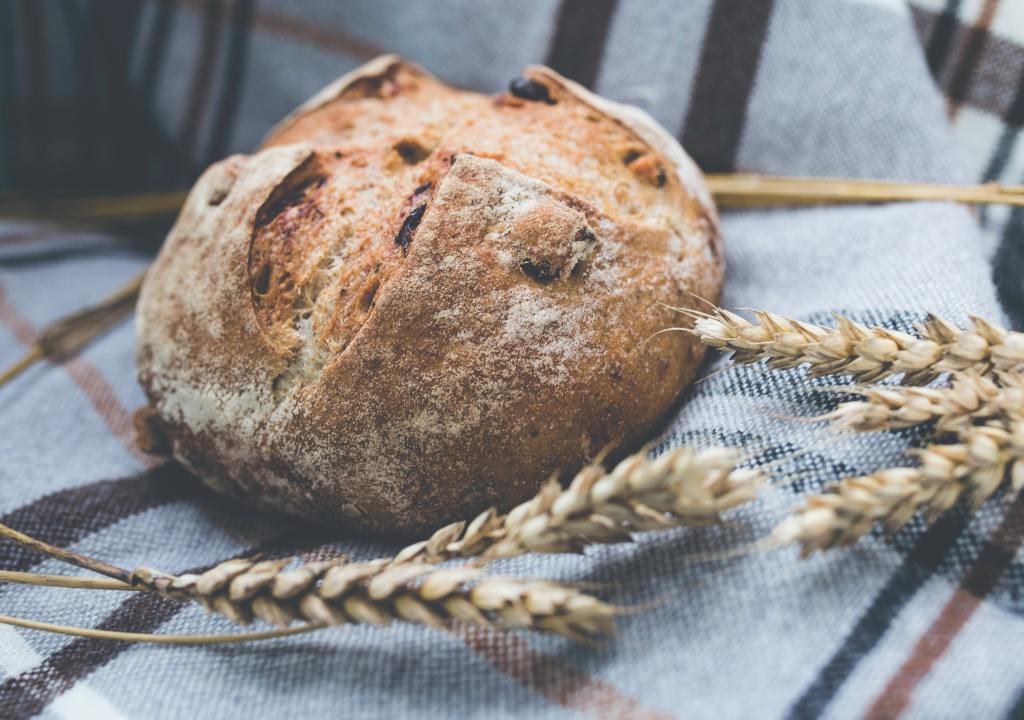
The firstfruit grain brought to the temple was barley as this was the beginning of the barley harvest (this is VERY important to remember for later). The word Omer means “sheaf” and is used as a measurement (about 1/10th of a ephah). The counting of the omer is a period of time between Passover and Shavuot to reflect and consider. After the people of Israel left Egypt they traveled through the Red Sea and then through a wilderness until they came to Mount Sinai. At that mountain, Moses went up and received the law from God. Shavuot marks that great event. We often think Moses went up the mountain just to receive the 10 commandments, but he actually received much more. He was on the mountain for 40 days receiving the law of God (Exodus 20-31) Meanwhile, the people got impatient and ended up rebelling against God by making a golden calf and worshiping it. Here they are about to receive the gift of the law from God, and they’ve already deserted Him. But are we any different? I think we are just as impatient. We are so used to getting an immediate reward that waiting for our blessings becomes a trial. Psalm 27 begins with “The Lord is my light and my salvation, whom shall I fear” and ends with “wait for the Lord – be strong and courageous – wait for the Lord.” He is the light – we can follow His path without fear. All we have to do is wait for the Lord.

It is important to point out at this juncture that Moses was on the mountain receiving the law for 40 days. Numbers have a huge significance in Jewish life. For instance, the number 7 is the number for completion and perfection = creation. The number 12 represents the wholeness and completeness of God’s purpose – 12 tribes, 12 disciples. The number 40 represents transition and change. Noah was in the ark 40 days and nights during which the world was transformed and changed. Moses was on Mount Sinai receiving the law which transformed the people who were once slaves to the people of God. They wandered in the wilderness for 40 years transforming a rebellious people into people willing to trust God. We are in the mother’s womb 40 weeks. Jesus went to the wilderness and fasted for 40 days, and after His resurrection, he was on earth for 40 more days, during which time His disciples were transformed from ordinary men into men who would take the gospel to the ends of the earth. In these 40 days Jesus opened up the scripture for them to see that He was the fulfillment of all things and then he ascended into heaven.
After Jesus’ ascension, the disciples remained in Jerusalem as Jesus had commanded them to. “While He was together with them, He commanded them not to leave Jerusalem, but to wait for the Father’s promise. This, He said, is what you heard from Me; for John baptized with water, but you will be baptized with the Holy Spirit not many days from now.” Acts 1:4-5 Again with the waiting!! During this period of time, they went to the upper room to pray and to choose another disciple to bring the number back to 12 (completion for God’s purpose). And then… they waited.
At the end of the counting of the Omer we get to Shavuot – the celebration of the giving of the perfect and holy law of God on Mount Sinai. But there is one problem. while the law is God’s standard for absolute holiness, it cannot empower us to salvation. It only points out how hopelessly lost we are without God. So, the Word was made flesh and dwelt among us and fulfilled every part of God’s holy law. Jesus was the perfect unleavened bread of life. He died as our Passover Lamb. He arose as the firstfruit of the resurrection. He spent 40 days transforming His disciples into men who would go forth and then asked them to wait. Then on Shavuot, the 50th day, the law was fulfilled once again. On the day when everyone was celebrating the giving of the Torah, God gives His Holy Spirit. While the gift of the law could not empower us to righteous, the gift of the Holy Spirit can. Paul, in his writing to Titus says, “But when the kindness of God our Savior and His love for mankind appeared, He saved us, not by works of righteousness that we had done, but according to His mercy, through the washing of regeneration and renewal by the Holy Spirit. He poured out this Spirit on us abundantly through Jesus Christ our Savior, so that having been justified by His grace, we may become heirs with the hope of eternal life.” Titus 3:4-7

I would be remiss if I didn’t point out one last interesting thing. At the end of the passage in Leviticus about Shavuot is a seemingly obscure passage. “When you reap the harvest of your land, you are not to reap all the way to the edge of your field or gather the gleanings of your harvest. Leave them for the poor and the foreign resident; I am Yahweh your God.” You may be thinking – how does this relate? It seems totally out of place – like a rabbit is being chased. But we know God has a reason for all things so we need to look at it. This was a command by God. The people of Israel were to leave the edges of their fields for the poor to glean. Interestingly, the night before Shavuot, the book of Ruth is read. Most do not understand why they read it, they just know it is what they are suppose to do. So, if we were to go to the upper room with the disciples, we would find them reading the book of Ruth together. Why is this significant? Here’s the story: When Ruth and Naomi arrive in Bethlehem it is the beginning of the barley harvest (remember I said to keep this in mind.) It is actually firstfruits. Then, if you recall, Ruth goes to glean in the fields of Boaz – the edge of the fields as God commanded in Leviticus. Boaz becomes Ruth’s kinsmen redeemer and she has a son named Obed who had a son named Jesse who had a son named David. This seemingly obscure part of this scripture leads to the Messiah who is the fulfillment of the bikkurim, the promise that was to come. He died on the cross and became our kinsmen redeemer – redeeming us from sin and death. He is the firstfruit of the resurrection. He stayed on earth for 40 more days transforming some ordinary disciples into apostles to spread the gospel throughout the earth. They were told to wait for a gift that was coming. And it did come – on Shavuot. On the very day the holy law of God Most High was given on Mount Sinai, God poured out His Holy Spirit on a group of men and women in the upper room. And they went out and changed the world. And this is our calling. From Passover to Shavuot, Jesus fulfills the law so we can be redeemed and empowered. As Paul says in Romans 8:22-25, “For we know that the whole creation has been groaning together with labor pains until now. And not only that, but we ourselves who have the Spirit as the firstfruits — we also groan within ourselves, eagerly waiting for adoption, the redemption of our bodies. Now in this hope we were saved, yet hope that is seen is not hope, because who hopes for what he sees? But if we hope for what we do not see, we eagerly wait for it with patience.” Be patient and wait, for God is doing a mighty thing – and He will accomplish it!
 Bible Study Blog