Feasts of the Lord – Sukkot and Simkat Torah
The Lord spoke to Moses: “Tell the Israelites: The Festival of Booths to the Lord begins on the fifteenth day of this seventh month and continues for seven days. There is to be a sacred assembly on the first day; you are not to do any daily work. You are to present a fire offering to the Lord for seven days. On the eighth day you are to hold a sacred assembly and present a fire offering to the Lord. It is a solemn gathering; you are not to do any daily work… “You are to celebrate the Lord’s festival on the fifteenth day of the seventh month for seven days after you have gathered the produce of the land. There will be complete rest on the first day and complete rest on the eighth day. On the first day you are to take the product of majestic trees, palm fronds, boughs of leafy trees, and willows of the brook and rejoice before the Lord your God for seven days. You are to celebrate it as a festival to the Lord seven days each year. This is a permanent statute for you throughout your generations; you must celebrate it in the seventh month. You are to live in booths for seven days. All the native-born of Israel must live in booths, so that your generations may know that I made the Israelites live in booths when I brought them out of the land of Egypt; I am Yahweh your God.” Leviticus 23:33-36;39-43
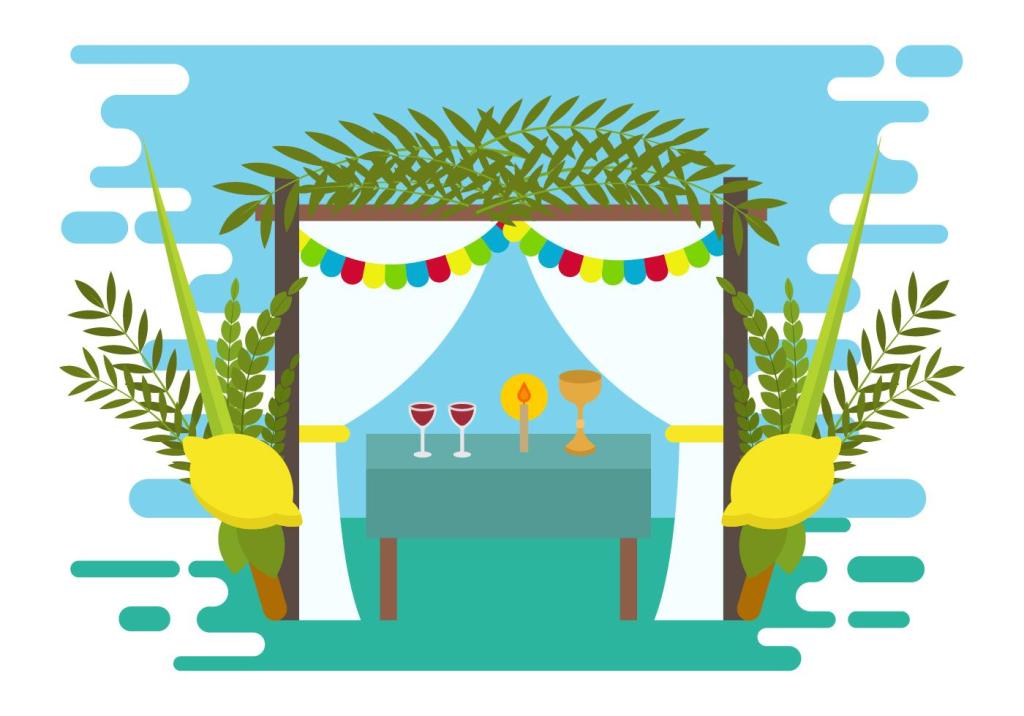
The last Biblical festival of the year is Sukkot or the Festival of Booths. This seven day holiday was celebrated each fall just five days after the Day of Atonement. On the eighth day the people read the word of God and rewound the scrolls of the Torah from Deuteronomy to Genesis. For the first ten days of this seventh month we have been awakened to our sin and shortcomings. We have confessed, forgiven, repented and humbled ourselves before God. His mercy and grace became truly evident in the death and resurrection of His Son Jesus. Now, five days later, it is a time of rejoicing. A time to give thanks for God’s amazing provision for us. And a time to once again renew our commitment to Him as the Word. It is significant that there are two extra Sabbath days in this holiday. God has given us rest. It is a gift and a time to rejoice before Him.
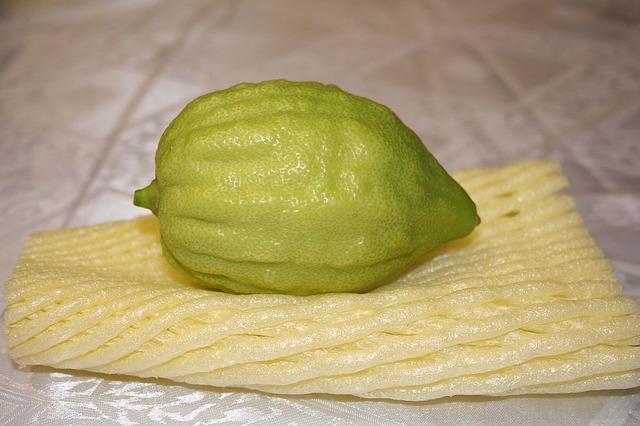
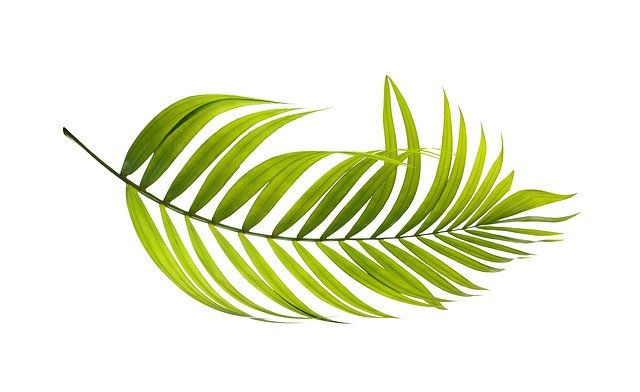
The word Sukkot means booths or tabernacles and it commemorates the booths the people lived in when they traveled through the wilderness. It also reminded them of the Tabernacle of the Lord that served as the place where God’s glory dwelt until the building of the temple in Jerusalem. They were temporary dwellings and served to show that God will provide. So, during this festival, you are to build a booth and live in it for seven days. You are also to put together what is known as the four species – the beautiful fruit of the tree, palm branches, boughs of the leafy tree and willows of the brook. The beautiful fruit of the tree is an etrog – a citrus fruit that resembles a very large lemon. Then there is the lulav (palm branches), aravot (willow branches) and hadassim (myrtle branches). These are bound together and waved before the Lord in all six directions symbolizing God’s omni-presence. The rabbis have this to say about the meaning of each species: The etrog, which has both a pleasing taste and a pleasing scent, represents those who have knowledge of and practice the Torah. The palm branch, which produces tasty fruit, but has no scent, represents those who have knowledge of but do not practice Torah. The myrtle leaf, which has a strong scent but no taste, represents those who practice, but have little knowledge of Torah. The willow, which neither tastes nor has a scent, represents those who have no knowledge and do not practice Torah. During Sukkot, you ask yourself which species best represents you.
Living in the booths for the seven days is a reminder that the temporary dwellings in the wilderness were symbols of God’s provision. We are reminded that God is here dwelling among us. He does not leave us nor does He forsake us. He is Adonai Jirah – God our provider. We do not have to worry about our needs not being met. This is the testimony of Moses to the Israelites: “I led you 40 years in the wilderness; your clothes and the sandals on your feet did not wear out” Deuteronomy 29:5. God provided them with manna from heaven, water from rocks, quail in the wilderness. There clothes and sandals did not wear out. Every need was met. Now they have entered the promised land – the land flowing with milk and honey – but they needed to remember that God is the one who provides. So each year they build a booth once again and live in it for the seven days. Waving the four species reminds us that we not only need to know God’s Word, but we need to practice it as well. He tells us that obedience is better than sacrifice and it is no accident that this festival comes after 10 days of reflection and seeking the forgiveness of God.
Living in a booth also focuses our attention on God and God alone. We leave all our distractions behind. In today’s world I believe this is more important than ever. There are so many things that can distract us these days. During this past year of covid 19 I have found myself on my phone more, watching tv more, and find it harder to concentrate on important things. I know that I am not alone – I read about many others who are feeling the same way – on my phone of course! There is a need for us to find a place where we can focus our attention back on God. Sukkot provides us with the very place – a booth where we do not take our modern electronic devices but instead, we read God’s word, eat and spend time with our family and reflect on the ever present Creator of the Universe. The booth itself has three walls and a roof open enough to see the stars at night and the sky by day. It is a place of joy and many decorate it extensively. The three walls provide an opening for the practice of a tradition called hachnasat orchim or hospitality. Inviting guests is expected and an unexpected guest is an extra blessing. Lastly, since this is a festival before the rainy season of harvest, water plays a part in it. There was a water libation ceremony during Sukkot where the priests would take water from the pool of Siloam and pour it out over the altar.
Jesus has fulfilled Sukkot in several ways. He has come to us in bodily form, His body is the temple of the Holy Spirit, and He is the living water. John 7 gives us a glimpse of this. It is the time of the Feast of Tabernacles and Jesus and His disciples have gone up to Jerusalem for the festival. About half way through the festival, Jesus goes to the temple and begins to teach. Before that, people had been talking about Him. Was He the Messiah or not? After He began to teach, many believed Him to be the Messiah. “On the last and most important day of the festival, Jesus stood up and cried out, “If anyone is thirsty, he should come to Me and drink! The one who believes in Me, as the Scripture has said, will have streams of living water flow from deep within him.” He said this about the Spirit. Those who believed in Jesus were going to receive the Spirit, for the Spirit had not yet been received because Jesus had not yet been glorified” John 7:37-39.
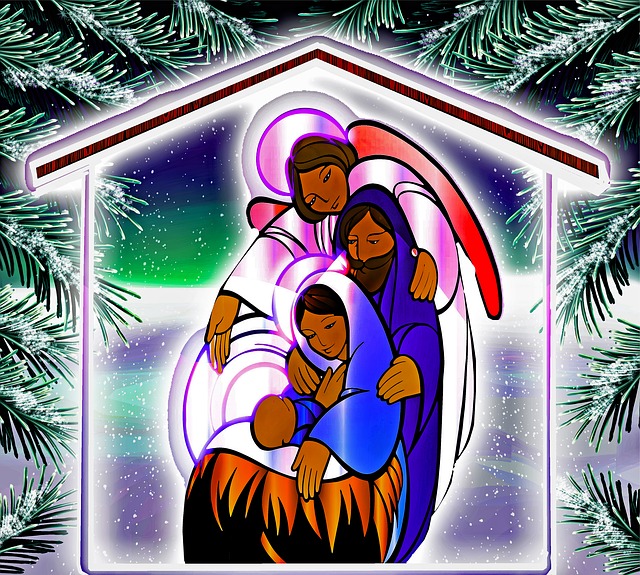
Jesus was also, “The Word became flesh and took up residence among us. We observed His glory, the glory as the One and Only Son from the Father, full of grace and truth” John 1:14. There is much debate over this next point, but I believe there is evidence. We know that Jesus was not born on December 25th. First, there are no festivals during this time period, and this would be an event that would fulfill one of God’s festivals. Second, the winter solstice does not figure in any way on the Jewish calendar. Third, without a festival, shepherds in that area would not have a reason to be out in the fields with the sheep at night. During most festivals, shepherds are out in the fields because people would purchase a lamb for the sacrifice on their way to Jerusalem. For these reasons, I believe we must look at a festival for Christ’s birth. There are several reasons to see Sukkot as his birth. First, he was born 6 months after John the Baptist. This would mean John the Baptist would have been born during Passover. From the study of Passover, we know that we are looking for Elijah’s return during that time. Jesus said, “For all the prophets and the Law prophesied until John; if you’re willing to accept it, he is the Elijah who is to come. Anyone who has ears should listen!” Matthew 11:13-15. Second, Jesus being born in a cow stall amidst cow dung etc. given the cleanliness laws is unlikely. But Jesus being born in a sukkah with Mary and Joseph being the recipients of hachnasat orchim makes much more sense. The word manger in Greek means stall and was used to describe the sukkah. Third, on the 8th day when the word of God was being read, Jesus would have been circumcised, set apart on that day. We also know that there are extra-biblical writings that support Sukkot as the date of Christ’s birth. The early church was known to have seen the Messianic significance in the festivals. They celebrated the death and resurrection of Jesus during Passover, his ascension 40 days after Passover. They celebrated the giving of the Holy Spirit during Shauvot and and his birth during Sukkot.
And finally, since this is a fall festival, we know that it has not been fully fulfilled. We know Sukkot will be fulfilled when Christ comes again and we finally come to tabernacle with God in our heavenly home. I did not see a sanctuary in it, because the Lord God the Almighty and the Lamb are its sanctuary. The city does not need the sun or the moon to shine on it, because God’s glory illuminates it, and its lamp is the Lamb. The nations will walk in its light, and the kings of the earth will bring their glory into it. Each day its gates will never close because it will never be night there. They will bring the glory and honor of the nations into it. Nothing profane will ever enter it: no one who does what is vile or false, but only those written in the Lamb’s book of life” Revelation 21:22-27.
As we look at Sukkot, the questions the Rabbi’s ask should govern our celebration. Which species are you most like? The willow which tastes nor has a scent, represents those who have no knowledge and do not practice Torah? The myrtle leaf, which has a strong scent but no taste, represents those who practice, but have little knowledge of Torah? The palm branch, which produces tasty fruit, but has no scent, represents those who have knowledge of but do not practice Torah? Or the etrog, which has both a pleasing taste and a pleasing scent, represents those who have knowledge of and practice the Torah? May we be people who have both knowledge and practice the Word of God. For “Don’t you know that your body is a sanctuary of the Holy Spirit who is in you, whom you have from God? You are not your own, for you were bought at a price. Therefore glorify God in your body” I Corinthians 6:19-20. Let us glorify God in all we do!
 Bible Study Blog