For Such A Time As This
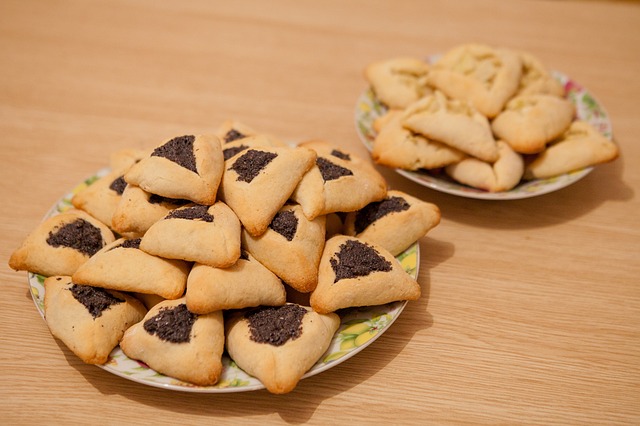
We have finished the festivals of the Lord, concluding with the celebration of Sukkot. But there are a couple of other festivals not appointed by the Lord, that I would like to address. The first is Purim (which means lots) and the second is Hanukkah. Because Purim is coming up in a few days, I want to go ahead and talk about it first. Purim is a fun celebration that starts with a fast and ends with Hamentashen (a delightful cookie shaped like the hat – tashen, of the villain Haman)! There are costume parties and food, plays, the reading of Esther and lots of noise makers to drown out the name of Haman. In order to fully understand Purim, we have to study the book of Esther. It is a fascinating book of the Bible for many reasons. One, it is one of only two books named after a woman, two, it fostered this festival of fasting and joy called Purim, and three, it is the only book of the Bible in which the name of God is not present. The story of Esther is also the stuff of good movies – intrigue, romance, attempted murder, twists and turns, a hero, a heroine and a villain. All in all, it is a joyous festival, celebrating God’s redemption of His people.
The book opens with a 180 day party plus a week of feasting and drinking. At the end of the week, a probably very drunk king Xerxes, or Ahasuerus as he is known in this book, decides he wants to parade his beautiful wife in front of his guests. She refuses and, after the king consults his wise counselors who fear that all women will suddenly despise their husbands, she is banished. In chapter two he now regrets his actions (probably after he has now sobered up and realized his actions were a bit hasty.) So what is a poor king to do? “The king’s personal attendants suggested, “Let a search be made for beautiful young women for the king. Let the king appoint commissioners in each province of his kingdom, so that they may assemble all the beautiful young women to the harem at the fortress of Susa. Put them under the care of Hegai, the king’s eunuch, who is in charge of the women, and give them the required beauty treatments. Then the young woman who pleases the king will become queen instead of Vashti.” This suggestion pleased the king, and he did accordingly” Esther 2:2-4. In essence, they had a nationwide beauty pageant for the kings next wife. Enter our heroine Esther.

So who exactly is Esther? “In the fortress of Susa, there was a Jewish man named Mordecai son of Jair, … a Benjaminite. He had been taken into exile from Jerusalem with the other captives when King Nebuchadnezzar of Babylon took King Jeconiah of Judah into exile. Mordecai was the legal guardian of his cousin Hadassah (that is, Esther), because she didn’t have a father or mother. The young woman had a beautiful figure and was extremely good-looking. When her father and mother died, Mordecai had adopted her as his own daughter” Esther 2:5-7. So Esther is Jewish woman who was an orphan and has been adopted by her uncle Mordecai. They live near the kings palace in Susa. Mordecai basically enters her into this beauty pageant and instructs her not to reveal that she is Jewish. So for a year, she lives in harem receiving beauty treatments and instruction while Mordecai checks on her daily. When it is her turn to go to the king, she impresses him so much, she is made queen.
At this juncture we need to look at our second main character of the story – Mordecai, the hero and an integral part in what takes place throughout the book. He Esther’s uncle and guardian. Because of his concern and love for Esther, he instructs her to keep her ethnicity a secret and he checks on her. Since he is able to come to the King’s Gate, it is likely he worked in the palace. This is important because one day while he is sitting at the King’s Gate, he overhears a plot to assassinate the king. He tells Esther, who tells the king and the plot is thwarted. The event gets recorded in the kings historical record and then forgotten. Mordecai is also apparently a godly man, bowing to no one. We find an example of this when our third main character enters in chapter three. Haman the Agagtite – the villain. Haman has been honored by the king so everyone at the King’s gate is to bow to him. And they all do – that is everyone except Mordecai. The members of the royal staff warn him that he needed to obey and bow to Haman, but still he refuses. They find out Mordecai is Jewish and tell Haman. Haman, in his rage, decides not only to get rid of Mordecai, but the all the Jewish people as well.

At this time, it is important to note that Haman is an Agatite and a descendant of King Agag. This is an important point that will come to light later. So, Haman’s anger and rage drives him to seek vengeance not only on Mordecai, but all the Jewish people. So, in the first month (Nissan), Hamen casts purim (lots) to see which month this destruction should take place. It is cast for the month of Adar which is the twelfth month. Haman goes before the king and “informs” him of a particular people group who are disloyal and disobedient to the king. The king, going on the miss-information of Haman gives the go ahead for whatever Haman wants to do. So on the 13th day of Nissan, two days before the celebration of Passover by the way, “Letters were sent by couriers to each of the royal provinces telling the officials to destroy, kill, and annihilate all the Jewish people—young and old, women and children—and plunder their possessions on a single day, the thirteenth day of Adar, the twelfth month.” Esther 3:13.
Well, Mordecai is of course distressed by this. So, in the ancient way of mourning, he tears his clothes, puts on sackcloth and begins to fast. Esther learns of this and sends someone to find out what has happened. Mordecai sends a copy of the edict to Esther imploring her to approach the king on her people’s behalf. Esther responds, by saying she can’t go unless the king summons her or she could face death. Mordecai then delivers his very weighted response – it is perhaps the most famous line in all of Esther. “Don’t think that you will escape the fate of all the Jews because you are in the king’s palace. If you keep silent at this time, liberation and deliverance will come to the Jewish people from another place, but you and your father’s house will be destroyed. Who knows, perhaps you have come to your royal position for such a time as this” Esther 4:13-14. Mordecai understands two things – There are no accidents when it comes to God and no matter what – His will is going to be done. In faith. Mordecai recognizes that Esther has been placed in her position “for such a time as this”. But he also has faith that even if she does not do what God is asking, He will rescue His people – “liberation and deliverance will come to the Jewish people from another place.” Esther accepts her position as God’s provision and responds by asking all the Jews in Susa to fast with her for three days and nights. After that, I will go to the king even if it is against the law. If I perish, I perish” Esther 4:16b.
The scene has been set. The time has come for the climax of this story. After the fast is over, Esther dresses and approaches the king. She wins his approval and the scepter is extended. He is willing to grant whatever request she has. In our impatience, we might have revealed right then and there what was on our mind. But Esther doesn’t do that. Instead, she is patient and waits on God’s perfect timing. She simply asks the king and Haman to dinner. They come to dinner and the king tells her again that he will grant whatever request she wants. So here is her opportunity again. The big reveal – take down Haman. But we find she once again prolongs the reveal by asking them to a banquet the next evening where she will then reveal her request. We will soon find that God’s timing is perfect – if we would only listen to Him. So, Haman leaves that first dinner in great spirits. He summons his wife and friends and brags on all his good fortune. But still he is upset that Mordecai refuses to bow. His wife and friends all tell him to have a gallows built 75 feet high and ask the king in the morning to hang Mordecai on it the next day. Haman thinks this is a capital idea and so he has the gallows built.
And here is where the timing of God is perfect. That night, the king can’t sleep. So what does he do? The same thing I do when I can’t sleep – he reads. And what does he read? The historical records where he finds the report about Mordecai saving his life. When the king inquires about what had been done for Mordecai, he finds that nothing was done. So the kings asks who is in the court – and lo and behold he finds that Haman is there. For, Haman has arrived to ask the king to let him hang Mordecai that very morning. Before he gets his request in, the king asks him, “What should be done for the man the king wants to honor?” Haman thought to himself, “Who is it the king would want to honor more than me?” Haman told the king, “For the man the king wants to honor: Have them bring a royal garment that the king himself has worn and a horse the king himself has ridden, which has a royal diadem on its head. Put the garment and the horse under the charge of one of the king’s most noble officials. Have them clothe the man the king wants to honor, parade him on the horse through the city square, and proclaim before him, ‘This is what is done for the man the king wants to honor.’” Esther 6:6-9. But to his shock and horror, the king says, “Hurry, and do just as you proposed. Take a garment and a horse for Mordecai the Jew, who is sitting at the King’s Gate. Do not leave out anything you have suggested” Esther 6:10. Talk about ultimate humiliation!

Now it is time for the 2nd banquet with the king and Esther. Haman arrives thinking that at least he can recover his pride a bit. But that is not to be, for this is the time Esther chooses to reveal all of Haman’s lies and schemes. When the king asks once again what Esther’s request is she says, “If I have obtained your approval, my king, and if the king is pleased, spare my life—this is my request; and spare my people—this is my desire” Esther 7:3. The king is still unaware of Esther’s ethnicity and so he is shocked. He asks who would do such a thing and Esther says, “The adversary and enemy is this evil Haman. Esther 7:6. To be sure, the gallows that was built for Mordecai did not go unused because in the end, Haman is hanged on it. So in the end, the Jewish people are saved and Mordecai is lifted up to Haman’s position. This all came to be because one man would not bow and one women stepped forward.
The lessons of Esther and Purim are many. Most we can see right away, but some require more understanding and research. First, the most important thing that comes from the book is how God, even though not mentioned, is at work. It shows us that we may not see Him, hear His name, or feel His presence, but He is there, working all things to the good of those who love Him. There are far to many “coincidences” in the book to not see God at work. The one that really stands out to me is the very day Haman is coming to get the kings permission to hang Mordecai is the morning after a bout of insomnia when the king reads about what Mordecai did for him. This can only be orchestrated by God. Even though it is not expressed that the people prayed during the three days of fasting, it is implied in the fasting itself. One does not fast unless one is seeking after God. And after seeking God, Esther goes before the king in faith. The king does not hesitate to extend his scepter to her in approval. After seeking after God, Esther waits patiently to reveal Haman’s treachery – God’s perfect timing. And when we are willing to step out in faith, God will show us amazing things. We are indeed here for such a time as this. God has called us to walk in faith. A friend of mine in Europe took this to heart. He felt God’s leading to go to a certain park in Paris – all the way across town – go through a particular entrance where he would find someone who needed a bible. Most of us would perhaps raise our eyebrows a bit, or dismiss it as silly idea, but not him. He got up, took the metro all the way across town to this particular park. Walked through the entrance he was told to and found a lady on a bench. He approached her and asked if she was there to receive a book. She said yes, that she had a dream the night before that someone would come and give her a green book and that she was to read it. Daniel gave her the green bible he had brought with him that day. Walking in faith will take us out of our way. It will require us to get out of our comfort zone and do some things we never dreamed we could. But as we walk in faith, God will show us who He is, and what He can do, and we will be stretched so we can continue to walk deeper in faith. Mordecai said, “perhaps you were brought to this place for such a time as this’. Esther responded by saying yes – and if I perish, I perish – but I will walk in faith.
This book also shows us that what we do, or don’t do, matters. Our obedience or disobedience has a lasting mark, not only in the present, but also in the future. It is evident in Esther’s and Mordecai’s obedience. What is not so evident is the disobedience that enabled this event to take place in the first place. To discover this, we must go back in time to a place where a king’s disobedience led to Haman himself. If you are thinking of Xerxes, you would be wrong. I am talking about King Saul and his disobedience. Haman was an Agagite, a descendant of King Agag of the Amalekites. The Lord had commanded King Saul to destroy the Amalekites because of their great sin but Saul did not completely destroy them. This disobedience shows up here in Esther in the life of Haman who threatened to destroy the Jewish people once again. That act of disobedience had great consequences not only in King Saul’s present (it cost him his kingship) but in the future as well. It had a lasting mark. It is the same when we disobey. We might think it’s just a little sin, a harmless white lie, no big deal. But – we do not know all the repercussions that can come from that small act of disobedience. This is why Samuel 15:22 says, “Does the Lord take pleasure in burnt offerings and sacrifices as much as in obeying the Lord? Look: to obey is better than sacrifice, to pay attention is better than the fat of rams.” Esther was ready – and God used her to save a nation. And that is what God is asking of each of us – He wants our obedience. He wants us to be ready to walk where He asks us to walk and to do what He asks us to do. These are extraordinary times we live in. Who knows, it could be that we are here right now “for such a time as this.”
 Bible Study Blog