Hanukkah: The Festival of Lights
The second non-biblical feast we will explore is Hanukkah. Most of what we may know about Hanukkah is in current popular culture. Eight days of gifts, something about lighting candles, a dreidel and chocolate coins and a song by Adam Sandler (actually two songs). But Hanukkah is much more than that. The word Hanukkah means “dedication” and it commemorates an event that took place in 168 BCE. It is known as the festival of lights because of a miracle that was said to have taken place on that very first Hanukkah. A miracle that only God could do. But, to really understand Hanukkah, we must first have a little history lesson.
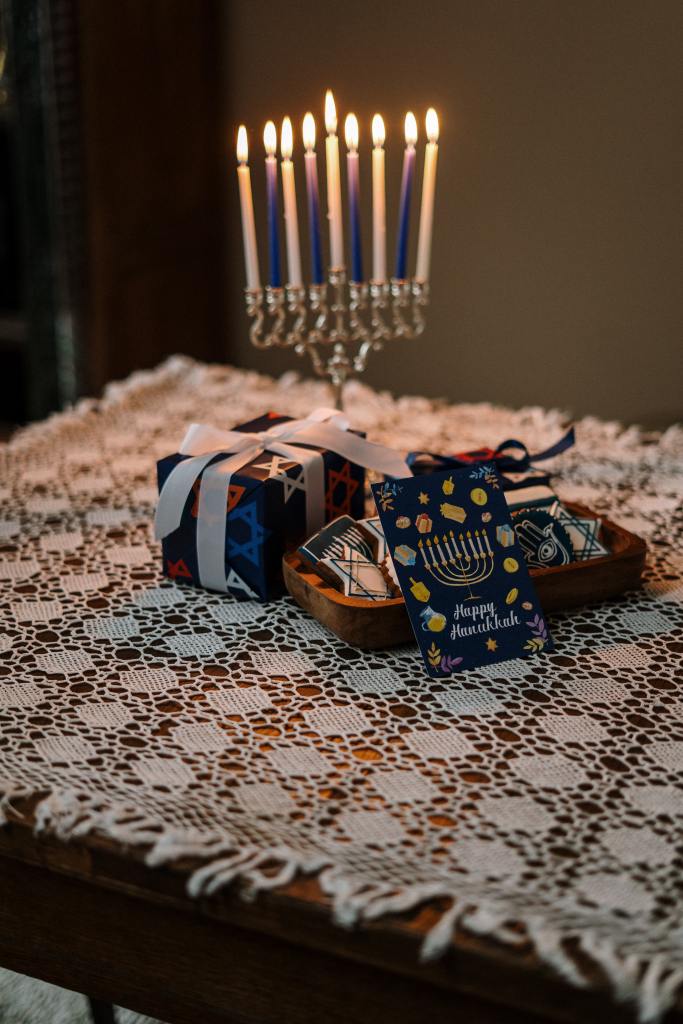
Our history lesson starts in the year 175 BCE when the Seleucid Greek empire was in power and Antiochus IV Epiphanes was king. It is important to note that many of the Jews at this time were heavily influenced by Greek culture. This is known as Hellenization (the spread of Greek culture, religion and language over people who were conquered by the Greeks). As an aside: this is one of the reasons the New Testament is written in Greek rather than Hebrew. Anyway, there were two factions of Jews at the time: the Hellenized Jews like the Tobiads, who wanted to do away with the Jewish laws and take on a Greek lifestyle and the traditionalist, like the Maccabees who wanted to adhere to Jewish and biblical law.
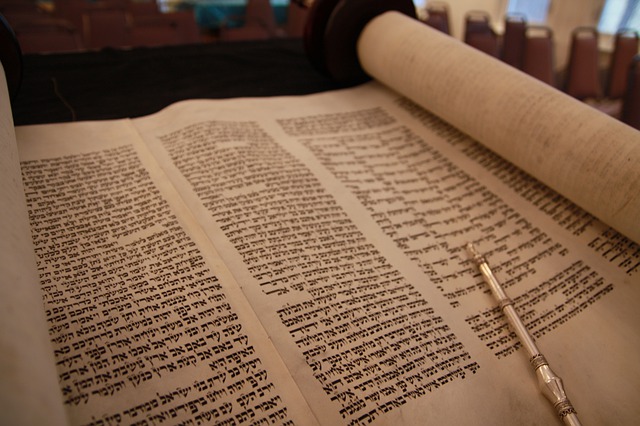
It is important to note that Antiochus believed the high priest position to be a political one rather than God appointed. He felt he could depose anyone he wished. Here’s the quick version of the story: The current high priest was Onais, a traditionalist. His brother Jason, a Hellenized Jew, bribed Antiochus for the high priest position and immediately began to abolish the temple practices and started the conversion of Jerusalem into a Greek city. The Tobiads didn’t think he went far enough though, so they sent Menelaus to the king and he out bribed Jason to become the next high priest. Menelaus desecrated the temple by stealing the sacred vessels and murdering Onais. A power struggle ensued between Jason and Menelaus ending with Antiochus coming to Jerusalem and massacring the Jews. Antiochus then further defiled the Jewish temple by installing an altar to Zeus and sacrificing pigs on it. This led to the Maccabean revolt which was led by Judas Maccabees. They came against the Hellenistic influence and the defamation of the temple. Through a series of battles, the Maccabees won the day, regained control over the temple, removed the symbols of Zeus and once again offered sacrifices in keeping with Jewish law.
This is when the miracle happened. The temple is comprised of several things – the altar, the table for the 12 loaves of shewbread, the incense altar, and the menorah which is lit with oil. “The Lord spoke to Moses: “Command the Israelites to bring you pure oil from crushed olives for the light, in order to keep the lamp burning continually. Aaron is to tend it continually from evening until morning before the Lord outside the veil of the testimony in the tent of meeting. This is a permanent statute throughout your generations. He must continually tend the lamps on the pure gold lampstand in the Lord’s presence” Leviticus 24:1-4. As the Maccabees re-dedicated the temple they only found a small jug of oil that had remained pure and uncontaminated. It was only enough to keep the lamp lit for one day, but, miraculously it lasted for eight days – just enough time for them to procure more oil. So the 9 stemmed menorah was born – eight stems to commemorate the miracle and 1 stem as the servant – the one that all the other stems are lit off of.

The story of Hanukkah and the battle that led to the celebration are recorded in First and Second Maccabees. You will not find these books in a Protestant Bible, (along with 6 others books) as they are considered the “apocryphal” or “deuterocanonical” books. They are found, however, in the Catholic Bible placed in between the testaments. The books describe the battles that took place for the re-establishment of God’s laws and the re-dedication of the temple. The only other place Hanukkah, or the Feast of Dedication, is mentioned in the Bible is in John 10:22-24, “Then the Festival of Dedication took place in Jerusalem, and it was winter. Jesus was walking in the temple complex in Solomon’s Colonnade. Then the Jews surrounded Him and asked, “How long are You going to keep us in suspense? If You are the Messiah, tell us plainly.” He has been in Jerusalem teaching, “Then Jesus spoke to them again: “I am the light of the world. Anyone who follows Me will never walk in the darkness but will have the light of life” John 8:12. Many question who He is and He says, “Precisely what I’ve been telling you from the very beginning,” Jesus told them. “I have many things to say and to judge about you, but the One who sent Me is true, and what I have heard from Him—these things I tell the world.” They did not know He was speaking to them about the Father. So Jesus said to them, “When you lift up the Son of Man, then you will know that I am He, and that I do nothing on My own. But just as the Father taught Me, I say these things. The One who sent Me is with Me. He has not left Me alone, because I always do what pleases Him” John 8:25-29. He then shows He is the light of the world by healing a blind man in John chapter 9. He teaches that He is the good shepherd and His sheep will know Him, yet they ask Him once again to tell them if He is the Messiah. I’m not sure if He could have been any more plain than to announce Himself as the light of the world during a festival that celebrates the miracle of light!
So what are the lessons of Hanukkah for us?
Lesson 1 – Stay true to God’s word and do not be led astray by the world. The Jews of the time just wanted to blend into the world around them. They were willing to give up their faith and who they were as God’s people to do it. Paul says it very plainly to us in his book to the Romans. “Therefore, brothers, by the mercies of God, I urge you to present your bodies as a living sacrifice, holy and pleasing to God; this is your spiritual worship. Do not be conformed to this age, but be transformed by the renewing of your mind, so that you may discern what is the good, pleasing, and perfect will of God” Romans 12:1-2. It’s pretty plain: do not be conformed to this age. Don’t try to blend in to the world around you. Don’t be tempted to leave your faith behind just so you can be more like the world. God wants us to be obedient to His word. The entirety of Psalm 119 is devoted to the laws, statues and decrees of God. It opens with this: “How happy are those whose way is blameless, who live according to the Lord’s instruction! Happy are those who keep His decrees and seek Him with all their heart. They do nothing wrong; they follow His ways” (vs. 1-3). To follow the ways of God means to walk the path that is not of this world. We must walk the path of God.
Lesson 2 – He has called us to be a light to the world. In His sermon on the mount, Jesus says, “You are the light of the world. A city situated on a hill cannot be hidden. No one lights a lamp and puts it under a basket, but rather on a lampstand, and it gives light for all who are in the house. In the same way, let your light shine before men, so that they may see your good works and give glory to your Father in heaven” Matthew 5:14-16. Hanukkah is a celebration of God’s miracle to keep the lamp going for 8 days. The lamp represents Jesus as the light of the world and our need to be lights as well. The only way to be a true light to the world is to walk in God’s path. Once again we turn to Psalm 119: “I gain understanding from Your precepts; therefore I hate every false way. Your word is a lamp for my feet and a light on my path” (vs. 104-105). It’s very definite: I hate every false way. So what do I do? I follow God’s word which is a lamp for each step my feet takes. The path is lit by God’s light.
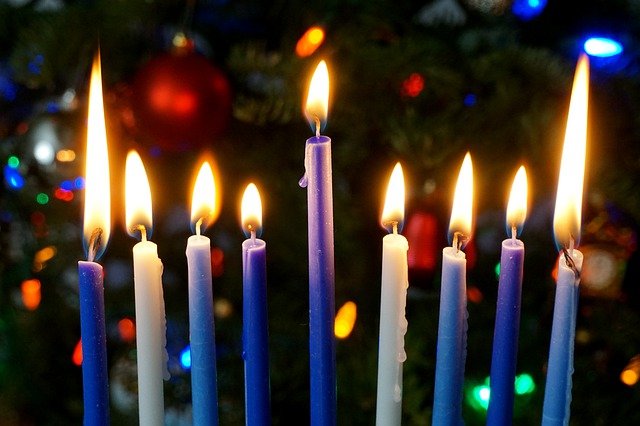
Lesson 3 – When we are empty, or feel that we are at the end, God will lift us up, fill us up and sustain us beyond what we believe. He is the God of miracles. We might be looking at a jar of oil for one day, but God sees eight. We might see the end, but God sees beyond that. We might feel empty and done, but God is ready to fill us with His Spirit and empower us to do more than we can imagine. When we think we can’t take one more step, God picks us up and carries us. When we are weak, He is strong. As the angel said to Mary – there is nothing that is impossible with God. The miracle of Hanukkah shows us this. There is a song out on the radio right now by Tauren Wells called “Famous For”. I love this song. The chorus goes like this: Make way through the waters, walk me through the fire. Do what You are famous for, what You are famous for. Shut the mouths of lions, bring dry bones to life and do what You are famous for. What You are famous for. Do we believe this? God will make a way – He has before, He does it now and He will continue to do it!
It comes down to this: If we, as the people of God, can learn these three lessons, then we will walk as we need to walk in this world. We will know how to navigate because we will be led by THE Light of the World. We will not conform to the world around us, but instead we will be transformed – and in turn, as lights of the world, transform the world around us to follow God. It is the only way we will see true peace in this world. We will walk as people who believe that God is all we need – and He will do what He is famous for!
 Bible Study Blog