Ruth – Returning Home
Last week we discovered that the book of Ruth is set in the time of the judges, a time when Israel was going from obedience to disobedience pretty regularly. During one of their times of disobedience, a famine devastates the land of Israel and Elimelech takes his family away from his hometown of Bethlehem (house of bread) to Moab, a place of hostility. It is a pretty desperate time indeed and they settle in Moab with little to no expectation to return. Because of this, both their sons marry women from Moab. Then, more despair follows as Elimelech and then Naomi’s two sons die. Naomi is now left alone in a foreign land without a husband, without sons and without any family to take care of her. It is a desperate situation. But finally a bit of good news finds its way to her. There is bread in Bethlehem once again. So, now that all else has failed her, she packs up everything to make the long journey home.

To get a better perspective on what Naomi is facing, we must delve a bit into how biblical society was set up. I think it is sometimes difficult for us to understand the tremendous hardships women like Naomi faced because we look at it from our social perspective. Most of us live in unconnected societies – families often live many miles from one another and rarely see one another. For instance, my husband and I live in Texas while my parents live in Utah, my brother and niece live several hours from us and my cousins, aunts and uncles are scattered throughout the United States. We are a classic example of an unconnected society. Ruth and Naomi lived in a connected society – families lived together often in the same compound. Villages were made up of several several families who made up clans within the same tribe. And the family structure was all about the bet-ab – the house of the father.
Everything in this time was patriarchal – based on male linage, particularly the oldest living male who would be the bet-ab. Under a patriarchal society, the father would pass things down to his sons, the oldest first and then on down the line. When the bet-ab would get too big to handle everyone sufficiently, they would break off into clans. These clans lived in the small villages made up of about 200-300 people. All the clans were a part of one of the 12 tribes of Israel. Within this system, ancestral resources moved patrilineal, or through the male family line. Economic assets in this culture are land and children. Children are considered economic assets because of their ability to farm, shepherd, apprentice etc. under the father. Land was not sold, it was inherited. If sold, it would revert back to the family during the year of jubilee. If a man died leaving a widow without sons, the next male in line was responsible to continue the line and redeem the land and property in the name of the widow’s late husband. He is called the kinsman redeemer. This becomes very important later in the story. So in Naomi’s case, because she lost her husband and her two sons, Ruth and Orpah had no recourse for another husband. Naomi didn’t have any other sons to redeem the two widows, so they were basically in a dead end situation. And Naomi isn’t going to remarry and have another son for them at this point in her life. It is a very tough spot indeed.
To sum it up, here you have a situation where Elimelech takes his family out of their safety net system and moves them to hostile territory. Perhaps his thinking is they can set up a new clan elsewhere with his two sons. But this doesn’t work out so well, and now Naomi is left in the most vulnerable place a woman in her time could be in. No husband, no sons and no clan to help her. She must go home. With all this in mind, let’s look at verses 6-18.
“Naomi and her daughters-in-law prepared to leave the land of Moab, because she had heard in Moab that the Lord had paid attention to His people’s need by providing them food. She left the place where she had been living, accompanied by her two daughters-in-law, and traveled along the road leading back to the land of Judah. She said to them, “Each of you go back to your mother’s home. May the Lord show faithful love to you as you have shown to the dead and to me. May the Lord enable each of you to find security in the house of your new husband.” She kissed them, and they wept loudly. “No,” they said to her. “We will go with you to your people.” But Naomi replied, “Return home, my daughters. Why do you want to go with me? Am I able to have any more sons who could become your husbands? Return home, my daughters. Go on, for I am too old to have another husband. Even if I thought there was still hope for me to have a husband tonight and to bear sons, would you be willing to wait for them to grow up? Would you restrain yourselves from remarrying? No, my daughters, my life is much too bitter for you to share because the Lord’s hand has turned against me.” Again they wept loudly, and Orpah kissed her mother-in-law, but Ruth clung to her. Naomi said, “Look, your sister-in-law has gone back to her people and to her god. Follow your sister-in-law.” But Ruth replied: Do not persuade me to leave you or go back and not follow you. For wherever you go, I will go, and wherever you live, I will live; your people will be my people, and your God will be my God. Where you die, I will die, and there I will be buried. May Yahweh punish me,and do so severely, if anything but death separates you and me. When Naomi saw that Ruth was determined to go with her, she stopped trying to persuade her” Ruth 1:6-18.

We find Naomi and her two daughters-in-law on the way to Bethlehem. As they travel down the road Naomi decides to release Orpah and Ruth from their obligation to her family. Once Ruth and Orpah married Naomi’s sons, they left their families and became a part of their husband’s families – for better or for worse. Naomi, in her compassion for the women, release them from this and she sends them on their way with a blessing: May God show you faithful love as you have shown me and may God grant you security in the house of a new husband. This is a beautiful blessing from one who is in a power position to those who are under her authority. The word for faithful love here is hessed, a word used to describe the love that God has for us. It encompasses the deeds that a more powerful party will do for a weaker party. She has seen their love for her in their willingness to go with her and it is Naomi’s unselfish desire for God to bless them in the same way. She goes further by asking God to grant them a new home with new husbands. The word used is menuchah which means resting place. Naomi’s desire is that her daughters-in-law will find homes that will be places of peace and rest for them. At first both reject this idea, but Naomi reminds them of their plight. They are destined to be alone if they do not return to their families. She cannot bear a new son to redeem them. As a reminder, in this time, if a widow is left childless, the brother of the dead husband was to redeem them in his brother’s name so the family line would continue. Naomi wasn’t going to provide them anymore children, nor would they wait until he grew up to become the kinsman redeemer.
Naomi is now ready to go it alone. She excepts her fate and says, my life is much too bitter for you to share because the Lord’s hand has turned against me.” The word for bitter is mar and is the root word for maror, the bitter herbs that are eaten at Passover. We will find later in this passage that Naomi, which means pleasant, asks to be called Mara. She sees her life as being made bitter, not by God, but because of the decisions that were made. Instead of trusting God from the very beginning, a man by the name of Elimelech (My God is King) ran from Bethlehem (house of bread) to Moab, a hostile place. (On a side note, the people of Moab are descendants of Lot through the sin committed by his daughter after Sodom and Gomorrah. Instead of trusting God, she decided to get her father drunk, sleep with him and get pregnant because she feared she would be alone.) Naomi realizes the consequences of Elimelech’s decision has led her to this place. She is not blaming God for her bitterness, instead, she makes her way back to Him by going home in the hope that, at least there, she might be able to survive.

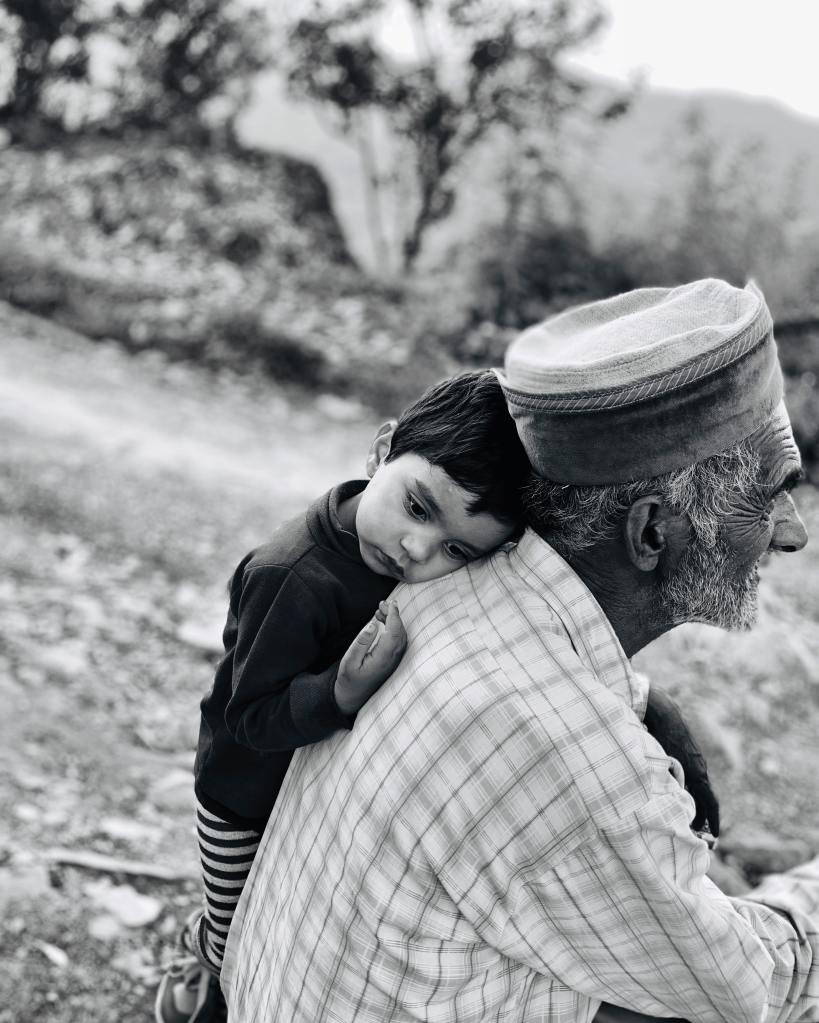
So, Orpah returns to her family to start a new life, but amazingly Ruth refuses. Both loved Naomi and wanted to go with her and both were released from any obligation with a blessing for a better life. Each made her own decision. Orpah, excepts the blessing and returns to her family but Ruth dabeqah, which means clung to her mother-in-law. Dabeqah is the same root word used when Joshua tells the people of Israel to cling fast to God. It is a word that describes the inner clinging or a steadfastness rather than just the physical act itself. Ruth stands firm in her conviction that she go with Naomi. She understands the consequences of her decision, that she is destined to be alone in a strange land with no family, but her love and care for Naomi is greater than her personal needs. She knows that if she returns to her home, Naomi will be alone without anyone to care for her. So she says, where you go I will go, where you live I will live and there I will be buried. She makes a lasting covenant with Naomi: may Yahweh punish me severely if anything but death separates us. Naomi relents and they began a journey together into the great unknown. A new path and a new life and maybe some hope.
I look at this passage and have to ask myself an important question: What am I clinging to? We are all clinging to something. It could be traditions, jobs, relationships, possessions, ideas etc. I have found that most of us do not like uncertainty. I am sure Ruth was the same way, but she made the decision to cling to something other than what she could see. Somewhere along the line, Ruth recognized that the God of Naomi had more to offer her than the gods of her world. She willingly gives up her security making a covenant with Naomi in the name of Yahweh who she has decided to trust with her future. One of the things I have been blessed to see in my lifetime, are people who have been willing to give up what this world sees as secure and go into the unknown because they cling to God. The first people who that come to mind are my parents. Years ago God called them to leave their security – a great church in Texas where my father was the pastor, a nice home, friends and family close by – to move over 1000 miles away to Idaho where there was no family, less money, a different culture and lots of uncertainty. They have now ministered in the northwest for almost 50 years and their ministry has been incredible. The legacy my parents will leave is one of great impact for the kingdom of God, all because they know that God is where their security is. I have also seen this in my work on the mission field. Time and time again, people who give up their secure lives to walk with God in an uncertain world. And I have seen it a bit closer to home. People who walk away from what the world sees as security to follow God into the unknown.
Hebrews 11:1 says, “Now faith is the reality of what is hoped for, the proof of what is not seen.” So what are we hoping for? Do we just want to remain in what we see as secure, or do we want to step out and hope in God. It doesn’t always mean we have to walk away from jobs and move 1000 miles away, but it will mean that we have to re-evaluate what we are going to cling to. Ruth was all in –For wherever you go, I will go, and wherever you live, I will live; your people will be my people, and your God will be my God. Where you die, I will die, and there I will be buried. And that is where we need to be when we decide to follow God no matter what. Let’s remember the Psalmist when he said: The fear of the Lord is the beginning of wisdom; all who follow His instructions have good insight. His praise endures forever. Psalm 111:10
 Bible Study Blog