Ruth – Chapter 2: It’s About The Journey
We ended last week’s lesson with a word of hope – They arrived in Bethlehem at the beginning of the barley harvest. It is the barley harvest and, as such, it is the beginning of Passover. The Israelites are beginning preparations to celebrate this festival in the midst of the harvesting activity. It is a sign of hope for all as they celebrate their redemption by God from captivity in Egypt. This is the setting we enter into as Naomi and Ruth embark on their own redemption journey.

Vs. 1-3 Now Naomi had a relative on her husband’s side named Boaz. He was a prominent man of noble character from Elimelech’s family. Ruth the Moabitess asked Naomi, “Will you let me go into the fields and gather fallen grain behind someone who allows me to?” Naomi answered her, “Go ahead, my daughter.” So Ruth left and entered the field to gather grain behind the harvesters. She happened to be in the portion of land belonging to Boaz, who was from Elimelech’s family.
This chapter starts off with an aside – a by the way. By the way, says the author, there is this close relative of Naomi’s by the name of Boaz. He is described as being gibbor chayil, a man of great strength of character. In fact Boaz means swiftness and strength. So, we know a couple of things so far. There are two widows without resources who need to be redeemed somehow and we find out there is a kinsman of Naomi in the town might be able to help. As an aside of my own, I find it interesting that we already know the ending of the story from the very beginning. They will be redeemed by Boaz. And that is the point. Redemption isn’t the surprise ending. There isn’t going to be a twist to this story. The story is about the journey to redemption. Showing how Naomi, who things all is bitter so changes her name to Mara, finds that God was, is and will always be her redeemer.
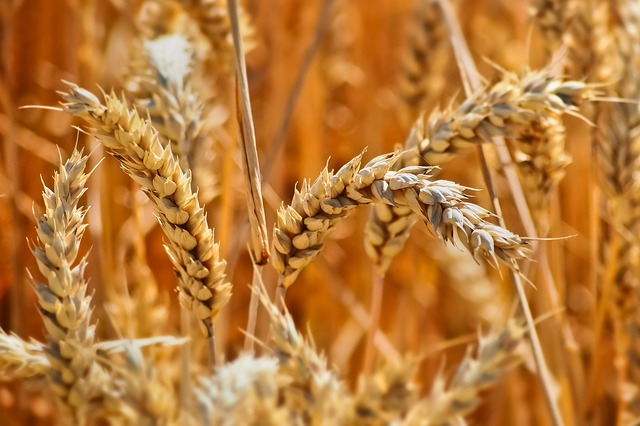
Back to our story. So, Ruth requests to go and gather grain in a field where she emsa hen – which means to find favor or grace. In the law, God has set up ways for widows, orphans and the foreigners to be able to supply their needs. “When you reap the harvest in your field, and you forget a sheaf in the field, do not go back to get it. It is to be left for the foreigner, the fatherless, and the widow, so that the Lord your God may bless you in all the work of your hands. When you knock down the fruit from your olive tree, you must not go over the branches again. What remains will be for the foreigner, the fatherless, and the widow. When you gather the grapes of your vineyard, you must not glean what is left. What remains will be for the foreigner, the fatherless, and the widow. Remember that you were a slave in the land of Egypt. Therefore I am commanding you to do this,” Deuteronomy 24:19-22. And now the story progresses. Here we are at Passover, when the people of Israel are remembering their slavery and redemption from Egypt. Ruth, a foreigner and a widow, is going out to seek grace from someone so she can glean the leftovers to feed herself and Naomi. She comes to a field and begins to glean – and it happens to be the field of Boaz, a man who could possibly be their kinsman redeemer. I don’t know about you, but it’s pretty exciting to watch how God has worked all things out before Ruth and Naomi even begin to ask the questions.
Vs 4-17 Later, when Boaz arrived from Bethlehem, he said to the harvesters, “The Lord be with you.” “The Lord bless you,” they replied. Boaz asked his servant who was in charge of the harvesters, “Whose young woman is this?” The servant answered, “She is the young Moabite woman who returned with Naomi from the land of Moab. She asked, ‘Will you let me gather fallen grain among the bundles behind the harvesters?’ She came and has remained from early morning until now, except that she rested a little in the shelter.” Then Boaz said to Ruth, “Listen, my daughter. Don’t go and gather grain in another field, and don’t leave this one, but stay here close to my female servants. See which field they are harvesting, and follow them. Haven’t I ordered the young men not to touch you? When you are thirsty, go and drink from the jars the young men have filled.” She bowed with her face to the ground and said to him, “Why are you so kind to notice me, although I am a foreigner?” Boaz answered her, “Everything you have done for your mother-in-law since your husband’s death has been fully reported to me: how you left your father and mother and the land of your birth, and how you came to a people you didn’t previously know. May the Lord reward you for what you have done, and may you receive a full reward from the Lord God of Israel, under whose wings you have come for refuge.” “My lord,” she said, “you have been so kind to me, for you have comforted and encouraged your slave, although I am not like one of your female servants.” At mealtime Boaz told her, “Come over here and have some bread and dip it in the vinegar sauce.” So she sat beside the harvesters, and he offered her roasted grain. She ate and was satisfied and had some left over. When she got up to gather grain, Boaz ordered his young men, “Let her even gather grain among the bundles, and don’t humiliate her. Pull out some stalks from the bundles for her and leave them for her to gather. Don’t rebuke her.” So Ruth gathered grain in the field until evening. She beat out what she had gathered, and it was about 26 quarts of barley.

In the first study, I talked about the word chayil – someone of integrity. Here we find out why both Boaz and Ruth are called chayil. First Boaz: From his greeting we know he is a man of God. The LORD be with you. Literally Yaweh be with you. We know that he knows everyone – men and women – who work in his fields by the question he asks his servant, “Whose young woman is this?” He instantly recognizes there is someone in the field he hasn’t seen before. He is told she is the young Moabite woman who came back with Naomi. We know he treats people with respect – men and women – by how he approaches and what he says to Ruth, “Listen, my daughter. Don’t go and gather grain in another field, and don’t leave this one, but stay here close to my female servants. See which field they are harvesting, and follow them.” He refers to Ruth as “my daughter” showing he is taking responsibility for her. Shamat bit-ti – hear my daughter. He then gives her four directives: 1 – only gather grain in this field – go nowhere else, 2 – stay close to my female servant girls – gather where they gather, 3 – I have ordered the men not to touch you, and 4 – when you are thirsty, get a drink from the jars brought here by my servants. He treats her as a father would a daughter. Stay close by, stay by the women of this field, no one is going to harm you on my watch, and you will have water to drink. Then he goes further – he orders the young workers to let her gather among the bundles, not to humiliate her and to purposely draw out some of the stalks to leave for her to gather. He makes sure Ruth and Naomi are provided for.

Next, let’s look at why Ruth is chayil: We already know she has given up a lot to go with Naomi and take care of her. It shows that she thinks of others well being before herself. We also know more about her character by what is said of her. The servant tells Boaz, “She asked, ‘Will you let me gather fallen grain among the bundles behind the harvesters?’ She came and has remained from early morning until now, except that she rested a little in the shelter.” She is humble and respectful. Even though she understands the law states she can gather in the fields, she first asks permission – she is looking for someone to give her emsa-hen, grace. She is trusting in God to guide her to the right place. We also see she is diligent and hard working. She started early in the morning and continues to work through the entire day. This means she comes out in the cool of the day and works through the heat. It is also back breaking work. Constantly bending over, gathering the grain and carrying it around with her. And her reputation precedes her. “Everything you have done for your mother-in-law since your husband’s death has been fully reported to me.” She is known for what she has given up to take care of her mother-in-law. Even though she is still considered the Moabitess, there is a now a respect for what she has done for Naomi and it has been talked about around the town.
Vs. 18-23 She picked up the grain and went into the town, where her mother-in-law saw what she had gleaned. Then she brought out what she had left over from her meal and gave it to her. Then her mother-in-law said to her, “Where did you gather barley today, and where did you work? May the Lord bless the man who noticed you.” Ruth told her mother-in-law about the men she had worked with and said, “The name of the man I worked with today is Boaz.” Then Naomi said to her daughter-in-law, “May he be blessed by the Lord, who has not forsaken his kindness to the living or the dead.” Naomi continued, “The man is a close relative. He is one of our family redeemers.” Ruth the Moabitess said, “He also told me, ‘Stay with my young men until they have finished all of my harvest.’” So Naomi said to her daughter-in-law Ruth, “My daughter, it is good for you to work with his female servants so that nothing will happen to you in another field.” Ruth stayed close to Boaz’s female servants and gathered grain until the barley and the wheat harvests were finished. And she lived with her mother-in-law.
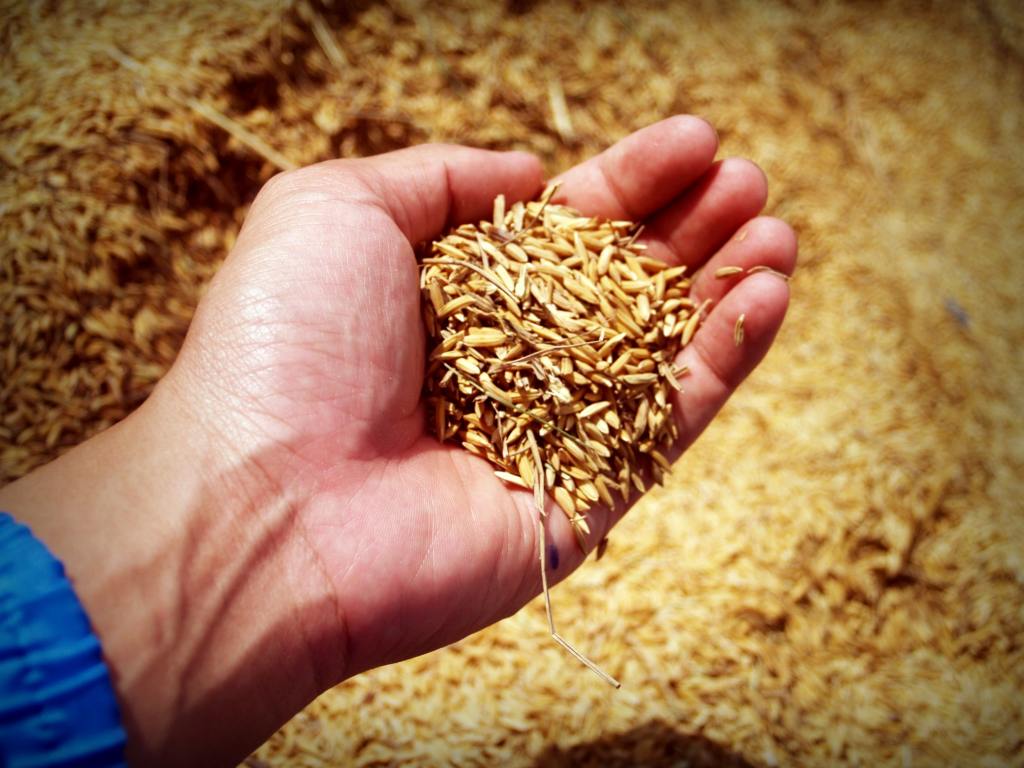
So now Ruth has returned home with 26 quarts of barley. This is about an ephah, an ancient Hebrew unit of dry measure, which is equal to 8 lbs of grain. I work with grains all the time and I can tell you, to glean, and beat out 8 lbs of barley is a lot of work. This will produce a lot of bread for Ruth and Naomi. But, I want to also point out, Ruth doesn’t only bring home the grain she gathered, she also brings home the left over roasted grain she had for her lunch. She didn’t just provide food for the future, but Naomi was able to have food that very day. Naomi is shocked and asks where Ruth gathered. When Ruth tells her Boaz, Naomi realizes she has not been forsaken by God after all. Her eyes are opened and she now fully understands God’s kindness. He has not forgotten her. There is a kinsman redeemer after all. And Ruth continues in her work – gathering through both barley and wheat harvests. Storing up grain for her and Naomi for a long time to come. She stays true to her character – respectful, diligent, honorable, and loving.

After reading this chapter, it occurred to me, especially in this day and age, we need this reminder. Ruth and Naomi didn’t know in the beginning that they had a kinsman redeemer waiting in the wings, but we do. We have known all along we have THE Great Redeemer – Jesus Christ. Yet, we still want to “change” our name from pleasant to bitter at times. I am sure you are like me. There are times in life when all seems lost. What was once pleasant has become bitter. I think 2020 up to now has been like that for many. Everything seems derailed: businesses closed, vacations got canceled, jobs were lost, incomes and livelihoods dwindled, we felt isolated, people got sick and some even died. In the midst of all of this, hate messages, riots, racial tensions, loneliness, fear and uncertainty ruled the day (and the headlines). It felt like God had forsaken us. What was once naom (pleasant) became mara (bitter). This chapter reminds us – God never leaves us, nor does he forsake us – He is always present. The exciting thing – we know the ending to the story! We don’t have to wonder if there is going to be a twist. No, He IS our Great Redeemer. What was lost will be found. Hate can be thwarted with the love of Christ. Loneliness can become sweet fellowship. Fear can be conquered by the knowledge that God is in control of all things. God IS Adonai Yireh – God the Provider. He IS Adonai Rapha – God the Healer. We can go forward in faith because we stand on the firm foundation of El-Elyon and El-Shaddai – The most High and Almighty God. We find it’s not about the ending – because we already know God is victorious. Christ has won, death has been conquered. It is about the journey we take to get there. Paul said in 1 Corinthians 9:24-27, “Don’t you know that the runners in stadium all race, but only one receives the prize? Run in such a way to win the prize. Now everyone who competes exercises self-control in everything. However, they do it to receive a crown that will fade away, but we a crown that will never fade away. Therefore I do not run like one who runs aimlessly or box like one beating the air. Instead, I discipline my body and bring it under strict control, so that after preaching to others, I myself will not be disqualified.” Let’s run this race as people who are gibbor chayil having great character and integrity. Let’s make sure the journey is one where we stand on the promises of God who was, who is and who is to come. Let’s run the race like we know the ending of the story – We are redeemed!
 Bible Study Blog