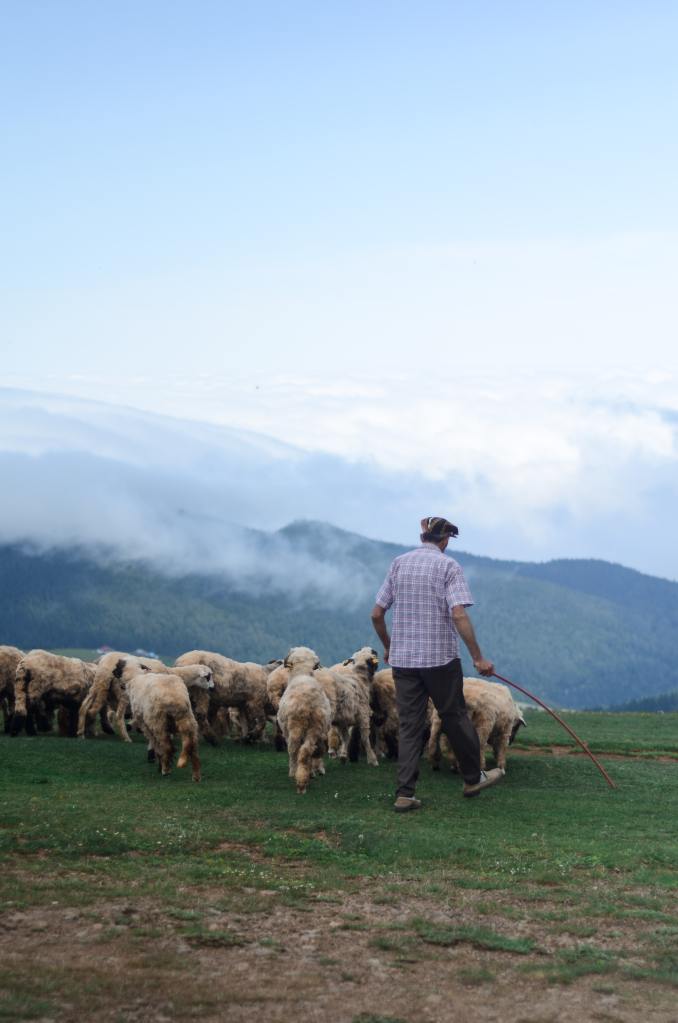
This week I am taking another break from a book study so, once again, I turn to the Psalms. This week I want to work through Psalm 23 – one of just about everyone’s favorite, mine included. This Psalms is usually read at funerals, focusing on the afterlife but, in all reality, it is actually is about life – now. David wrote Psalm 23 out of his experience as a shepherd. He knew what it took to be a good shepherd and he really understood sheep. In this Psalm, God is the ultimate shepherd and we are the ultimate sheep and we find out who God is and who we are.
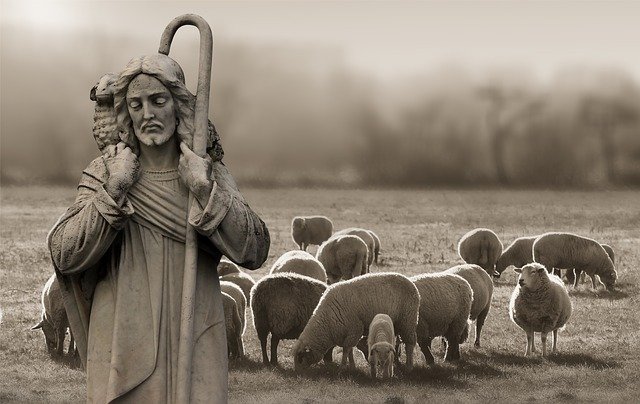
Vs. 1 – The Lord is my shepherd; there is nothing I lack.
The word for LORD here is actually “YAhVEh” which is the sacred name of God. It is translated I AM. The Hebrew word for want is chaser which means lack or to be without. Literally the verse would say, “I AM is my shepherd therefore I lack nothing. So here we find our first look at the character of God – He is all sufficient. He IS, He WAS and He IS TO COME. If He is our shepherd than we lack nothing. In my study about this passage I discovered a little about sheep. They are not an animal that can provide for themselves. They are one of the most helpless animals around. If they are not moved from pasture to pasture, they will just eat the grass to the root and then starve if there is nothing left. They do not have an inner instinct that teaches them to forge for other food. They must have a shepherd to look after them.
This brings us to our first look at ourselves. We too are helpless creatures in need of a good shepherd. Like the song by Mylon LeFevre says – Without Him I could do nothing. Without Him I’d surely fail. Without Him I would be drifting, like a ship without a sail. The wonderful thing about sheep – they feel no anxiety when they have the shepherd there – and we too can live in complete contentment in the knowledge that with God, we lack nothing.
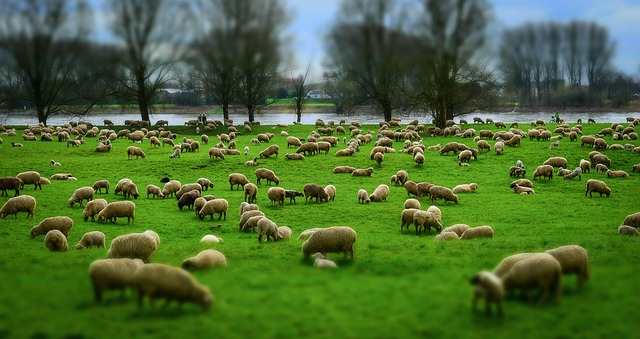
Vs 2 – He lets me lie down in green pastures; He leads me beside quiet waters.
Here we find the shepherd does not only provide for the needs of the sheep, but he provides in abundance. He doesn’t just lead them to a pasture to eat, it is a lush green meadow where the sheep can recline because they are fully satisfied. It is a picture of abundance over and above the our needs. We not only lack for nothing, we can’t even take in all the blessings God bestows on us. John 10:7-10 says, “I tell you the truth, I am the gate for the sheep. All who ever came before me were thieves and robbers, but the sheep did not listen to them. I am the gate; whoever enters through me will be saved. He will come in and go out and find pasture. The thief comes only to steal and kill and destroy; I have come that they may have life and have it to the full.”
One thing I learned about sheep in my studies is that they will not drink from a rushing stream or river. They are frightened by the rapidly moving water – and with good cause. If, you’ve ever owned a wool sweater that got wet, you know how heavy it can be. A rushing river could pull that sheep in very easily, so the shepherd creates a place for them to drink that is quiet or tranquil. In the same way, God leads us besides those tranquil waters. In John 4:13-14, Jesus speaks of living water. “Everyone who drinks this water will be thirsty again, but whoever drinks the water I give him will never thirst. Indeed, the water I give him will become in him a spring of water welling up to eternal life.” In this verse we find that God cares for us and blesses us beyond our imagination.
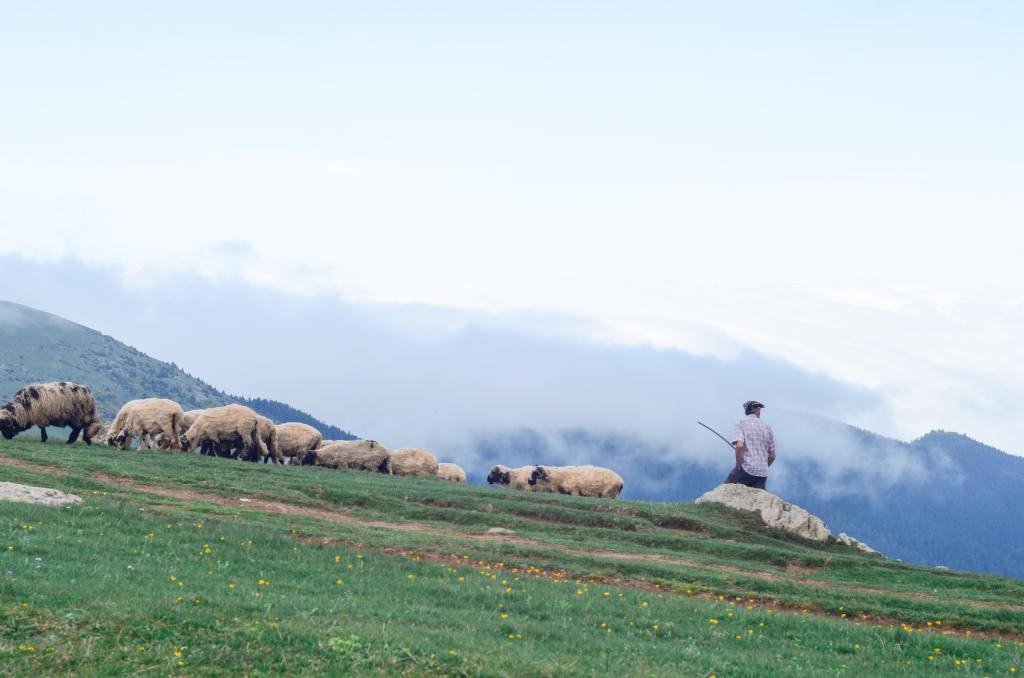
Vs. 3 – He renews my life; He leads me along the right paths for His name’s sake.
The Hebrew word for the phrase “restores my soul” is shwub. which means once again or to turn back. So the phrase literally reads my soul he turns back. We find that because of the lush meadows, and the tranquil waters, the sheep have been restored. Matthew 11:28 says, “Come to me, all you who are weary and burdened, and I will give you rest.” God desires to restore us, to give us rest. We must trust in the One who is all sufficient.
When the shepherd moves his sheep around he is careful to avoid overstraining the sheep. Sometimes this means they must seemingly go out of their way to get to the next pasture – but it is for the sheep’s own good. The sheep don’t question the shepherd; they just follow his voice relying on the fact that he knows best. God demonstrated this same shepherding characteristic when he led the Israelites from Egypt to the Promised Land: “When Pharaoh let the people go, God did not lead them on the road through the Philistine country, though that was shorter. For God said, “If they face war, they might change their minds and return to Egypt.” So God led the people around by the desert road toward the Red Sea,” Exodus 13:17-18a. God knew the best path for them to follow. Have you ever questioned the path God has you on? I know I have. “Why are you taking me this way??” “This path is too long – I want a shortcut to get to where I think I ought to be.” If only we were a bit more like the sheep – trusting in the shepherd, not questioning him. Knowing that He knows us better than we know ourselves. He will lead us down the right path.
This brings me to another interesting thing about sheep – they know their shepherds voice and will follow it anywhere. Jesus speaks of this in John 10:1-5 “I assure you: Anyone who doesn’t enter the sheep pen by the door but climbs in some other way, is a thief and a robber. The one who enters by the door is the shepherd of the sheep. The doorkeeper opens it for him, and the sheep hear his voice. He calls his own sheep by name and leads them out. When he has brought all his own outside, he goes ahead of them. The sheep follow him because they recognize his voice. They will never follow a stranger; instead they will run away from him, because they don’t recognize the voice of strangers.” Do we know His voice? Will we follow Him anywhere?
And why does He do all of this – leading us, blessing us, caring for us… For the sake of His name. John 10:11-13 says, “I am the good shepherd. The good shepherd lays down his life for the sheep. The hired man, since he is not the shepherd and doesn’t own the sheep, leaves them and runs away when he sees a wolf coming. The wolf then snatches and scatters them. This happens because he is a hired man and doesn’t care about the sheep.” You see, the shepherd has a reputation to guard. If he doesn’t care for the sheep and leaves them unprotected he wouldn’t be much of a shepherd. He wouldn’t be on the top of the list to look after anyone’s sheep. In the same way, God does what He does for the sake of His name. He will not do anything that will not be glory to His name. He is the good shepherd, and the path He leads us on, no matter what we may think of it, is the best path for us. Since God cannot do anything that will damage His name, He will not do anything that is not in our best interest.

Vs 4 – Even when I go through the darkest valley, I fear no danger, for You are with me; Your rod and Your staff they comfort me.
This is usually the portion of this Psalm used in funerals – but we must keep in mind this is a Psalm about life. The Hebrew word for darkest valley is tsalmaveth which means thick darkness or a shadow of death. It is not death itself, only it’s shadow. Ever been through one of those – maybe all of 2020 seemed like this. There are times when we will go through thick darkness and it feels like death is all around – pressing down on us. There are places we must travel through that will be hard and fraught with danger. Sometimes the shepherd would have to take the sheep through deep gorges to get them from one pasture to another, and sometimes, God must take us through some tough places – the valley’s of life – to get us to the next pasture. 1 Peter 1:6 reminds us that “though now for a little while you may have had to suffer grief in all kinds of trials.” And James 1:2-5 says to, “Consider it pure joy, my brothers, whenever you face trials of many kinds, because you know that the testing of your faith develops perseverance. Perseverance must finish its work so that you may be mature and complete, not lacking anything.” There will be trials in this life, but, if we trust the shepherd, we will fear no danger – “remember, I am with you always, to the end of the age,” Matthew 28:20b
We find that the shepherd has two tools with him at all times – a rod and a staff. And these tools are a comfort to us. The rod was used in two ways – to protect the sheep from predators and as a tool of discipline. We’ve all heard the phrase spare the rod and spoil the child. It comes from Proverbs 13:24 which actually says, “The one who will not use the rod hates his son, but the one who loves him disciplines him diligently.:” Without discipline, we will go off on the wrong path. I can say, there is nothing worse than an undisciplined child. As a a former elementary school music teacher, I have met a few. Proverbs 22:15 says, Foolishness is tangled up in the heart of a youth; the rod of discipline will drive it away from him. God is not out to get us – he loves us and wants us to walk the right path. There are times in our lives when we make foolish choices and then there is a time for discipline – it is not something we often like, but in the end, it is for our best.
The second tool is the staff. It is a tool used to guide the sheep, to keep them from falling into holes or straying from the path. One touch of the staff lets the sheep know the shepherd is there. It is comforting and lessens the fear. In the same way, God will use His staff to let us know He is there. There are times when He keeps us from falling into holes or straying from the path. His touch brings comfort and His discipline shows He loves us. We are not just an insignificant piece of straw that is blown by chance in the wind, rather God is very aware of us and will discipline and bless us accordingly.
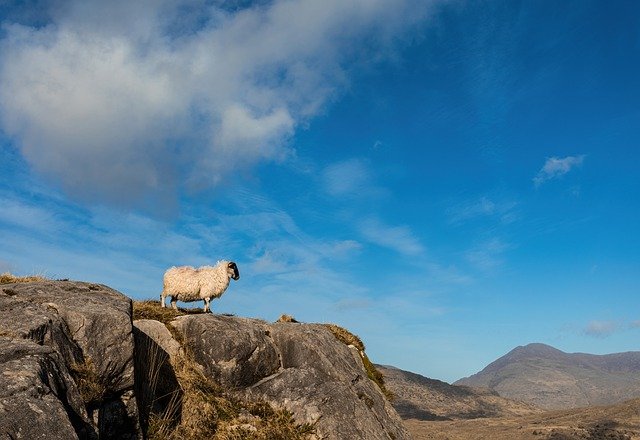
Vs 5 – You prepare a table before me in the presence of my enemies; You anoint my head with oil; my cup overflows.
There were times when shepherds would take their sheep up on a plain or a table. He would have to go before the sheep to prepare it by removing obstacles that would harm them, fill in holes they may fall in, make sure the water source was tranquil, and keep it safe from enemies. He would then guide the sheep to this place. They would literally be on a table in the presence of their enemies, but be perfectly safe because the shepherd had gone before them. This is a beautiful picture of what God does for us. Just as the shepherd knew all about the place he prepared for the sheep, God knows what is ahead of us and prepares it for us. There may be enemies all around us, but we are protected by God in the midst of it all. Jesus says in John 14:1-3, “Your heart must not be troubled. Believe in God; believe also in Me. In My Father’s house are many dwelling places; if not, I would have told you. I am going away to prepare a place for you. If I go away and prepare a place for you, I will come back and receive you to Myself, so that where I am you may be also.” In the place He is preparing for us there will be a banquet beyond all banquets!
There are going to be time when we are hurt. When sheep hurt themselves, the shepherd applies oil to their wounds as a healing balm. Anointing the head with oil was also a very particular sort of blessing. The word for anoint is dashen, which means richness of fat. The word for overflows is revahyuaht which means saturation. From this we understand God will richly put oil on our head to the point of saturation. His blessings are so abundant we can’t hold any more because they have reached that saturation level. Such are the blessings of the good shepherd.
Vs 6 – Only goodness and faithful love will pursue me all the days of my life, and I will dwell in the house of the Lord as long as I live.
So, when we follow the good shepherd, trusting in His path no matter what, we find that goodness and and faithful love will pursue us. The word for goodness is tohb, which means good in the widest sense, abundant good. The word for faithful love is checed – a word used for an ultra-orthodox Jew. They are devoted followers of God. One dictionary even termed it a foolish follower. The word for the phrase pursue me is radaph which means to run after or chase. God’s abundant goodness will run after me and I in turn will foolishly and devotedly run after God all the days of my life. What a beautiful picture! As I am spiritually enriched, I will in turn, enrich others. His blessings – the oil – are so great they spill out of me onto everyone I come into contact with.
And here is the conclusion – Because YAhVEh is the good shepherd, I lack nothing. Because of Him, I recline in lush meadows and drink from tranquil waters – and I will thirst no more. Because of the good shepherd, I can rest in this fact: He will lead me in the paths of righteousness. He will not take me on paths that will over strain me, but take me on the best paths. Some of these paths might be trying or filled with suffering, but I don’t have to fear because the good shepherd is with me. He will protect me with his rod. He will keep me on the straight and narrow, which may mean discipline, with that same rod. He will comfort me wit the touch of His staff, letting me know He is always near and walking with me though it all. The good shepherd will go before me to prepare a place for me in this life and the next. In fact, I will have so many blessings, I will be saturated with them and they will overflow to everyone I come into contact with. His abundant goodness will run after me and I, in turn, will run after Him with foolish devotion for all my days. Then there is the final promise – I will dwell in YAhVeh’s house forever.
As I read through this Psalm once again, I have to ask myself – why do I still hesitate to follow Him fully? – for there are times when I still question. I pray I have the wisdom to be the sheep that follows my shepherds voice – wherever He leads I’ll go – and I will lack nothing.
 Bible Study Blog