1 Corinthians: An Introduction
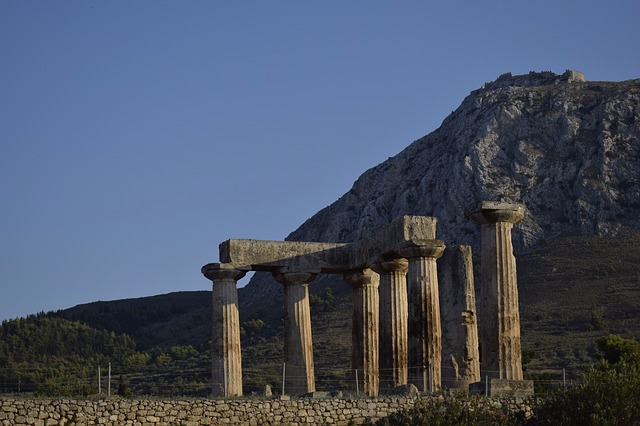
As I have struggled a bit on what to study next, I find myself in another of Paul’s letters – this time it is Corinthians. As always, I want to open up the study with a little background on the city, culture and people of that day as well as a bit of biblical background and context. Paul wrote at least two letters to the church at Corinth. There is evidence within the two books that there may have been other letters that have since been lost to us. This particular church was near and dear to Paul’s heart as it is one he started and spent one and a half years at. We can read about it in Acts 18:1-8. “After Paul left Athens, he went to Corinth, where he found a Jewish man named Aquila, a native of Pontus, who had recently come from Italy with his wife Priscilla .\because Claudius had ordered all the Jews to leave Rome. Paul came to them, and being of the same occupation, stayed with them and worked, for they were tentmakers by trade. He reasoned in the synagogue every Sabbath and tried to persuade both Jews and Greeks. When Silas and Timothy came down from Macedonia, Paul was occupied with preaching the message and solemnly testified to the Jews that Jesus is the Messiah. But when they resisted and blasphemed, he shook his robe and told them, “Your blood is on your own heads! I am innocent From now on I will go to the Gentiles.” So he left there and went to the house of a man named Titius Justus, a worshiper of God, whose house was next door to the synagogue. Crispus, the leader of the synagogue, believed the Lord, along with his whole household. Many of the Corinthians, when they heard, believed and were baptized.” So began the church at Corinth. We see from this Paul has come into contact with some fellow tentmakers and future partners in the his ministry Priscilla and Aquila. They will be instrumental in the start and continuation of this church.

Corinth was situated on a narrow strip of land between the Corinthian Gulf and the Saronic Gulf. This was a strategic location that would insure the commercial prosperity of the city as merchant ships would use this passage to avoid having to around the tip of Greece. Because of this Corinth was a very ethnically diverse city made up of Romans, Greeks, and several other people groups from the merchant ships throughout Asia. There were also several Jews in the city – enough to warrant a synagogue.
Another major attraction in Corinth were the Isthmian Games. These games were a festival of athletic and musical competitions to honor the sea god Poseidon. They were held in the spring of the second and fourth years of each Olympiad at his sanctuary. In fact, several gods were worshiped here including Aphrodite, who was considered the protectress of the city, Demeter, Poseidon, and several other Roman gods.
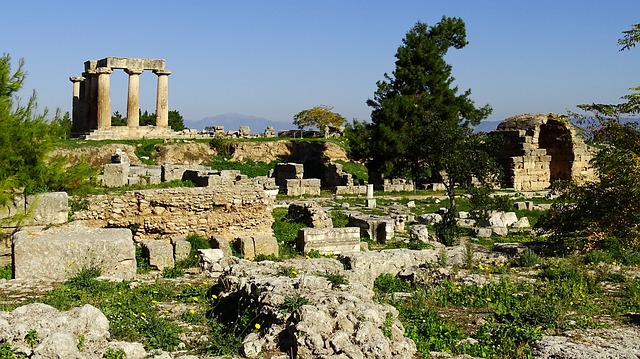
Perhaps the most significant factor which comprised the atmosphere of Corinth was gross, unashamed immorality. It was a city known for it’s sexual looseness. Much of this stemmed from the worship of Aphrodite of which Corinth was one of her main cult centers. The cult of Aphrodite was actually imported from Phoenicia and their worship of Astrte, which, in turn, was influenced by the worship of Ishtar. She is associated with sexuality and procreation and was known as the goddess of the prostitutes and connected to Eros – the god lust and sexual desire. To sum it up, Corinth was a city described as intellectually alert, materially prosperous, and morally corrupt.
1 Corinthians was written by Paul, along with his collaborator Sosthenes in about 56-57 AD. FThe first question I had was who is Sosthenes? After a bit of detective work, I found the following in Acts 18. A bit of background first. Paul had been successful in Corinth persuading some of the Jews to believe in the Messiah. This angered the Jews and so they brought Paul to Gallio, a Roman senator, to accuse him of “persuading people to worship God contrary to the law”, (v. 13.) At that time Sosthenes was the leader of the synagogue and opposed Paul. Gallio didn’t buy their argument and refused to listen to them. Verse 17 says, “Then they all seized Sosthenes, the leader of the synagogue, and beat him in front of the judge’s bench.” We are not sure who the “they” were, as it could have been the Jews or the crowd of other Corinthian citizens. If indeed this is the same Sosthenes, then he did eventually become a believer and now works with Paul to spread the gospel of Christ.
The theme of the letter is how the church is reflecting the society it lives in. As we see from the historical background, the city is morally corrupt, materialistic, intellectual, and idol worshiping. Sound familiar? This could be a letter written to us in today’s society. So Paul addresses several problems the church has in this letter. The first problem concerns factionalism within the church. There were several leaders in the church and the congregation fractured off into those who followed Apollo, or Paul, or Cephas or Christ… Second, Paul deals with sexual immorality – a huge problem in Corinth itself that has integrated itself into the church. Third, he deals with the interesting subject of meat sacrificed to idols. Since idol worship was popular in Corinth the question of do we or don’t we eat meat that has been sacrificed to idols was debated. Some in the church felt there was no harm in eating meat sacrificed to idols while others felt they were participating in idolatry if they did eat the meat. On a social level, there was a question as to whether or not one should attend the feasts given in the idol temples as they were some of the main social events in the city. Could a Christian, in good faith attend these events? Fourth, Paul addresses spiritual gift and worship. And finally, he deals with the resurrection of the dead as this was a huge question for the church. As we can see, many of these questions are not just ones for the Corinthian church, but ones that we need to be asking today. How much does our church reflect the social dynamic today?
And so let us begin with 1 Corinthians:1-9 – “Paul, called as an apostle of Christ Jesus by God’s will, and Sosthenes our brother: To God’s church at Corinth, to those who are sanctified in Christ Jesus and called as saints, with all those in every place who call on the name of Jesus Christ our Lord—both their Lord and ours. Grace to you and peace from God our Father and the Lord Jesus Christ. I always thank my God for you because of God’s grace given to you in Christ Jesus, that by Him you were enriched in everything—in all speech and all knowledge. In this way, the testimony about Christ was confirmed among you, so that you do not lack any spiritual gift as you eagerly wait for the revelation of our Lord Jesus Christ. He will also strengthen you to the end, so that you will be blameless in the day of our Lord Jesus Christ. God is faithful; you were called by Him into fellowship with His Son, Jesus Christ our Lord.”
Paul greets this church warmly and reminds them that they are sanctified in Christ Jesus. He gives them grace and peace from God the Father and Jesus Christ. He shows his love for the church by letting them know he gives thanks to God for them. He starts off by reminding them Christ will strengthen them to the end so they will be blameless in the day of the Lord. He wants them to know up front that all he has to say in this letter is because he loves them. He will reiterate this in what we have come to know as the love chapter of 1 Corinthians 13. Paul’s desire in this letter is for them to follow God with all their hearts, to walk blameless and to keep close fellowship with Jesus Christ.
I am excited to see what God would have for us here in this letter. I believe He is speaking to us once again in this day and age – a time of division and questions about how the people of God should respond in this world. I look forward to our study in 1 Corinthians.
 Bible Study Blog