Imitating Christ
Chapter 11 of 1 Corinthians deals with two distinct issues. The first being headship and the second is the Lord’s Supper. While they do not seem connected, they actually have one foundational tie – and that is the sense of betterment. It is an issue that Paul has been dealing with the entire letter – and why he continues to say “everything is permissible but not everything is helpful”. Not everything in 1 Corinthians 11 will be what we like to call “politically correct” in the current political and social climate we live in. In this day and age, we don’t like to think of others in the terms of headship – that is someone that has been put in the position of leadership – especially when it comes to men and women. But before we get our hackles up, ready to see Paul as some male chauvinist wanting male domination, lets begin by reading his words in Galatians 3:27-29. I believe these verses give us the proper lenses with which to read this chapter. “For as many of you as have been baptized into Christ have put on Christ like a garment. There is no Jew or Greek, slave or free, male or female; for you are all one in Christ Jesus. And if you belong to Christ, then you are Abraham’s seed, heirs according to the promise.” With this in mind, let us begin.

Vs. 1-16 Imitate me, as I also imitate Christ. Now I praise you because you always remember me and keep the traditions just as I delivered them to you. But I want you to know that Christ is the head of every man, and the man is the head of the woman, and God is the head of Christ. Every man who prays or prophesies with something on his head dishonors his head. But every woman who prays or prophesies with her head uncovered dishonors her head, since that is one and the same as having her head shaved. So if a woman’s head is not covered, her hair should be cut off. But if it is disgraceful for a woman to have her hair cut off or her head shaved, she should be covered. A man, in fact, should not cover his head, because he is God’s image and glory, but woman is man’s glory. For man did not come from woman, but woman came from man. And man was not created for woman, but woman for man. This is why a woman should have a symbol of authority on her head, because of the angels. In the Lord, however, woman is not independent of man, and man is not independent of woman. For just as woman came from man, so man comes through woman, and all things come from God. Judge for yourselves: Is it proper for a woman to pray to God with her head uncovered? Does not even nature itself teach you that if a man has long hair it is a disgrace to him, but that if a woman has long hair, it is her glory? For her hair is given to her as a covering. But if anyone wants to argue about this, we have no other custom, nor do the churches of God.
Paul begins by saying, “imitate me as I imitate Christ.” This is important because Paul wants us to see that he is in no way bringing something to them that Christ hasn’t already taught. He is imitating Christ in all he does. Therefore, they can imitate him. The word imitate in Greek is mimētai, which means to emulate. It is where we get our word mimic and is used to show someone who imitates someone they admire. Now to the not so “popular” part – Paul’s pattern of headship. And so here it is: Christ is the head of the man, the man is the head of the woman and God is the head of Christ. At first glance, we want to shout no way – this shows women as second class citizens under the thumb of a man. But does it? In the same way that Paul explained the submission we have for one another in marriage, we see the same pattern here. The first thing to notice is the headship over man. It is Christ. So, man is to imitate Christ in all things, just as Christ himself submitted to the headship of God and imitated Him. Likewise, women are to submit themselves to the headship of a man who imitates Christ – who imitates God. This is not about who is in charge – this is about who we emulate. Remember, Paul starts out by stating that he imitates Christ, so then they can imitate him. In the same way, if a man will imitate Christ, then he will not abuse his headship. He will be the head in a loving and serving manner, just as Christ. He will seek guidance from the one he submits to, so he will be the same kind of headship leader as Christ. When a woman submits to a headship that submits to Christ, then she will not have to worry about abuse, or being looked at as beneath anyone. Just as Christ is equal to God, yet he submits to God’s headship, the woman is equal to the man – in Christ there is no woman or man – only oneness in Christ.

Now to address the hair issue. We find that this is the only letter that Paul writes that addresses veiling or head coverings for women. In other letters, such as Timothy and Ephesians, Paul doesn’t mention veils at all, but asks that the women have modest hairstyles without a lot of adornments. Since each letter has a different solution, we must gather that Paul was dealing with a specific cultural issue that was causing a problem in that particular church and community. We could get caught up in rules for men and women, but I believe Paul is writing a specific letter here to a specific church. Corinth was a very Roman city and, as such, would have adhered to Roman rules when it came to what women and men wore. The fact is, we are not entirely sure why Paul specifically speaks on head coverings here – but I am sure the Corinthian church did. What can we get from this? Everything is permissible, but not everything is helpful. First, how can we keep our brother from stumbling and second, how can we be light in the darkness? Does what we wear, how we talk, what we watch, etc. build the kingdom of God or does it blow it up? Whatever it is, we must look to build up. The willingness we have to be servants in this world will speak loudest in a world filled with voices that just want to be heard.
Vs. 17-26 Now in giving the following instruction I do not praise you, since you come together not for the better but for the worse. For to begin with, I hear that when you come together as a church there are divisions among you, and in part I believe it. There must, indeed, be factions among you, so that those who are approved may be recognized among you. Therefore, when you come together, it is not really to eat the Lord’s Supper. For at the meal, each one eats his own supper ahead of others. So one person is hungry while another gets drunk! Don’t you have houses to eat and drink in? Or do you look down on the church of God and embarrass those who have nothing? What should I say to you? Should I praise you? I do not praise you for this! For I received from the Lord what I also passed on to you: On the night when He was betrayed, the Lord Jesus took bread, gave thanks, broke it, and said, “This is My body, which is for you. Do this in remembrance of Me.” In the same way, after supper He also took the cup and said, “This cup is the new covenant established by My blood. Do this, as often as you drink it, in remembrance of Me.” For as often as you eat this bread and drink the cup, you proclaim the Lord’s death until He comes.
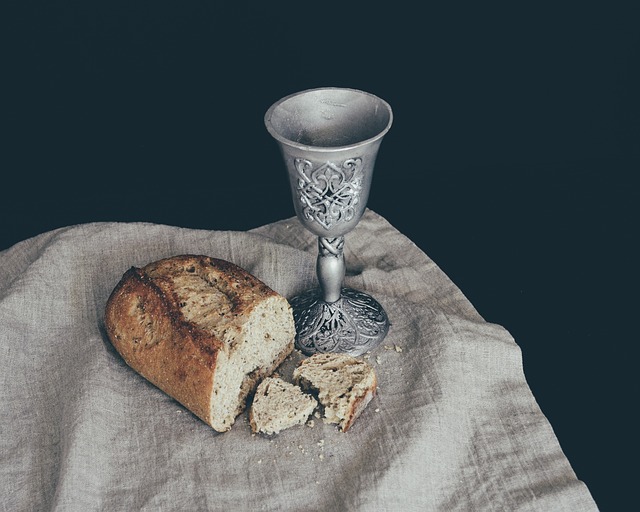
It seems that Paul is changing subjects here, but I believe this is the same issue as above. As imitators of Christ, how do we look at people around us? Are there class issues, race issues, or male and female issues? When we come together as a body of Christ, do we see the body as a whole, or do we see classes of individuals? Apparently, the Corinthian church would come together for a meal and some would indulge while others would go without depending on their economic standing? There were those who wanted to stand out and be recognized all the while embarrassing others in their church. Paul says – NO! This is not what we are about as a body of Christ. We must hearken back to Christ’s example in John 13:4-5 and imitate Him. “He got up from supper, laid aside His robe, took a towel, and tied it around Himself. Next, He poured water into a basin and began to wash His disciples’ feet and to dry them with the towel tied around Him.” Paul admonishes this church for their lack of servanthood. Their lack of imitation of Christ, who came to seek and save the lost. Instead they sought to claim the best for themselves. Not only that, they ate and drank to excess in front of those who had nothing. Paul reminds them that the Lord’s supper is there to proclaim his death in the cup and the bread. So listen to what Paul says here:
Vs 27-34 Therefore, whoever eats the bread or drinks the cup of the Lord in an unworthy way will be guilty of sin against the body and blood of the Lord. So a man should examine himself; in this way he should eat the bread and drink from the cup. For whoever eats and drinks without recognizing the body, eats and drinks judgment on himself. This is why many are sick and ill among you, and many have fallen asleep. If we were properly evaluating ourselves, we would not be judged, but when we are judged, we are disciplined by the Lord, so that we may not be condemned with with the world. Therefore, my brothers, when you come together to eat, wait for one another. If anyone is hungry, he should eat at home, so that when you gather together you will not come under judgment. And I will give instructions about the other matters whenever I come.
This is a harsh indictment of this kind of behavior – guilty of sin against the body and blood of the Lord. Paul wants us to examine ourselves before we take the Lord’s supper. This is not to say that we need to make ourselves worthy – as if we can work for grace. This is talking about our attitude as we take the Lord’s Supper. In the Sermon on the Mount, Jesus said, “So if you are offering your gift on the altar, and there you remember that your brother has something against you, leave your gift there in front of the altar. First go and be reconciled with your brother, and then come and offer your gift,” Matthew 5:23-24. The message here is clear. Don’t bring baggage to the Lord’s table. Get rid of the ego, pride, resentment, etc. so that you can be true imitators of Christ. Be repentant and open to God’s grace. What Paul said earlier should be our motivation: “Everything is permissible,”but not everything is helpful. “Everything is permissible,” but not everything builds up. No one should seek his own good, but the good of the other person,” 1 Corinthians 10:23-24. If we seek the good of others, then we will not allow pride and ego to be in the forefront. We will instead act like a body – one body – who’s desire is to see God be glorified in all we do. Yes, this may mean giving up some of our freedom’s and rights. It will mean we put ourselves in the positions of servants, willing to wash another’s feet. It means we look out for each other, especially those who may not have as much as we do. We make sure that all are equal at the table of the Lord. When we concentrate on being imitators of Christ, then we will really see his kingdom come here on earth as it is in heaven.
 Bible Study Blog