Christ’s Resurrection
So far in this first letter to the Corinthian church, Paul has addressed their lack of understanding of how the body of Christ should work, their need for God’s wisdom instead of their own, and the necessity of a true understanding of agape love. Now Paul wants to clarify a very important doctrinal issue – the doctrine of the resurrection. To understand why the resurrection was such a problem, we need to understand the philosophies that influenced the church in Corinth. First there is Platonic philosophy, or the belief that at death, the soul left the inferior body behind. This infiltrated the church and so the belief that Jesus resurrected spiritually rather than physically gained popularity. We read in 1 John 4:1: “Dear friends, do not believe every spirit, but test the spirits to determine if they are from God, because many false prophets have gone out into the world.” This should be a warning to us as well to test everything we hear before taking it on as “gospel”. It reminds me of a time I went into a church and saw a statue of a woman dressed in a beautiful yellow dress. When I asked about it, I was told it was a representation of mother earth and the spring solstice which was a prevalent belief in the culture. It was an example of religious syncretism or the blending of a cultural belief into the fabric of Christianity. I asked him if that posed a problem theologically and his answer was “no, why should it?”

The next influence the Corinthian church dealt with was Gnosticism, or the belief about personal wisdom and knowledge. Paul had addressed this in the first part of his letter: “For the message of the cross is foolishness to those who are perishing, but it is God’s power to us who are being saved. For it is written: I will destroy the wisdom of the wise, and I will set aside the understanding of the experts. Where is the philosopher? Where is the scholar? Where is the debater of this age? Hasn’t God made the world’s wisdom foolish? For since, in God’s wisdom, the world did not know God through wisdom, God was pleased to save those who believe through the foolishness of the message preached. For the Jews ask for signs and the Greeks seek wisdom, but we preach Christ crucified, a stumbling block to the Jews and foolishness to the Gentiles. Yet to those who are called, both Jews and Greeks, Christ is God’s power and God’s wisdom, because God’s foolishness is wiser than human wisdom, and God’s weakness is stronger than human strength.” 1 Corinthians 1:18-25. Some may have also been influenced by the Sadducees who did not believe in a resurrection, but thought the world beyond was only “wishful thinking”. Jesus responded to them in Luke 20:27-40, “But as for the fact that the dead are raised, even Moses revealed this in the passage about the burning bush, where he calls the Lord the God of Abraham, the God of Isaac, and the God of Jacob. Now He is not the God of the dead, but of the living; for all live to Him.” Some of the scribes answered and said, “Teacher, You have spoken well.” For they did not have the courage to question Him any longer about anything.” All these philosophies had found their way into the Corinthian church and so, Paul begins this next section wanting to “clarify the gospel.”
Vs 1-11 Now brothers, I want to clarify for you the gospel I proclaimed to you; you received it and have taken your stand on it. You are also saved by it, if you hold to the message I proclaimed to you—unless you believed for no purpose. For I passed on to you as most important what I also received: that Christ died for our sins according to the Scriptures, that He was buried, that He was raised on the third day according to the Scriptures, and that He appeared to Cephas, then to the Twelve. Then He appeared to over 500 brothers at one time; most of them are still alive, but some have fallen asleep. Then He appeared to James, then to all the apostles. Last of all, as to one abnormally born, He also appeared to me. For I am the least of the apostles, unworthy to be called an apostle, because I persecuted the church of God. But by God’s grace I am what I am, and His grace toward me was not ineffective. However, I worked more than any of them, yet not I, but God’s grace that was with me. Therefore, whether it is I or they, so we proclaim and so you have believed.
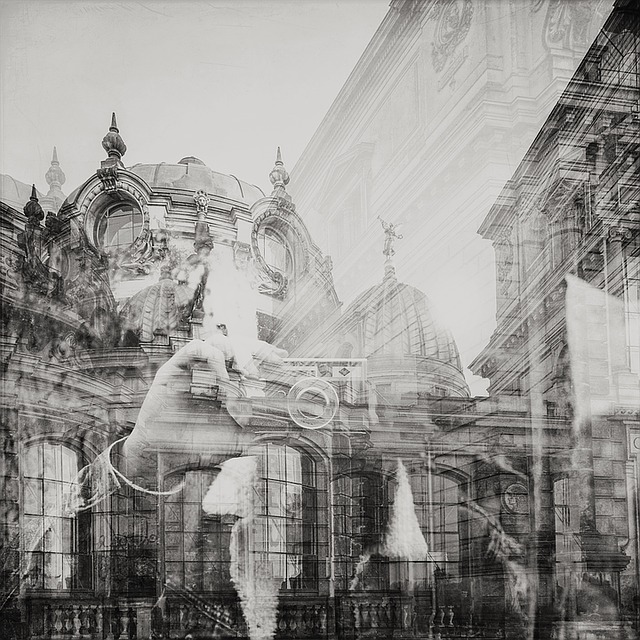
I don’t often point out the pictures in this Bible Study but, I do want to highlight this one. It is a good representation of the state the Corinthian church was in. They had layered so many other belief’s into their Christianity, the things they should be focusing on were distorted. So, Paul lays out the gospel message for them in this passage. Christ died, Christ was buried, Christ rose from the dead and then he appeared – in the flesh – to Peter (Cephas), the apostles, over 500 other brothers, and finally to Paul himself. And so begins his explanation of what it really means to be resurrected. The Greek word for gospel is euaggélion, which literally means God’s good news. Interestingly, the sentence is “I have come to clarify the gospel that I have proclaimed to you”. The Greek says, “I have come to clarify the euaggelion that I euaggelízō. Paul says I want to clarify the gospel that I had gospelized. The Corinthian church had received or been gospelized and they stood by the gospel. For clarification, the Corinthian church didn’t necessarily have a problem with the resurrection of Christ, but with the resurrection of believers. They believed Christ was raised from the dead because they stood on that doctrine, but they allowed the other philosophy’s to creep in and take hold of the church so their understanding of the resurrection as a whole was skewed. Isn’t that so like us today? Over the past few years, I have been watching many churches take on the influence of current societal ideas and beliefs. I think we need to ask ourselves, ”What religious syncretism have we let in without even realizing it and how can we take out the distortions so we can have a focused picture of the gospel?”
Vs. 12-19 Now if Christ is proclaimed as raised from the dead, how can some of you say, “There is no resurrection of the dead”? But if there is no resurrection of the dead, then Christ has not been raised; and if Christ has not been raised, then our proclamation is without foundation, and so is your faith. In addition, we are found to be false witnesses about God, because we have testified about God that He raised up Christ—whom He did not raise up if in fact the dead are not raised. For if the dead are not raised, Christ has not been raised. And if Christ has not been raised, your faith is worthless; you are still in your sins. Therefore, those who have fallen asleep in Christ have also perished. If we have put our hope in Christ for this life only, we should be pitied more than anyone.
So Paul lays out his argument: if you believe that Christ was raised from the dead – which is what you stand on – how can you say there is no resurrection of the dead? If you are saying that, then Christ was not raised at all. And if Christ was not raised, then everything you stand on and proclaim is a lie and your faith is absolutely worthless. And even more – those believers who have already died have perished, making Jesus a liar when He said to the thief on the cross “today you will be with me in paradise.” So if Christ is only for this life – what a pity! We must go back to what Christ said about himself in John 11:25-26. Lazarus was dead and Martha was in mourning. She believed her brother would be raised on the day of resurrection, but Jesus goes even further to tell her “I am the resurrection and the life. The one who believes in Me, even if he dies, will live. Everyone who lives and believes in Me will never die ever. Do you believe this?” And that is the question Paul is asking – do you really believe this?!
Vs. 20-34 But now Christ has been raised from the dead, the firstfruits of those who have fallen asleep. For since death came through a man, the resurrection of the dead also comes through a man. For as in Adam all die, so also in Christ all will be made alive. But each in his own order: Christ, the firstfruits; afterward, at His coming, those who belong to Christ. Then comes the end, when He hands over the kingdom to God the Father, when He abolishes all rule and all authority and power. For He must reign until He puts all His enemies under His feet. The last enemy to be abolished is death. For God has put everything under His feet. But when it says “everything” is put under Him, it is obvious that He who puts everything under Him is the exception. And when everything is subject to Christ, then the Son Himself will also be subject to the One who subjected everything to Him, so that God may be all in all. Otherwise what will they do who are being baptized for the dead? If the dead are not raised at all, then why are people baptized for them? Why are we in danger every hour? I affirm by the pride in you that I have in Christ Jesus our Lord: I die every day! If I fought wild animals in Ephesus with only human hope, what good did that do me? If the dead are not raised, Let us eat and drink, for tomorrow we die Do not be deceived: “Bad company corrupts good morals.” Come to your senses[and stop sinning, for some people are ignorant about God. I say this to your shame.

If you remember the lesson about the firstfruits, this will make more sense. If not, here is the short version. Leviticus 23:9-14 explains the firstfruit’s offering. It was an offering made in faith and hope that God will provide the rest of the harvest. Jesus is our firstfruits offering. He died for us, was buried and raised again from the dead. And, in faith and hope, we know there will come a day when we will die, be buried, and be raised up to be with Christ. In Adam, because of his sin, we all died. But in Christ, because He is the Lamb of God who became our firstfruits offering, we will live. He is the resurrection and the life. So what is our response? Live in such a way that declares this is truth. If this isn’t truth, then we should just eat and drink for tomorrow we will die – without hope or faith. But we have the hope that is Christ. He is our resurrection and life. We must stop being corrupted by what the world says and live a righteous life walking in such a way that we are the rest of the harvest – the fruit that has been borne from the firstfruit.
Vs. 35-49 But someone will say, “How are the dead raised? What kind of body will they have when they come?” Foolish one! What you sow does not come to life unless it dies. And as for what you sow—you are not sowing the future body, but only a seed, perhaps of wheat or another grain. But God gives it a body as He wants, and to each of the seeds its own body. Not all flesh is the same flesh; there is one flesh for humans, another for animals, another for birds, and another for fish. There are heavenly bodies and earthly bodies, but the splendor of the heavenly bodies is different from that of the earthly ones. There is a splendor of the sun, another of the moon, and another of the stars; for one star differs from another star in splendor. So it is with the resurrection of the dead: Sown in corruption, raised in incorruption; sown in dishonor, raised in glory; sown in weakness, raised in power; sown a natural body, raised a spiritual body. If there is a natural body, there is also a spiritual body. So it is written: The first man Adam became a living being; the last Adam became a life-giving Spirit. However, the spiritual is not first, but the natural, then the spiritual. and made of dust; the second man is from heaven. Like the man made of dust, so are those who are made of dust; like the heavenly man, so are those who are heavenly. And just as we have borne the image of the man made of dust, we will also bear the image of the heavenly man.
And so, this was what was so concerning to the Corinthian church – what will we look like? They had been so influenced by the Gnosticism and Platonism they focused on the wrong things. And what is Paul’s answer to this question? God decides that and this isn’t really what you need to focus on. So often we focus on the things that don’t really matter. We allow the little minute details derail our faith and focus. What then should we focus on? Paul shows us: 1. We are a seed that has been sown in corruption, but because Christ has been raised, we will be raised in incorruption. 2. We have been sown in dishonor, but because of Christ’s resurrection, we are now raised in glory. 3. We have been sown in weakness, but the power of the resurrection means we are raised in power. 4. We were sown in a natural body, but we will be raised into spiritual bodies – yes bodies, not a spiritual formless conscious state. 5. Right now we bear the image of Adam – a man made from the dust of the earth, but, when we are raised, we will bear the image of Christ. And now for the exiting part. The glorious truth is:
Vs. 50-58 Brothers, I tell you this: Flesh and blood cannot inherit the kingdom of God, and corruption cannot inherit incorruption. Listen! I am telling you a mystery: We will not all fall asleep, but we will all be changed, in a moment, in the blink of an eye, at the last trumpet. For the trumpet will sound, and the dead will be raised incorruptible, and we will be changed. For this corruptible must be clothed with incorruptibility, and this mortal must be clothed with immortality. When this corruptible is clothed with incorruptibility, and this mortal is clothed with immortality, then the saying that is written will take place: Death has been swallowed up in victory. Death, where is your victory? Death, where is your sting? Now the sting of death is sin, and the power of sin is the law. But thanks be to God, who gives us the victory through our Lord Jesus Christ. Therefore, my dear brothers, be steadfast, immovable, always excelling in the Lord’s work, knowing that your labor in the Lord is not in vain.

Death will be swallowed up in victory! (Hallelujah!) Christ has won on the cross through his death and resurrection. (Amen) He conquered sin and death and it will be no more. (Praise be to God Almighty) That’s right, it’s time to celebrate the truth – death will no longer be victorious and it will no longer have it’s sting. Because once the day of resurrection comes, we will be raised up and be clothed in incorruptibility and immortality. The Greek word for incorruptibility is aphtharsia, which means something that cannot deteriorate, and the Greek word for immortality is athanasía, which means something that cannot die. There will come a day when we will be raised in bodies that will not deteriorate or die. We have been given the victory through Christ, our Passover Lamb, our Firstfruits, our Yom Kippur (Atonement), and our Risen Savior. Therefore, don’t focus on the small stuff – focus on the God stuff. Don’t allow the philosophy’s of the world to creep into your belief’s, instead, test the words of man by the Word of God. And finally, be steadfast, immovable and excel in the work of the Lord, because we do not labor in vain, but to the glory of God. If we can do this, the prayer the Lord taught us will be answered: His Kingdom will come and His Will will be done in earth as it is in heaven.
 Bible Study Blog