True Joy
Paul wrote his letter to the church at Philippi during his Roman imprisonment in about 61 or 62 AD. In Acts 16, we read about Paul’s first visit to Philippi during his 2nd missionary journey with Silas. This was the first church Paul planted in Europe. During their time in Philippi, they encountered Lydia, a seller of purple, who comes to know Jesus along with her entire household, and they healed a young girl who was possessed by a spirit, which landed them in prison. A third encounter is recorded in Acts 16:25-30: “About midnight Paul and Silas were praying and singing hymns to God, and the prisoners were listening to them. Suddenly there was such a violent earthquake that the foundations of the jail were shaken, and immediately all the doors were opened, and everyone’s chains came loose. When the jailer woke up and saw the doors of the prison open, he drew his sword and was going to kill himself, since he thought the prisoners had escaped. But Paul called out in a loud voice, “Don’t harm yourself, because all of us are here!” Then the jailer called for lights, rushed in, and fell down trembling before Paul and Silas. Then he escorted them out and said, “Sirs, what must I do to be saved?” Paul visited Philippi one other time during his 3rd missionary tour and spent Passover with the then established church.
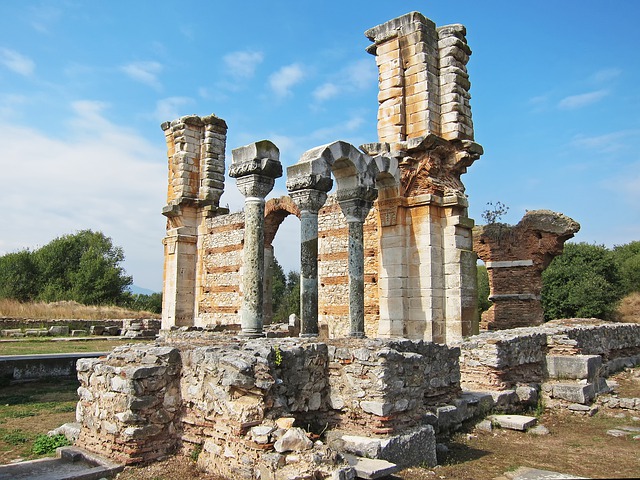
The earliest name we find of the city was Tasibasta, or “the place of the Thasians”. The city came to prominence when it became the capital of the Greek empire. Around 359 BC, the citizens asked Philip II of Macedon to assist them with a neighboring city and after he helped them, he named the city after himself – thus Philippi was born. Philip II of Macedon was the father of Alexander the Great. When Alexander took the reigns as ruler, he worked to make Philippi one of the models of Greek culture. Philippi was also known for it’s many natural resources including it’s many natural springs, abundance of timber, and it’s metals including gold. Philippi had a diverse population including the native Thracians, Greeks and Romans and the primary languages were Latin and Greek. This would be one of the first cities Paul encountered without a significant Jewish population, evidenced by the fact that there was not a synagogue in the city (you had to have at least 10 men to establish a synagogue). Instead, Paul went to the riverside to find Jewish worshipers. Even then, his first convert was a Gentile woman and her household. Like many of the cities in the area, Philippi’s religious scene included the worship of several local gods including the Tharacian god Liber Pater, often equated with Bacchus the god of wine, and Bendis, who was similar to Diana of Artemis. Paul also encountered followers of Apollo, a god known for divination.
Unlike other letters to the churches, the letter to the Philippians is not dealing with a crisis or a sin problem. Instead, it is a letter of encouragement, appreciation and affection, overflowing with joy Paul expresses his great appreciation for the church’s financial support of Paul’s missionary journeys and their friendship and support during his imprisonment in Rome. He seeks to encourage them in their continued walk with Christ. If the letter has a theme it is joy. We find this in his introduction:
Vs. 1- 11 Paul and Timothy, slaves of Christ Jesus: To all the saints in Christ Jesus who are in Philippi, including the overseers and deacons. Grace to you and peace from God our Father and the Lord Jesus Christ. I give thanks to my God for every remembrance of you, always praying with joy for all of you in my every prayer, because of your partnership in the gospel from the first day until now. I am sure of this, that He who started a good work in you will carry it on to completion until the day of Christ Jesus. It is right for me to think this way about all of you, because I have you in my heart, and you are all partners with me in grace, both in my imprisonment and in the defense and establishment of the gospel. For God is my witness, how deeply I miss all of you with the affection of Christ Jesus. And I pray this: that your love will keep on growing in knowledge and every kind of discernment, so that you can approve the things that are superior and can be pure and blameless in the day of Christ, filled with the fruit of righteousness that comes through Jesus Christ to the glory and praise of God.

The first thing we find is this letter is not written by Paul alone. Timothy is a co-writer of this letter. From this we can gather that Timothy had a significant relationship with the Philippians church. In the opening greeting, Paul uses the Greek word doulos to describe both himself and Timothy. Doulos is a word that means slave or servant. Paul considers himself and Timothy both slaves of Christ which shows their humility. As we go through Philippians, we will find that Paul exhorts the church to have the mind of Christ, who humbled himself and became a servant as well. The letter is addressed to three specific parties: the saints at the Philippians church, the overseers and the deacons.

The thing I notice in this opening paragraph is when Paul prays for this church, he prays with joy. We see in his other letters that Paul prays for the all of the churches diligently. He always gives thanks to God gives them a word of encouragement as he points out what he sees God doing in that church. But, this is the first church he prays for with absolute joy. In chapter two we will find a hymn within this letter, and so it is known by some as the singing letter. How appropriate! We recall Paul and Silas singing with joy in their hearts in prison while in Philippi the first time, and Paul is once again “singing” with joy in another prison as he writes his letter to this beloved church.
Paul then identifies the things he is thankful for. He sees this church as a true partner with him in his ministry both financially and in friendship and fellowship. Paul knows God began a good work in the church and he and Timothy feel certain God will complete that work. The work began on a riverside with a woman named Lydia who excepted the gospel of Jesus along with her whole household. It began in a prison cell with singing, an earthquake and a jailer who’s life was saved twice. Once from his own hand and second through the message of the gospel. From there, a church was born and then it thrived. The work Paul began continued under the overseers and deacons and the saints respond with more love.

The Philippians church had supported Paul through thick and thin, both financially and with true koinōnia or fellowship. Paul and Timothy have the church at Philippi in their hearts and they have a deep love and affection for them as true partners. Because of this, their prayer for them is this: “that your love will keep on growing in knowledge and every kind of discernment, so that you can approve the things that are superior and can be pure and blameless in the day of Christ, filled with the fruit of righteousness that comes through Jesus Christ to the glory and praise of God.” The word for love here is agape, which is the love of God. This church already had a great deal of agape and Paul wants them to have more. (We should all strive to have more and more love.) But Paul didn’t want them to just have more love, he wanted that love to grow in knowledge and every kind of discernment. The Greek word for knowledge is epignósis, which is the word used for knowledge gained through first-hand relationship. This means Paul didn’t just want any kind of knowledge, but knowledge that was born out of experience and relationship. The Greek word for discernment is aisthésis which is the word used for perception the opposite of intellection. Paul didn’t want them to just know something as an intellect, he wanted them to know something because of relationship. Why? So they could dokimazo: approve or properly be able to test things to find things that are superior.
As believers in Jesus, this should be our prayer. We should desire to grow in agape love so we can, through our first hand knowledge and perception, be able to test the superior things so we can be pure and blameless, filled with the fruit of righteousness. Not knowledge and perception that comes through intellect, but through our relationship with God and His church. If our churches would strive for this, we would see believers growing in grace and peace. I believe we would see others come to know Christ as our churches walk in righteousness and love. As we continue to explore this amazing letter, we will find joy in our walk with Christ.
 Bible Study Blog