Romans 1:1-17
As I contemplated a study through the book of Romans, I came to the conclusion that this could be a daunting task. For the book of Romans is both absolutely simple, yet ultimately complicated in it’s teachings. So, to help us, as we walk through this book, I will be referencing many of the teachings in the Old Testament. Why would I do this? Because it is both the Scripture Paul read and taught throughout his ministry. In fact, it is because of his vast knowledge and understanding of Scripture (God’s Word), through his many years of study with the likes of Gamaliel, that we have a better understanding of God’s holiness, righteousness and His amazing grace through the death and resurrection of Jesus Christ. And it is this amazing grace that is the theme of the book of Romans. So, too understand grace, we must understand God’s Word. Over the years, I believe a misunderstanding of Scripture has led us to miss the grace that has always been who God is. Also in this book, Paul has beautifully laid out, brick by brick, a glorious “Roman Road”. It is only through the Scripture Paul read and taught, that we can truly navigate this road. I am excited to study this book once again and I hope you enjoy it as well. And so we begin our journey through the book of Romans with a little introduction into the world of Rome in the first century.
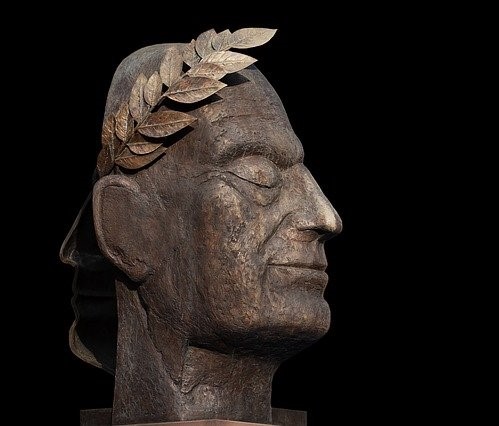
The Rome Empire was the dominant political and military force of the time and the city of Rome was the foundation of this vast empire. At the time Paul wrote his letter to the church at Rome, the city had about 1 million people making it one of the largest Mediterranean cities of the ancient world. Rome was a wealthy city and was known for it’s brutal practices in the arenas and for it’s sexual immorality. On the religious front, Rome was heavily influenced by Greek mythology with most of the inhabitants being polytheistic. The practice of Emperor worship or the Imperial Cult was not only prevalent, but assumed. So, as long as the religious practice included this Imperial Cult, it was tolerated.
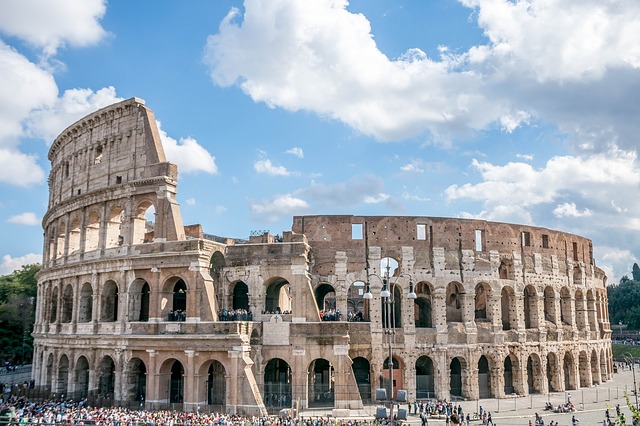
It is not known how Christianity exactly started in Rome. We do know there were about 50,000 Jews living in Rome around the time of Christ’s death and that Christianity began very soon afterward. Perhaps it was through a group of Jews who sojourned to Jerusalem during Shauvout, (Pentecost in Greek) and heard the preaching of Peter and the apostles. We do know, that by 40 A.D., Christianity had a solid presence in the city. Because both Christians and the Jews are monotheistic, they both ran into problems with the Imperial Cult practice. Both Christians and non-believing Jews refused to worship the Emperor as a deity, which led to an intense persecution. My husband and I had the privilege of visiting Rome a couple of years ago. One of the places we toured was the Colosseum where about 3000 Christians had been martyred. One of the things that shaped the church at Rome was in 49-54 AD when Claudius banned all Jews from Rome. Because of this, the church, which was most certainly started by a Jewish group of believers, expanded during these 5 years under Gentile Christian leadership.
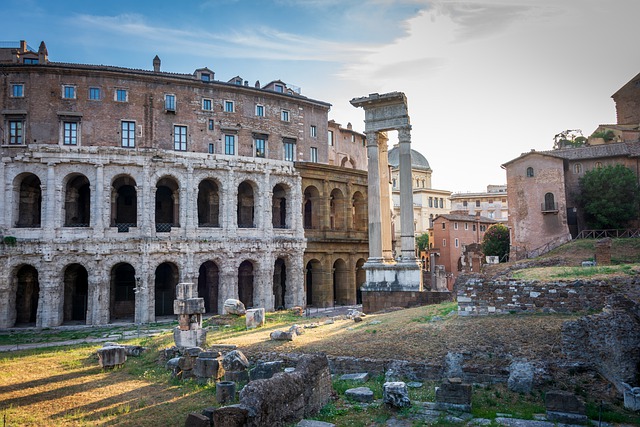
Three years later, in 57 AD, Paul writes his letter to the church. After the death of Claudius in 54 AD, Nero ascended to the throne at the age of 16. He had not yet taken the full reigns of leadership so, the persecution attributed to him was still in the future. At this time, Paul had not yet had an opportunity to visit the church at Rome, so he had only only heard about the church. This is evidenced by verses 8-12 in chapter 1: ”First, I thank my God through Jesus Christ for all of you because the news of your faith is being reported in all the world. For God, whom I serve with my spirit in telling the good news about His Son, is my witness that I constantly mention you, always asking in my prayers that if it is somehow in God’s will, I may now at last succeed in coming to you. For I want very much to see you, so I may impart to you some spiritual gift to strengthen you, that is, to be mutually encouraged by each other’s faith, both yours and mine.” He writes his letter from Corinth and begins this letter with an expanded introduction. “Paul, a slave of Christ Jesus, called as an apostle and singled out for God’s good news, which He promised long ago through His prophets in the Holy Scriptures, concerning His Son, Jesus Christ our Lord, who was a descendant of David according to the flesh and who has been declared to be the powerful Son of God by the resurrection from the dead according to the Spirit of holiness. We have received grace and apostleship through Him to bring about the obedience of faith among all the nations, on behalf of His name, including yourselves who also belong to Jesus Christ by calling: To all who are in Rome, loved by God, called as saints. Grace to you and peace from God our Father and the Lord Jesus Christ.” Romans 1:1-7
It was not from lack of desire that Paul had not yet visited Rome. He says in verses 13-15: “Now I want you to know, brothers, that I often planned to come to you (but was prevented until now) in order that I might have a fruitful ministry among you, just as among the rest of the Gentiles. I am obligated both to Greeks and barbarians, both to the wise and the foolish. So I am eager to preach the good news to you also who are in Rome.” And so a visit was in the plans and this letter was to be in a way both introduction and the beginning of his teaching. The primary theme of this letter is God’s righteousness and His plan for salvation. Paul introduces his theme in a powerful way: “For I am not ashamed of the gospel, because it is God’s power for salvation to everyone who believes, first to the Jew, and also to the Greek. For in it God’s righteousness is revealed from faith to faith, just as it is written: The righteous will live by faith.” Romans 1:16-17
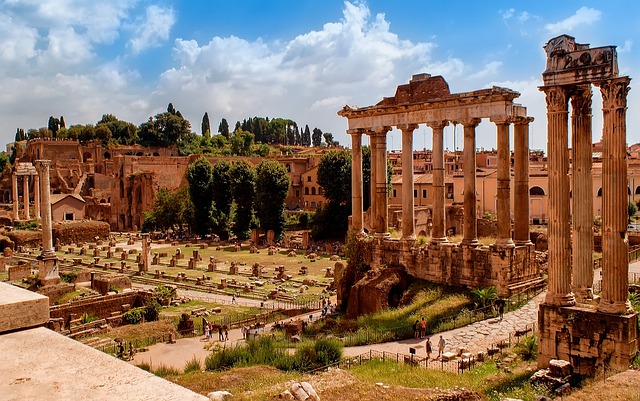
The impact of this book on generations of believers is astounding. Here are a few examples. The trajectory of Augustine’s life was changed forever by reading the book of Romans. He gained the faith he needed to walk in righteousness. Martin Luther’s life and ministry changed as he began to understand Romans 1:17; “For in it God’s righteousness is revealed from faith to faith, just as it is written: The righteous will live by faith.” Luther’s understanding of grace changed the course of his life and the church. In fact, it was Luther’s commentary on Romans that had a great effect on a then young failed minister by the name John Wesley. Wesley said, “While he (Luther) was describing the change which God works in the heart through faith in Christ, I felt my heart strangely warmed. I felt I did trust in Christ alone, for my salvation, and an assurance was given me that he had taken my sins away, even mine.” That life changing influence has also come from the aforementioned Roman Road. Five steps to salvation that have seen many people come to faith in Christ. Step 1, everyone is a sinner, (Romans 3:9-12; 23). Step 2, There is a consequence for our sins – that is death, but God gives us the free gift of grace instead, (Romans 6:23) Step 3, that gift of grace comes by way Jesus Christ death on the cross for our sins, (Romans 5:8). Step 4, if you place your faith in Christ, you will receive this amazing free gift of grace, (Romans 10:9-10; 13) Step 5, salvation, through Christ, brings us into a relationship with God and all condemnation we deserve has been made right because of Christ. (Romans 5:1, 8:1; 38-39)
And so, we begin our journey through Romans. It is a book that takes us down the well constructed Roman Road to grace and righteousness. As with all journeys, there will be difficulties, but God’s great grace will be triumphant. As Paul says once again: “For I am not ashamed of the gospel, because it is God’s power for salvation to everyone who believes, first to the Jew, and also to the Greek. For in it God’s righteousness is revealed from faith to faith, just as it is written: The righteous will live by faith.” Romans 1:16-17
 Bible Study Blog