Morality vs. the Moralist
In this second chapter, Paul is dealing with the Moralist, or “Pharisaical” members at the church in Rome. These were men and women who felt they were taking the moral highroad, thus, they could pass judgment on others. This is a letter that could be written in these days as well. Today, the Moralist has a standard they adhere to, with an expectation that others should follow this same standard. When it’s not, the Moralist will climb on their high horse, or twitter, and rant about the sub-standard beliefs of those around them. They don’t see themselves as “in the wrong”, but feel others should feel fortunate they are there to point everyone in the “right” direction. And, perhaps it is in the right direction. Before we get puffed up with our own morality though, let’s consider 1 Corinthians 13:1; “If I speak human or angelic languages but do not have love, I am a sounding gong or a clanging cymbal.” Love is the key to all moral judgment, for without it, we are just an out of tune percussion group driving everyone away. Or, for you fellow elementary music teachers out there – here’s another example: a group of first time recorder players, all squeaking and squawking on dissonant notes.

VS. 1-10 Therefore, any one of you who judges is without excuse. For when you judge another, you condemn yourself, since you, the judge, do the same things. We know that God’s judgment on those who do such things is based on the truth. Do you really think—anyone of you who judges those who do such things yet do the same—that you will escape God’s judgment? Or do you despise the riches of His kindness, restraint, and patience, not recognizing that God’s kindness is intended to lead you to repentance? But because of your hardness and unrepentant heart you are storing up wrath for yourself in the day of wrath, when God’s righteous judgment is revealed. He will repay each one according to his works: eternal life to those who by persistence in doing good seek glory, honor, and immortality; but wrath and indignation to those who are self-seeking and disobey the truth but are obeying unrighteousness; affliction and distress for every human being who does evil, first to the Jew, and also to the Greek; but glory, honor, and peace for everyone who does what is good, first to the Jew, and also to the Greek.
Paul takes a lesson from Jesus, and applies it here. “Do not judge, so that you won’t be judged. For with the judgment you use, you will be judged, and with the measure you use, it will be measured to you. Why do you look at the speck in your brother’s eye but don’t notice the log in your own eye. Or how can you say to your brother, ‘Let me take the speck out of your eye,’ and look, there’s a log in your eye? Hypocrite! First take the log out of your eye, and then you will see clearly to take the speck out of your brother’s eye,” Matthew 7:1-5 Paul was not getting on the church at Rome for their judgment, but on the fact they committed the same sin they were judging. I hear a lot of believers and non-believers say we shouldn’t judge one another. In one sense, that is correct if it is judgment that comes to a per-determined verdict. This is judgment without compassion and mercy, which is wrong. As I read this passage, I believe the key is this: Do you really think anyone of you who judges those who do such things yet do the same, that you will escape God’s judgment? Or do you despise the riches of His kindness, restraint, and patience, not recognizing that God’s kindness is intended to lead you to repentance? In the prayer Jesus taught His disciples, He says, “Forgive us our trespasses as we forgive those who trespass against us.” I’ve often asked the question, “Do we really want God to forgive us like we forgive others?” I think most of us would probably answer no – I know that’s my answer. Still, we rage at God because of people who are committing outrageous sin without any seeming consequence, not realizing His desire is that none should perish. As His children, we should want the same thing. That is not to say we shouldn’t speak out against blatant sin. We absolutely should. It is our motivation that is in question. Do we judge because we love them, or because it makes us look and feel better than “those people”? If we are like the Moralist, than we are “storing up wrath for ourselves in the day of wrath, when God’s righteous judgment is revealed.”
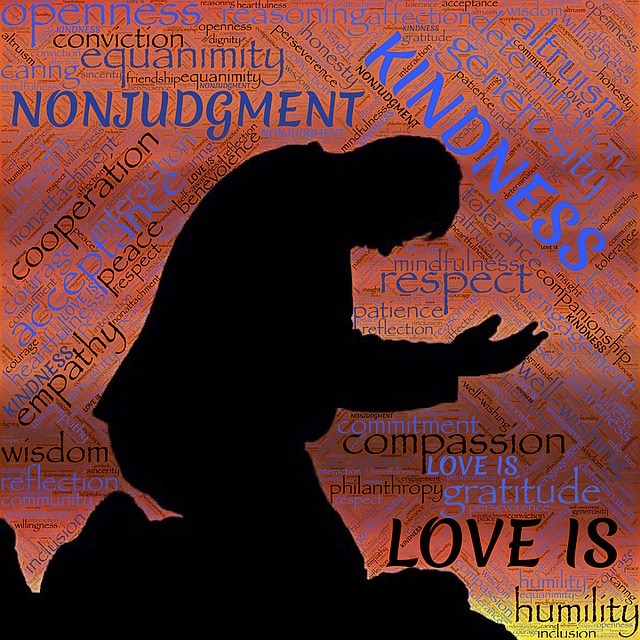
Bottom line, our judgment of others must be like God’s judgment of us. It is righteous, just, rich in kindness, restraint (thank goodness!) and patience with the ultimate desire of leading to our repentance. It is God’s desire that we have a relationship with Him. So, He showed us His great mercy through Christ’s death on the cross. As our relationship with Him grows, He wants us to emulate those same qualities. The driving force behind any judgment we might have is the desire to encourage a relationship with God. We hold others accountable because we truly love them and want what is best for them. There is no twitter rage or Facebook shaming, only kindness, restraint, patience and mercy with a desire for repentance that leads to a deeper relationship with God.
VS 11-16 There is no favoritism with God. All those who sinned without the law will also perish without the law, and all those who sinned under the law will be judged by the law. For the hearers of the law are not righteous before God, but the doers of the law will be declared righteous. So, when Gentiles, who do not have the law, instinctively do what the law demands, they are a law to themselves even though they do not have the law. They show that the work of the law is written on their hearts. Their consciences confirm this. Their competing thoughts will either accuse or excuse them on the day when God judges what people have kept secret, according to my gospel through Christ Jesus.
God does not play favorites. The Greek word for favoritism is prosópolémpsia. It is actually two words put together: receive and face, and means to judge someone on the face of things or on preconceived notions. Jesus was judged this way: Can anything good come out of Nazareth? It is how we prejudge people by they way the look, what they wear, the color of their skin, where they come from… God does not prosoploempsia. He judges us by what is in our hearts. Whether or not you follow a “law” you will be judged by His standard. Remember in Romans chapter 1? Paul tells us there is no excuses. Just as we know there is a God, we also have a sense of what is right and wrong. That is why those who sin without the law will perish without the law. It is not the law that condemns us – it is sin that has condemned us. The law is the standard that shows us what sin looks like, shows us our need for repentance and redemption, and points out the only way we can be redeemed, which is by God’s mercy. Remember the words of Jesus in John 3:17: For God did not send His Son into the world that He might condemn the world, but that the world might be saved through Him. The world has already been condemned by sin. Jesus came so we might have life. This is why Paul says the hearers of the law are not righteous, it is the doers of the law. In other words, just to have the law isn’t enough, it can’t save you. The law is there to point us to ultimate redemption through Jesus. Paul continues this argument:
VS 17-24 Now if you call yourself a Jew, and rest in the law, boast in God, know His will, and approve the things that are superior, being instructed from the law, and if you are convinced that you are a guide for the blind, a light to those in darkness, an instructor of the ignorant, a teacher of the immature, having the full expression of knowledge and truth in the law— you then, who teach another, don’t you teach yourself? You who preach, “You must not steal”—do you steal? You who say, “You must not commit adultery”—do you commit adultery? You who detest idols, do you rob their temples? You who boast in the law, do you dishonor God by breaking the law? For, as it is written: The name of God is blasphemed among the Gentiles because of you.

Just having the law does not guarantee redemption. The law is vital to understanding the holiness of God, and to pointing out we are sinners in need of redemption. It is therefore, a gift from God to us so we can recognize our need for Him. The law points us toward God’s wonderful gift of mercy – Jesus, who was sent as the atonement for our sin. It does us no good to say, “I have the law and so I’m okay.” If we stand only on the law, then we have condemned ourselves by it. There is only One who is worthy. Only One who is sinless and perfect. Only One, and His name is Jesus. We can be a Moralistic as we want to be, but we will never come up to the standard of God’s holy and perfect law. We have, and will dishonor God by breaking the law. In the case of the Jews in Paul’s day, they felt because they had the law, they were justified by it. But Paul points out that God judges us by the standard of the law and how it is applied. It’s one thing to stand on the side of justice, but another altogether to be just. They preached “do not steal” yet they were robbing people at the temple. Jesus went through the temple and turned over the money changing tables because of this. We see this today when priests or preachers or elders in our churches say one thing, when all the while they are committing overt sins in secret. The non-believing world is watching us. Unfortunately, there are many believers who have blasphemed God by their actions and caused those non-believers to stumble and turn away from God.
VS 25-29 For circumcision benefits you if you observe the law, but if you are a lawbreaker, your circumcision has become uncircumcision. Therefore if an uncircumcised man keeps the law’s requirements, will his uncircumcision not be counted as circumcision? A man who is physically uncircumcised, but who fulfills the law, will judge you who are a lawbreaker in spite of having the letter of the law and circumcision. For a person is not a Jew who is one outwardly, and true circumcision is not something visible in the flesh. On the contrary, a person is a Jew who is one inwardly, and circumcision is of the heart—by the Spirit, not the letter. That man’s praise is not from men but from God.
Many Jews believed circumcision would guarantee their salvation. It is not unlike those that believe baptism or confirmation or even our Christian traditions guarantees salvation. Salvation is not by what we have done, or, in the case of circumcision and some baptisms, what has been done to us. Paul says, if you want to rely on circumcision for your salvation, then you also have to keep the law perfectly. If you break the law in any way, then it is as if you had never been circumcised. In fact, the uncircumcised one who keeps the law will judges the lawbreaker. It is not about the outward visible sign of circumcision that saves us, but what is inside. Your heart must be what is circumcised by the Holy Spirit. The water of baptism cannot save you. You must be baptized by the Holy Spirit. The traditions of the church are not able to save us. Only God can save us from our sins.

In this world of Moralist, let’s be a church who, instead, walks the path of mercy, patience and love. Yes, there is a time to judge sin and speak up against what is morally wrong. There is a time to stand firm in the way of truth. But, in doing so, we must keep in mind the whole of 1 Corinthians 13 and Romans 2:4. When we judge, we must do so because we truly love others and desire them to come to repentance. The law is there to point us to our need of God, not be used to beat someone over the head with. Our traditions are just that – just traditions. They have no ability to save us, but must always point to Christ who is our salvation. We cannot use them to exclude or put others down. So many non-believers have been lost to the church because of this. Let us seek to be truly moral instead of being a Moralist. Let us set aside judgment that seeks to ostracize and suppress others. Instead, let us speak truth in love so others will see Jesus in us and come into a relationship with God.
 Bible Study Blog