The Song of Mary
Last week we found the angel Gabriel in the holy place, announcing the birth of John the Baptist, to a frightened doubting Zechariah. In spite of Zechariah’s doubts, God still performed a miracle and, in their old age, Zechariah and Elizabeth became parents. His disbelief was not without consequence as he was struck mute until Elizabeth would give birth. As a talker, I can’t imagine being unable to speak for over 9 months! In this next passage, we find the angel Gabriel bringing another message – this time to a young woman in a back water town in Galilee.
Vs 26-30 In the sixth month, the angel Gabriel was sent by God to a town in Galilee called Nazareth, to a virgin engaged to a man named Joseph, of the house of David. The virgin’s name was Mary. And the angel came to her and said, “Rejoice, favored woman! The Lord is with you. But she was deeply troubled by this statement, wondering what kind of greeting this could be. Then the angel told her: Do not be afraid, Mary, for you have found favor with God.

When I say Nazareth was a back water town, I wasn’t kidding. Until the gospel’s came along, Nazareth was not mentioned anywhere in the Old Testament. As it is, it’s only mentioned 15 times in the New Testament (14 times in the gospels and once in Acts). It was in this town where Mary and Joseph lived. In this passage we find out a few things about Mary. First, she and Joseph are engaged. The Greek word for engaged is actually mnésteuó, which means to be betrothed. To understand this completely, you have to understand the three stages to a Jewish wedding. First, there is the engagement. This is when the father’s get together and make a formal agreement. The next stage is betrothal. This is when the couple comes together in a ceremony where several promises are made. These promises are binding and the only way to end a betrothal is through divorce. The third stage happens approximately one year later when the marriage takes place, when the bridegroom comes for his bride. So, Mary and Joseph have entered the betrothal stage. Promises have been made, faithfulness is expected and the only way to end the relationship is through divorce. Second, we find Mary is from the house of David and she is a virgin. Isaiah 7:13-15 gives us the prophecy: “Listen, house of David! Is it not enough for you to try the patience of men? Will you also try the patience of my God? Therefore, the Lord Himself will give you a sign: The virgin will conceive, have a son, and name him Immanuel.” Third, Gabriel greets her as a favored woman. The Greek word for favored is charitoo, which means to endow with grace. The greeting means to be highly-favored because you are receptive to God’s grace. Lastly, we find the Lord is with her. This is a promise to her. Not only is God with her now, He will be with her as she walks this next journey in her life.
This greeting is met with great confusion as Mary is troubled by it and ponders what it all means. Let’s look at this from her viewpoint. Here she is, a young woman in the little insignificant town of Nazareth, betrothed to Joseph when suddenly she is visited by an angel of the Lord – and not just any angel – Gabriel himself has come to give her a life changing message. What could an angel have to say to her? It would all be rather frighting and overwhelming. The angel of the Lord knows this and so he says, “Do not be afraid, Mary, for you have found favor (charis or grace) with God.” And then, the angel says:
Vs 31-33 Now listen: You will conceive and give birth to a son, and you will call His name Jesus. He will be great and will be called the Son of the Most High, and the Lord God will give Him the throne of His father David. He will reign over the house of Jacob forever, and His kingdom will have no end.
Mary just thought she was troubled, overwhelmed and confused before. Now, she is absolutely bewildered. What did the angel just say? I’m going to give birth… to a son… Son of the Most High… throne… reign over the house of Jacob forever… It was all too much. It was too fantastic. It was more than she could take in. Her mind had to be swirling with a hundred thoughts at once: Wait, I’m a virgin.. I’m betrothed to Joseph… If this is true then what is to become of me… What will my parents say… How?…
Vs. 34-38 Mary asked the angel, “How can this be, since I have not been intimate with a man?” The angel replied to her: “The Holy Spirit will come upon you, and the power of the Most High will overshadow you. Therefore, the holy One to be born will be called the Son of God. And consider your relative Elizabeth—even she has conceived a son in her old age, and this is the sixth month for her who was called childless. For nothing will be impossible with God.” “I am the Lord’s slave,” said Mary. “May it be done to me according to your word.” Then the angel left her.

I want to point out how Mary’s questioning is very different than Zechariah’s questioning. Whereas Zechariah doubted the truth of the angel’s words, Mary was astonished and confused. She really couldn’t work out how it would be possible. And so, the angel explains it – “The Holy Spirit will come upon you, and the power of the Most High will overshadow you.” The Holy Spirit would empower and God Most High would envelop her. In other words, it was going to be a miracle. Then the angel asks her to consider the fact that her relative Elizabeth had conceived even in her old age. “For nothing will be impossible with God.” And then an amazing thing happens, showing us the very reason Mary was chosen. In spite of all the fear, trepidation, future trouble and misunderstandings, even the prospect of losing Joseph and being ostracized, she says, “I am the Lord’s slave. May it be done to me according to your word.” She has trusted God completely.
What we may not understand in today’s world, is what Mary had to deal with in her time. Being pregnant and betrothed meant one of only a couple things. Either the couple had entered into a relationship before the wedding, or she had been unfaithful. Anything else was unfathomable. Joseph not only had the right to divorce her, but shame her publicly. She faced possible ostracization and ridicule from friends and family. With all of this facing her, she still chose to trust in God. She was truly favored by God for a good reason. We don’t have all the details, but we do know from Matthew 1:18-21 that Joseph’s uncertainty was taken care of. “The birth of Jesus Christ came about this way: After His mother Mary had been engaged to Joseph, it was discovered before they came together that she was pregnant by the Holy Spirit. So her husband secretly. Joseph, being a righteous man, and not wanting to disgrace her publicly, decided to divorce her But after he had considered these things, an angel of the Lord suddenly appeared to him in a dream, saying, “Joseph, son of David, don’t be afraid to take Mary as your wife, because what has been conceived in her is by the Holy Spirit. She will give birth to a son, and you are to name Him Jesus, because He will save His people from their sins.” Mary stepped out in faith, and God was with her every step of the way.
Vs 39-45 In those days Mary set out and hurried to a town in the hill country of Judah where she entered Zechariah’s house and greeted Elizabeth. When Elizabeth heard Mary’s greeting, the baby leaped inside her, and Elizabeth was filled with the Holy Spirit. Then she exclaimed with a loud cry: “You are the most blessed of women, and your child will be blessed! How could this happen to me, that the mother of my Lord should come to me? For you see, when the sound of your greeting reached my ears, the baby leaped for joy inside me! She who has believed is blessed because what was spoken to her by the Lord will be fulfilled!”
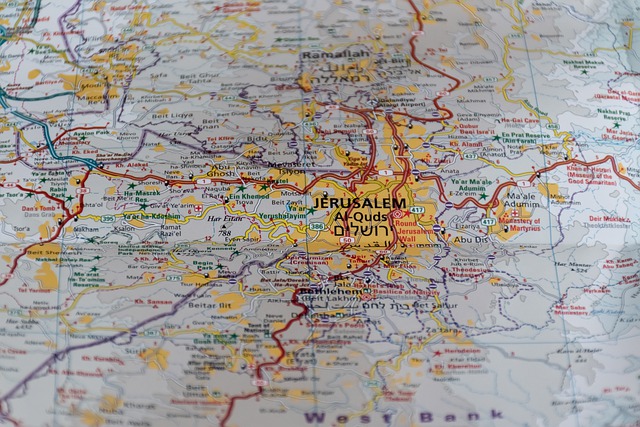
In this next passage, we find out what happened to Zechariah and Elizabeth. After this major life changing announcement, Mary leaves Nazareth and travels to their home, which was most likely in Hebron (a town given to the descendants of Aaron). Hebron is about 20 miles south of Jerusalem and would take the average person about 39 hours to walk there from Nazareth. (Interestingly, one would go through Bethlehem to get there.) When Mary arrives, she is greeted by Elizabeth. By this time, we find Elizabeth is 6 months pregnant. The Scripture says, when Mary greeted Elizabeth, her baby leapt in her womb. Without being told, Elizabeth knew everything. Mary was also pregnant and her baby was to be the Messiah. How did she know this? If it had only been her baby leaping, it would have been passed off as normal, but the Holy Spirit revealed this to her. Once again, God was taking care of Mary. What could have been an awkward situation became a time of joy and blessing. Mary was entering the home of a priest. They could have, rightfully according to the law, turned her away. But God continues to bestow grace on Mary by revealing the truth to Elizabeth. Elizabeth’s joy overflows to Mary and she, like Miriam, her namesake of old, sings before the Lord.
Vs 46-56 And Mary said: My soul proclaims the greatness of the Lord, and my spirit has rejoiced in God my Savior, because He has looked with favor on the humble condition of His slave. Surely, from now on all generations will call me blessed, because the Mighty One has done great things for me, and His name is holy. His mercy is from generation to generation on those who fear Him. He has done a mighty deed with His arm; He has scattered the proud because of the thoughts of their hearts; He has toppled the mighty from their thrones and exalted the lowly. He has satisfied the hungry with good things and sent the rich away empty. He has helped His servant Israel, mindful of His mercy, just as He spoke to our ancestors, to Abraham and his descendants forever. And Mary stayed with her about three months; then she returned to her home.

Several years ago, I had the privilege of singing Bach’s Magnificat with a choir as the soprano soloist. The work encompasses this passage of scripture and beautifully paints the picture of the joy, passion, expectation and exaltation of Mary, as only Bach can do. What I love about the Magnificat is how Bach breaks down each statement giving this passage the power of both song and prophetic word.
My soul proclaims the greatness of the Lord, and my spirit has rejoiced in God my Savior – The word for proclaims the greatness is megalunó, which is where we get our word to magnify. Mary’s soul, or pysche in Greek, magnifies the Lord. The word pysche means the vital breath of life, her very self. It is the seat of all emotions, affections and will. At the same time, her spirit, her very breath, praises and magnifies the Lord.
He has looked with favor on the humble condition of His slave. Surely, from now on all generations will call me blessed, because the Mighty One has done great things for me, and His name is holy. –
When the angel came to Mary, she was troubled. How could God favor a seemingly insignificant girl from an unknown town? She knows where she has come from – no where, and is amazed at how God continues to show her His amazing grace. Because of this, she realizes all generations will call her blessed by God. Not because of anything she has done, but because He has done great things. He is holy. He is the Mighty One. All glory and honor goes to Him. And in the next few phrases, she points only to God.

His mercy is from generation to generation on those who fear Him. Those who phobeó Him. From this word, we get our word phobia – or the fear of something. It can also mean to have absolute reverence for. God will have mercy on those who give him the reverence He is due. He has done a mighty deed with His arm; This phrase recalls us to the following passage: “Your ways, God, are holy. What god is as great as our God? You are the God who performs miracles; you display your power among the peoples. With your mighty arm you redeemed your people, the descendants of Jacob and Joseph,” Psalm 77:13-15. He has scattered the proud because of the thoughts of their hearts; He has toppled the mighty from their thrones and exalted the lowly. God, in His infinite mercy, raises up those who are humble and fear Him, while scattering those who do not have reverence for Him. This is both a praise and a prophecy. We will find it is the lowly shepherds who first come to the manger. Later wise men from the east would come and bow before the child. All the while, Herod, the current king of Judah, would be toppled and humbled. He has satisfied the hungry with good things and sent the rich away empty. This phrase recalls for us the plight of the rich young man who could not contemplate leaving behind his earthly treasure for heavenly ones. (Matthew 19:16-30) It also brings to mind the feeding of the 5000, as people were fed both spiritually, through the teachings of Jesus, and physically, through the miracle of the 5 loaves and 2 fish, (Matthew 14:13-21). He has helped His servant Israel, mindful of His mercy, just as He spoke to our ancestors, to Abraham and his descendants forever. Finally, Mary addresses the hope Israel has had for the coming of the Messiah. Since it was promised so long ago, they longed for the Messiah. They have looked for Him at every turn. Finally he has come. Finally, the promise of God has been fulfilled.
Through a humble girl from a nowhere place came the Prince of Peace, King of kings and Lord of lords. God works through all who come before Him in humility. He can use the simplest of His servants, when they are willing. Yesterday, it was youth Sunday at my church and, it just so happened that this Sunday came right after the youth returned from their mission trip. They had just experienced what it was like to really serve. They went to different homes and built ramps, decks, did lawn care, cleaned, did home repairs – all for those who couldn’t do these things for themselves. They became servants. The sermon title yesterday was “Lights On?” To sum it up – it’s great to have the lights on in the church, but, if we just keep the light in the church and never go out to be the light of Christ in the world, it’s basically a wasted light. It’s so easy to become this elite little club inside the church, forgetting the call of Christ to be light in the world. Instead, let us be those humble servants, highly favored (graced) by God, simply willing, like Mary, to say “I am the Lord’s slave. May it be done to me according to your word.”
 Bible Study Blog