Emmanuel Has Come
Today, we come to the most read Christmas Scripture passage of all. In fact, most of us probably have the opening, and much of the rest of the passage, memorized. These words have been dramatized in plays and written about in song after song. It’s easy to become over familiar, so today, as we walk again through these words, let’s look deeper into each section and find out what God would have us focus on.
Vs 1-3 In those days a decree went out from Caesar Augustus that the whole empire should be registered. This first registration took place while Quirinius was governing Syria. So everyone went to be registered, each to his own town.
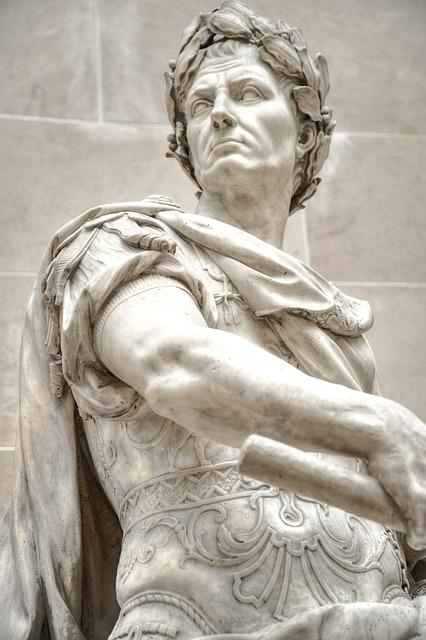
Luke, being the detailed writer he was, has narrowed down the date for the birth of Jesus for us. He draws our attention to some very specific events and people. Who are these people? First there is Caesar Augustus. We know that Augustus was formerly Octavian. He took on the title as Caesar Augustus after he defeated Antony and Cleopatra at the battle of Actium in 31 BC, thus becoming the sole ruler of Rome. He reigned until 14 AD. At some point he ordered a census to be taken – but when? To further establish a date, Luke mentions that Quirinius was governing Syria during this census. We know from historical documents that Quirinius called for this census in Judea in 6 AD. By this, we also know which Herod we are dealing with (he is not mentioned here, but is mentioned in Matthew.) This Herod would be Herod Antipas who came into power after the death of Herod the Great in 4 BC. He ruled until 39 AD. So, 6 months after the birth of John the Baptizer, around 6 AD, the Messiah, Emmanuel, is born.

Vs 4-7 And Joseph also went up from the town of Nazareth in Galilee, to Judea, to the city of David, which is called Bethlehem, because he was of the house and family line of David, to be registered along with Mary, who was engaged to him and was pregnant. While they were there, the time came for her to give birth. Then she gave birth to her firstborn Son, and she wrapped Him snugly in cloth and laid Him in a feeding trough—because there was no room for them at the lodging place.
So, at some point after this decree goes out, Joseph and Mary began their trek from Nazareth to Bethlehem. Why Bethlehem? Since they had to go to their own town, and because they were both of the house of David, they had to travel to Bethlehem. It is approximately 90 miles from Nazareth to Bethlehem. Today, this trip would take about 31 hours on foot, but, the trip would have taken them much longer back in the day. We have to take into account a few things. First, Mary is pregnant. This would most certainly slow things down just a bit! Second, the roads were not as nice as they are now. All in all, this journey would have probably stretched out to be over a week. However long it was, we know it would have been time consuming and a costly endeavor. We don’t really know how far along Mary was when they began this journey. It could have been soon after she returned from her time with Elizabeth and Zechariah, making her about 4 months pregnant, or they could have traveled when she was almost due. What we do know – when they finally got to Bethlehem, there wasn’t any lodging places available, so, Mary gives birth in a borrowed place and uses a feeding trough as a cradle. Here they are in Bethlehem. all alone without the support of family or friends. No fanfare, no congrats, no excitement. I find the understated birth to be poignant when you fully realize just who it is who has been born. This is the King of kings, Lord of lords and Prince of Peace. His birth, just like his death, would be in a borrowed place.
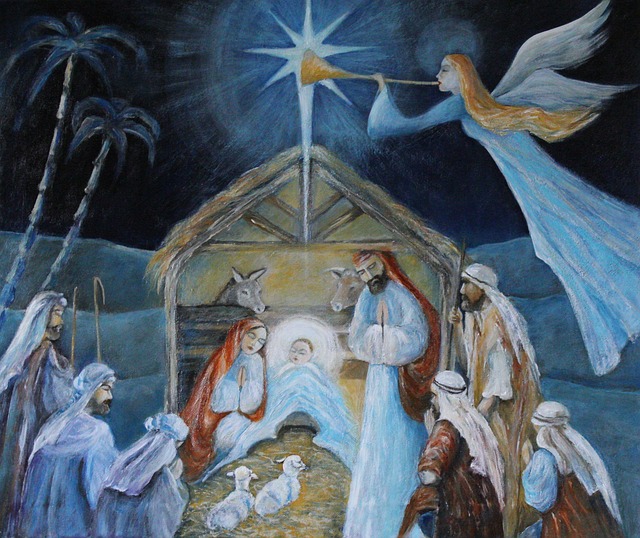
Vs 8- 14 In the same region, shepherds were staying out in the fields and keeping watch at night over their flock. Then an angel of the Lord stood before them, and the glory of the Lord shone around them, and they were terrified. But the angel said to them, “Don’t be afraid, for look, I proclaim to you good news of great joy that will be for all the people: Today a Savior, who is Messiah the Lord, was born for you in the city of David. This will be the sign for you: You will find a baby wrapped snugly in cloth and lying in a feeding trough.” Suddenly there was a multitude of the heavenly host with the angel, praising God and saying: Glory to God in the highest heaven, and peace on earth to people He favors!
As we start this section, I must clear up a mis-conception. Contrary to popular belief, shepherds were not despised outcasts. There are several clues in this passage that dispute this popular belief. In fact, throughout all of Scripture, we encounter many shepherds. Abraham, Isacc, Jacob, Moses, David, and Amos, just to name a few. None of these men would have been considered despised or outcast. They are all well respected patriarchs of the Jewish nation. Later, Jesus refers to himself as the Good Shepherd. It would not make sense if shepherds were indeed outcasts. But back to the passage at hand. I find it is fitting that the One who will reign on the the throne of David (a shepherd who wrote the 23rd Psalm) would be visited first by shepherds. Since they are out in the fields watching at night, it is most likely they are watching the lambs used for temple sacrifices. I find this fitting as well. Here are these shepherds, watching over lambs for sacrifice, about to come face to face with the Lamb of God. Pretty awesome when you think about it!
Before that though, they are going to come face to face with a sight that terrifies them. They are sitting by the fireside on an ordinary night when an angel appears and stands before them. Just like Zechariah and Mary before them, the angel tells them not to be afraid. It is good news! The long awaited Messiah has been born. The Savior of the world has come. And, just like it was prophesied in Micah, He has been born in Bethlehem – the city of David. Then the angel gives them a sign. The Greek word here for sign is sēmeíon, which means a specific sign given to authenticate something miraculous that has happened. This is so they will know the truth of what the angel has said. And to punctuate this event, suddenly the sky fills with a multitude of the heavenly host, or an army of angels. They have one mission – one goal – to praise God and give Him glory. This must have been an overwhelming, awe inspiring, profound event in the lives of these shepherds. So much so, there was an instant response.

Vs 15-20 When the angels had left them and returned to heaven, the shepherds said to one another, “Let’s go straight to Bethlehem and see what has happened, which the Lord has made known to us.” They hurried off and found both Mary and Joseph, and the baby who was lying in the feeding trough. After seeing them, they reported the message they were told about this child, and all who heard it were amazed at what the shepherds said to them. But Mary was treasuring up all these things in her heart and meditating on them. The shepherds returned, glorifying and praising God for all they had seen and heard, just as they had been told.
They got up and went straight to Bethlehem. No hesitation. No pondering. Just, let’s go right now. The Greek word used for hurried here is speudó. It is the same word Luke uses later for Zaccheus when he comes down from the tree to be with Jesus. God had given them an amazing message and they respond without delay. They make their way to Bethlehem, find Mary, Joseph and the baby, go out praising God telling everyone they came into contact with about what has happened. The response of everyone is, by the way, another indication that shepherds were not despised outcasts. The people were amazed at the message. If they were despised outcast, the people would never have even come near these men to hear the message. Even if they had heard it, the message would have been dismissed because they were outcast. And what is Mary doing? While the shepherds and those hearing this message are praising, Mary is treasuring them, or keeping these things safely, in her heart. She ponders and meditates on the message God has given her. She sits in the presence of the Savior of the world and is amazed by the wonder of it all.
And so, what is our response to this amazing message? The Savior of the world has come. Emmanuel is here! Do we, like Mary, ponder and meditate on this amazing message? Do we, like the shepherds and Zaccheus, hurry to be with Jesus? Do we run and tell everyone we meet about the wonderful news Christ has given us? We have the opportunity on a daily basis to come and be in the presence of Christ. We can mediate on His Word and ponder it’s meaning. We can speudó – hurry each day to be with Him. This is what I want to do! I want to anticipate the amazing message I will receive each day. I want to treasure all these things in my heart – so my life will be a blessing to others and the message of Christ will go out to all those around me.
 Bible Study Blog