The Redeemer Through the Redeemed
Both Matthew and Luke give us a genealogy of Christ. You will notice that they differ from David to Jesus. The other difference, Luke takes his line all the way to Adam who is the son of God. There are several explanations for the differences in the two genealogies. The one that makes the most sense to me is that one is the line of Mary and the other is the line of Joseph. In all probability, Matthew gives us the line of Joseph, which would have been his legal line, while Luke gives us the line of Mary, his actual linage. Notice he says “thought to be the son of Joseph”. The remarkable thing is, both Mary and Joseph are descended from David.
Some may think it extraordinary that the linage of Jesus could be traced that far back. In my research, I found it wasn’t so extraordinary at all. In fact, careful records were kept and people could trace their line of descent through public records. Josephus tells us in his autobiography that he did that very thing, tracing his genealogy through the public records. As Mary was still alive while Luke was writing his book, he would have had easy access to the records. And so, here is the line of Christ from the book of Luke:

As He began His ministry, Jesus was about 30 years old and was thought to be the son of Joseph, son of Heli, son of Matthat, son of Levi, son of Melchi, son of Jannai, son of Joseph, son of Mattathias, son of Amos, son of Nahum, son of Esli, son of Naggai, son of Maath, son of Mattathias, son of Semein, son of Josech, son of Joda, son of Joanan, son of Rhesa, son of Zerubbabel, son of Shealtiel, son of Neri, son of Melchi, son of Addi, son of Cosam, son of Elmadam, son of Er, son of Joshua, son of Eliezer, son of Jorim, son of Matthat, son of Levi, son of Simeon, son of Judah, son of Joseph, son of Jonam, son of Eliakim, son of Melea, son of Menna, son of Mattatha, son of Nathan, son of David, son of Jesse, son of Obed, son of Boaz, son of Salmon, son of Nahshon, son of Amminadab, son of Ram, son of Hezron, son of Perez, son of Judah, son of Jacob, son of Isaac,son of Abraham, son of Terah, son of Nahor, son of Serug, son of Reu, son of Peleg, son of Eber, son of Shelah, son of Cainan, son of Arphaxad, son of Shem, son of Noah, son of Lamech, son of Methuselah, son of Enoch, son of Jared, son of Mahalaleel, son of Cainan, son of Enos, son of Seth, son of Adam, son of God.
Lots and lots of names, and most of them seem unpronounceable. I, for one, would not want to be assigned to read this passage for a Sunday morning service! Most commentaries glaze over these names and move on quickly to “better stuff”. I use to be that way, except I would just skip over it altogether. That was until I decided to read through the Bible in a year. I started, like most people, with Genesis and moved quickly through Exodus and even Leviticus. (Yes, that book does fascinate me!) Then I got to Numbers. Even though there are a few interesting stories in the book, most of Numbers is made up of names, names and more names. Names of clans and tribes and priests. Names of who does what in the tabernacle. Names of leaders of tribes. Names of everyone that had anything to do with Israel at that time. Even in some of the interesting stories there are names accompanied by son of … son of… What was the point of it all? That was my question as I struggled through the book. Then it hit me. To God, names matter. These weren’t just a bunch of hard to pronounce names, they were names that represented people God cared about. They were name of people God wanted to redeem.
So, as I read through the names in Luke, I realized each of these people represent someone who played a part in the coming of the Messiah. Through these individuals came the Redeemer of the world. So, who were they and what were they like? Most of the names in this particular genealogy are a bit unfamiliar. We have a lot more information about most of the people in Matthew’s genealogy. But, these are the names of the Messiah’s linage, and so, they are important. So, for this study, I have picked out a few names to show us how God has always been, and will always be, the Great Redeemer. His mercy is everlasting and His grace is unfathomable and He knows our name.
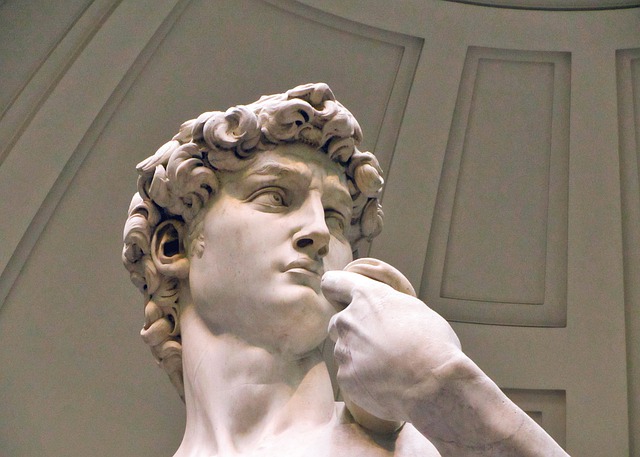
I want to start with Nathan, David’s son. There isn’t much we know about him except he was the son David and Bathsheba, the brother of Solomon and he had a son by the name of Mattatha. So, why would I start here with so little information? Because the information we do have about him shows us God’s great mercy and redemption. Nathan was also the son of Bathsheba and David. David’s great sins committed with, and because of, Bathsheba are legendary. Adultery, lust, murder, theft, covetness… just to name the more obvious ones. That the line of Jesus would come from here shows us the remarkable grace of God. God’s forgiveness of David, then allowing the line of Jesus to come from this particular spouse of David, gives us the perfect picture of what redemption looks like. Redemption is all in – 100%. God’s forgiveness is absolutely complete. Another aspect of coming from Nathan rather than the “kingly” line of Solomon shows us God doesn’t always use the “firstborn” route. That is the route we choose. It’s the route of succession in most kingdoms, and most families. But God’s ways are not our ways and we will see this take place over and over in Jesus’ lineage. Especially as we look at our next person – Jacob.

One of the ways the line of Israel is traced is through the specific line of Abraham, Isaac and Jacob. This line differentiates itself from the other people groups that came from Abraham through his other sons, and the people groups that came through Esau. These three names are combined together throughout the Bible to designate the people who would later be called the Jews. The amazing thing about this grouping is that neither Isaac nor Jacob are firstborn sons. They are not the sons who normally got the birthright of the father, yet they do. I would like to concentrate on Jacob, because his birthright did not come in a manner, shall we say, along the high road. On the contrary, it came through deceit. Jacob, later to be named Israel, bought Esau’s with a bowl of stew and then later swindled him out of his father Isaac’s blessing by taking advantage of a blind old man. This doesn’t bode well for the line of the future Messiah. Yet God, again in His great mercy, redeems Jacob and calls him Israel. He becomes the father of the 12 tribes and is one of the big three in the line of the promise. Perfect? Not even a little. Redeemed? 100%.

The next person we must look at is Judah – also not a firstborn son. He wasn’t even a 2nd or a 3rd born. No, Judah was the 4th son of Jacob. He wasn’t even a son of Jacob’s favorite wife, but of Leah. His birthright would have been very little indeed. As we read abut the life of Judah we find several things. First, he is the one who suggest they sell Joseph to the slave traders. Then Judah said to his brothers, “What do we gain if we kill our brother and cover up his blood? Come, let’s sell him to the Ishmaelites and not lay a hand on him, for he is our brother, our own flesh,” and they agreed,” Genesis 37:26-27. Yes, it was a step up from murder, but it certainly wasn’t because he cared about his brother. Second, He married the daughter of Shua, a Canaanite, and had three sons by her. Third, he then gets his firstborn son Er a wife by the name of Tamar. This is where things get interesting and I will give you the condensed version. Er, did evil in the sight of the Lord and dies without an heir. In this culture, what is suppose to happen next is the next brother in line takes Tamar as his wife and the next son she bears becomes the heir of Er. It is the kinsman redeemer law. The best known kinsman redeemer is later in this line – a man by the name of Boaz. So, Er’s brother Onan was to take this responsibility, but he refused to basically have real relations with her. He then dies, leaving the responsibility to the third son. Judah, who is now kind of afraid to lose all his sons because of Tamar, makes excuses for why he she should “wait” to marry his third, and now only, son. He never really intends on going through with this third marriage, which is finally noticed by Tamar. As you can imagine, this does not sit well with her, so, through a series of events, she pretends to be a prostitute and Jacob sleeps with her. During this encounter, Tamar has acquired his signet ring, a cord and his staff as “payment” and, she gets pregnant. (Yes, this could be a script for a good soap opera!) She then returns to her home and puts her widow clothes back on. It’s reported to Judah that she is pregnant and he has the audacity (yes these are my own thoughts here) to get angry about it wanting to burn her to death. Then comes the big reveal. She says, yes, I’m pregnant by the man who gave me these – producing the signet ring, cord and staff. Talk about eating crow! Judah says, “She is more in the right than I, since I did not give her to my son Shelah,” Genesis 38:26. She then has twins, one being Perez from whom the line of Jesus comes. This is what God’s amazing redemption is all about. Only He can make something good out of all that mess!
The last example I will give from this genealogy is all the men from Mattatha, to Heli. There are a total of 39 names here, and we don’t know anything about any of them. That’s the remarkable thing. They are all ordinary people, showing us that God uses ordinary people to do extraordinary things. We see it throughout this narrative. He chooses an ordinary woman to bear the King of kings. He sends ordinary shepherds to be the first visitors to the Lamb of God. He allows ordinary people like Anna and Simeon to be the first to bring a prophetic word about the Wonderful Counselor. Later, Jesus would chose 12 ordinary guys to follow Him for three years, training them for an incredible mission to spread the gospel across the world. And the most amazing thing of it all? He knows each of their names. They are not some nameless crowd, but people God knows intimately. He chose to redeem each of them by making the nameless descendants of David into the line bearing the Messiah. From those redeemed individuals came the Great Redeemer who would redeem us all.
He is the one who knows every single name. In fact, Jesus would say later in Luke 12:6-7, “Aren’t five sparrows sold for two pennies? Yet not one of them is forgotten in God’s sight. Indeed, the hairs of your head are all counted. Don’t be afraid; you are worth more than many sparrows!” The God who has numbered the hair on my head (and I have a lot of hair!), loves me more than I can know. He has given me grace and mercy beyond compare. He is faithful and steadfast. He is the Rock of my Salvation and He knows my name. I will end this with the lyrics of a song by Francesca Battistelli called He Knows My Name. They say it all:
Spent today in a conversation
In the mirror face to face with
Somebody less than perfect
I wouldn’t choose me first if
I was looking for a champion
In fact I’d understand if
You picked everyone before me
But that’s just not my story
True to who You are
You saw my heart
And made
Something out of nothing
I don’t need my name in lights
I’m famous in my Father’s eyes
Make no mistake
He knows my name
I’m not living for applause
I’m already so adored
It’s all His stage
He knows my name
He knows my name
 Bible Study Blog