Jesus Ministry in Galilee – Following the Spirit
Have you ever heard the phrase “no prophet is excepted in his home town?” These are the words Jesus spoke in His hometown of Nazareth. It’s hard for people to get past the young child that grew up in their town. It’s difficult to accept the young man or woman you babysat or taught could now teach you. This is where we find Jesus. He has recently been through a rough 40 days of testing and temptation. and now, He is beginning His ministry time on earth. And so, he begins in Galilee, the region where he grew up, and now, he is in Nazareth ready to enlighten the crowd with all the wisdom of God.

Vs 14-21 Then Jesus returned to Galilee in the power of the Spirit, and news about Him spread throughout the entire vicinity. He was teaching in their synagogues, being acclaimed by everyone. He came to Nazareth, where He had been brought up. As usual, He entered the synagogue on the Sabbath day and stood up to read. The scroll of the prophet Isaiah was given to Him, and unrolling the scroll, He found the place where it was written: The Spirit of the Lord is on Me, because He has anointed Me to preach good news to the poor. He has sent Me to proclaim freedom to the captives and recovery of sight to the blind, to set free the oppressed, to proclaim the year of the Lord’s favor. He then rolled up the scroll, gave it back to the attendant, and sat down. And the eyes of everyone in the synagogue were fixed on Him. He began by saying to them, “Today as you listen, this Scripture has been fulfilled.”
The first thing we notice is that Jesus is once again led by the Spirit. He does nothing without the leading of His Father. We also note that news about Him spreads throughout the entire region as He has been teaching in the synagogues and, as we will see in the next set of verses, doing miracles throughout Galilee. He is led to go home to Nazareth where He goes to the synagogue as was usual. The word here for usual in Greek is etho, which means to be accustomed to or a habit. Jesus made it a custom, a habit, to go to the synagogue. It was natural for Him to be in the house of God. This is where he would meet with the people to teach and read the Word of God. This is what He has been doing all around the Galilee, so the people of Nazareth were very curious as to what he would say and do in His hometown.
When He comes to the synagogue, He went to teach and was given the scroll of Isaiah. He unrolls it to Isaiah 61 and begins to read verse 1-2. “The Spirit of the Lord God is on Me, because the Lord has anointed Me to bring good news to the poor. He has sent Me to heal the brokenhearted, to proclaim liberty to the captives and freedom to the prisoners; to proclaim the year of the Lord’s favor, …” This is a very familiar passage associated with the coming Messiah. The Messiah is the Anointed One who will come to preach good news to the poor – Jesus would later say, blessed are the poor in spirit for the kingdom of heaven is theirs. He has come to heal the brokenhearted – blessed are they that mourn for they will be comforted. He came to proclaim liberty to the captives and freedom to the prisoners – the sin that enslaves us will be broken and we will be set free . He comes to proclaim the year of the Lord’s favor – those who are oppressed will welcome the year of Jubilee and will be oppressed no more. The year of Jubilee is described in Leviticus 25. It is the year of community, cultural, environmental and economic Shabbat. All is at rest and all is restored. I also want to point out here, the word for LORD in the Isaiah passage is Yawah. God will do this. And this is what Jesus says about this scripture – “Today as you listen, this Scripture has been fulfilled.” What a statement! Jesus has just identified Himself with this passage, and this is when a bit of “concern”, questioning and puzzlement begins. I can imagine them looking at one another and saying “did we just hear what we thought we heard?”

Vs 22-30 They were all speaking well of Him and were amazed by the gracious words that came from His mouth, yet they said, “Isn’t this Joseph’s son?” Then He said to them, “No doubt you will quote this proverb to Me: ‘Doctor, heal yourself. So all we’ve heard that took place in Capernaum, do here in Your hometown also.’” He also said, “I assure you: No prophet is accepted in his hometown. But I say to you, there were certainly many widows in Israel in Elijah’s days, when the sky was shut up for three years and six months while a great famine came over all the land. Yet Elijah was not sent to any of them—but to a widow at Zarephath in Sidon. And in the prophet Elisha’s time, there were many in Israel who had serious skin diseases, yet not one of them was healed —only Naaman the Syrian.” When they heard this, everyone in the synagogue was enraged. They got up, drove Him out of town, and brought Him to the edge of the hill that their town was built on, intending to hurl Him over the cliff. But He passed right through the crowd and went on His way.
Up until this moment, they had been speaking well of Him. His words amazed them and He was full of grace. But now, He has equated Himself with this Scripture,. He is saying, He is the Messiah. But how can that be? He’s Joseph the carpenter’s son. He grew up in Nazareth just around the corner. Yes, we’ve heard of all the miracles he has performed, but still, he is just one of us. Jesus’ response to their skepticism is a proverb, “Doctor, heal yourself.” In other words, He knows they are saying, “why would we look at you as the Messiah?” “Where’s the proof?” “You’re a local just like us.” “If you’re who you say you are, then show us by doing the same things you did in Capernaum.” But Jesus doesn’t fall into this trap. He has just resisted 40 days of taking this very shortcut. Instead, He tells them the truth. No prophet is accepted in his hometown. It would have been easy for Jesus to just give in and show them, but, as we know, there isn’t any guarantee they would have believed. Jesus goes on to remind them, it is faith that is essential. And so He gives them a couple of very hard examples. First, Elijah was sent to a widow in Sidon, a Gentile woman, who believed what he said in spite of desperate circumstances. Second, Naaman the Syrian, another Gentile, was healed because he also had faith. These examples acted like a slap in the face. Not only is Jesus telling them they had no faith, He had the audacity to say they were “lower” than the Gentiles. To say this enraged them would be an understatement. Their immediate reaction to what He had just said says it all. They drove him out of the synagogue and out of town and were ready to throw him off a cliff, which was a prerequisite to stoning. So what does Jesus do? He gives them a miracle after all. He simply passes through the crowd and goes on His way. Yet, they still do not believe.
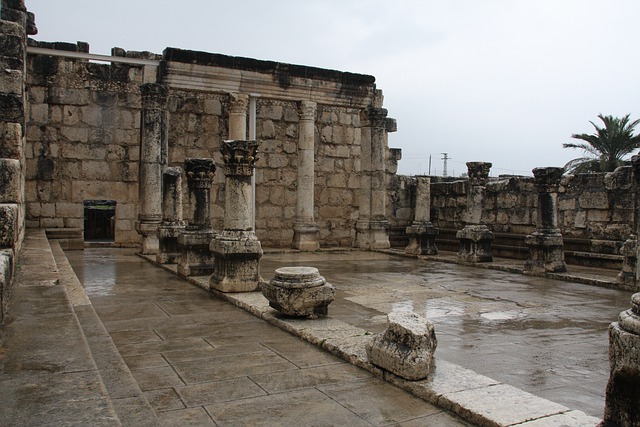
Vs 31-37 Then He went down to Capernaum, a town in Galilee, and was teaching them on the Sabbath. They were astonished at His teaching because His message had authority. In the synagogue there was a man with an unclean demonic spirit who cried out with a loud voice, “Leave us alone! What do You have to do with us, Jesus—Nazarene? Have You come to destroy us? I know who You are—the Holy One of God!” But Jesus rebuked him and said, “Be quiet and come out of him!” And throwing him down before them, the demon came out of him without hurting him at all. Amazement came over them all, and they kept saying to one another, “What is this message? For He commands the unclean spirits with authority and power, and they come out!” And news about Him began to go out to every place in the vicinity.
Jesus then goes to Capernaum and, like he did in Nazareth, goes to the synagogue on the Sabbath and begins to teach. Unlike those in His hometown, these people are astonished and receptive. And a man with an unclean demonic spirit cries out. “Leave us alone! What do You have to do with us, Jesus—Nazarene? Have You come to destroy us? I know who You are—the Holy One of God!” Those in the synagogue may not have recognized Him as the Messiah at that moment, but the demons knew exactly who He was. I actually find this amazing. Last week we discovered Satan knows scripture and knows how to twist it so it says what he wants it to say. This week we find the demons know exactly who Jesus is and they proclaim it. Why? Because they know what Jesus is capable of and they shrink from it in fear. Their fear is realized when Jesus commands them to come out of the man which amazes the crowd even more. And it wasn’t only the miracle itself that amazed. It was the authority and power they had just witnessed. They recognized Jesus’ dominion over evil spirits.
Vs 38-44 After He left the synagogue, He entered Simon’s house. Simon’s mother-in-law was suffering from a high fever, and they asked Him about her. So He stood over her and rebuked the fever, and it left her. She got up immediately and began to serve them. When the sun was setting, all those who had anyone sick with various diseases brought them to Him. As He laid His hands on each one of them, He would heal them. Also, demons were coming out of many, shouting and saying, “You are the Son of God!” But He rebuked them and would not allow them to speak, because they knew He was the Messiah. When it was day, He went out and made His way to a deserted place. But the crowds were searching for Him. They came to Him and tried to keep Him from leaving them. But He said to them, “I must proclaim the good news about the kingdom of God to the other towns also, because I was sent for this purpose.” And He was preaching in the synagogues of Galilee.
The next place Jesus goes it to Simon’s house where his mother-in-law was very ill. We know Simon as Peter, the name Jesus gives him in Matthew 16:17-18. So Peter’s wife’s mom is sick and Jesus comes and heals her. News of what had happened in the synagogue traveled quickly, because people found him there. They brought the sick to be healed throughout the night. In this passage, it’s made clear they waited until the Sabbath was over, so they were freed from travel and other restrictions and could make their way to Jesus freely. Some brought others who were demon possessed as we see those demons also recognized Jesus as the Son of God, the Messiah, sent to free the world from sin. At the end of that very long night, Jesus went away to a deserted place. But even then, the people followed him wanting to keep Him from leaving. What a difference faith makes! In His hometown, they dragged Him out of town and couldn’t get rid of Him fast enough. Here, they wanted to try to make Him stay. But Jesus knew His mission. He knew there were many other places that needed to hear the good news about the kingdom of God. So He chooses to follow God’s Spirit and leaves.
There were others that needed His healing touch. Others that needed to be rescued from sin and self. He knew his mission, and would not compromise it to stay in a place just because He was wanted and welcome. It would have been easy to stay I’m sure. Who doesn’t want to be wanted and well liked? Who wouldn’t want to stay in a place where people had faith and believed? But, Jesus followed the Spirit of God. He went where the Spirit led Him, no matter what the reception might be. He also knew his main ministry was not healing, although He would continue to heal. It was not performing miracles, although He would perform many miracles in the next three years. His main ministry was preaching and teaching the kingdom of God. His main emphasis was to bring the gospel to those in need. His main purpose was to deal with the spiritual sickness, not just physical maladies. This is why Jesus always chose the narrow road and small gate instead of the easy broad road and wide gate. His purpose didn’t always please everyone, but it did please God.

And this is what He asks of us. He wants us to follow the Spirit’s leading as He did. He wants our main purpose to be the same as His main purpose. The great commission says to “Go, therefore, and make disciples of all nations, baptizing them in the name of the Father and of the Son and of the Holy Spirit, teaching them to observe everything I have commanded you. And remember, I am with you always, to the end of the age.” Yes, we are to meet the needs of people around us, just as Jesus did. But we keep the main purpose of spreading the gospel of Jesus Christ in the forefront of our minds. Jesus met the many needs of the people around Him, but it was never in lieu of the gospel, it was in tandem with the gospel. If you’ve ever ridden a tandem bike or did a tandem sky dive, you know what I mean. The gospel is in the front seat, while everything else is guided by it. The tandem bike doesn’t work very well if the person in the back isn’t working with the person in the front. In the same way, a tandem skydive is governed by the instructor not the student. Yes, both are going in the same direction and they are strapped together, but the instructor does most of the work. He is the one that guides the student in the dive. Believe me, it’s safer that way!! Likewise, we are to walk and work in tandem with the Spirit of God. He is in the front. He is the instructor. When we follow Him and allow Him to take the lead, then we find the work of God getting done. No, we will not always be liked in our hometown. The road will not always be comfortable. And sometimes, we may want to stay in a comfortable situation when the Spirit is leading us to go. Like Jesus, we need to always keep in mind the main purpose of God and follow the leading of His Spirit remembering the last part of that Great Commission: “And remember, I am with you always, to the end of the age.”
 Bible Study Blog