Miracles of Faith and Compassion
A miracle is defined as a surprising and welcome event that is not explicable by natural or scientific laws, and, is therefore, considered to be the work of a divine agency. As we look at these two miracles, we will find they are every bit the definition above. There will be surprises, inexplicable happenings, welcoming events, and, it is certainly the work of a divine agency – Jesus Christ. Just before this, Jesus has preached a sermon. At the beginning of that sermon, He tells us who is truly blessed. “You who are poor are blessed, because the kingdom of God is yours. You who are now hungry are blessed, because you will be filled. You who now weep are blessed, because you will laugh,” Luke 6:20-21. We know these to be spiritual attributes – poor in spirit, hunger after righteousness… In these two miracles, we will find people who understand these attributes, and, because of this, they will receive blessings beyond their imagination.
Vs 1-10 When He had concluded all His sayings in the hearing of the people, He entered Capernaum. A centurion’s slave, who was highly valued by him, was sick and about to die. When the centurion heard about Jesus, he sent some Jewish elders to Him, requesting Him to come and save the life of his slave. When they reached Jesus, they pleaded with Him earnestly, saying, “He is worthy for You to grant this, because he loves our nation and has built us a synagogue.” Jesus went with them, and when He was not far from the house, the centurion sent friends to tell Him, “Lord, don’t trouble Yourself, since I am not worthy to have You come under my roof. That is why I didn’t even consider myself worthy to come to You. But say the word, and my servant will be cured. For I too am a man placed under authority, having soldiers under my command. I say to this one, ‘Go!’ and he goes; and to another, ‘Come!’ and he comes; and to my slave, ‘Do this!’ and he does it.” Jesus heard this and was amazed at him, and turning to the crowd following Him, He said, “I tell you, I have not found so great a faith even in Israel!” When those who had been sent returned to the house, they found the slave in good health.

Here we have a miracle involving a centurion. A centurion was a principle professional officer in the Roman military. Commands were separated into legions of about 6000 soldiers. Legions were then divided into 10 cohorts of 600 men each. Cohorts were then divided into 60 centuria with a centurion over each centuria. Thus, a centurion was over 100 soldiers. They were promoted from within the regular soldiers and was the highest rank a soldier could achieve – think lieutenant or captain in today’s military. Most centurions were not well liked by most Jews because they were usually cruel, forced the collection of taxes, and took from their communities. This particular centurion was very different in many ways. First, we see he valued his slave and sought out a way to save him. Second, he had friends within the Jewish elders who vouched for him and plead his case to Jesus. Third, he was described by the elders as one who loved the Jewish nation. And fourth, he valued their faith, evidenced by the fact that he built their synagogue. Yes, this centurion was definitely different from most of his colleagues.

And so, his slave is near death and he hears Jesus is coming to town. Jesus reputation has preceded Him and so the centurion asks the elders to make a request of Jesus to heal his slave. Because the elders request on his behalf, Jesus begins to make His way to the centurion’s house. But, as Jesus is coming his way, the centurion thinks about it and then sends some of his friends to give Jesus a message; “Lord, don’t trouble Yourself, since I am not worthy to have You come under my roof.” Here, we find a man who has an appropriate amount of humility. Let’s paint this picture a bit. The Jewish elders have deemed him worthy, Jesus has deemed him worthy by the very fact he is going to the man’s house, yet, he, a centurion with money and stature, considers himself unworthy to entertain Jesus in his home. He then couples that with a declaration of great faith; “But say the word, and my servant will be cured. For I too am a man placed under authority, having soldiers under my command. I say to this one, ‘Go!’ and he goes; and to another, ‘Come!’ and he comes; and to my slave, ‘Do this!’ and he does it.” And this is what amazes Jesus. In fact, the Greek word is thaumazó, which means to be astonished or awestruck. Jesus is awestruck by the faith of this man. So much so, He says, “I tell you, I have not found so great a faith even in Israel!” This is only one of two times when Jesus is described as amazed in scripture. The other time, by the way, is in Mark 6:6 when Jesus was “amazed at their unbelief.”
So, where does the centurion’s extraordinary faith come from? How can he understand what even the Pharisees and rabbis in Jesus’ day didn’t? He applied his experience in everyday life to the situation. He had heard how Jesus has healed many people throughout the Galilee area. He had probably heard from others about the sermons Jesus preached. He also understood how authority worked and instinctively knew Jesus was a man with the authority. Unlike the religious leaders and teachers around him, he came to Jesus poor in spirit. He came hungering and thirsting for righteousness. Because of this, great blessings were going to come his way. First, his mind was opened to understand the power of God. He did not need to physically see Jesus nor did he need Jesus to physically touch his slave. Second, he understood the power of Jesus’ Word. If his own word was powerful, a man that spoke and taught like Jesus was certainly even more powerful. And third, because of this, he received the blessing of Jesus being amazed at his faith. He saw the kingdom of God on earth. He was filled with the righteousness he hungered after. His mourning was turned into laughter that day.
Vs 11-17 Soon afterward He was on His way to a town called Nain. His disciples and a large crowd were traveling with Him. Just as He neared the gate of the town, a dead man was being carried out. He was his mother’s only son, and she was a widow. A large crowd from the city was also with her. When the Lord saw her, He had compassion on her and said, “Don’t cry.” Then He came up and touched the open coffin, and the pallbearers stopped. And He said, “Young man, I tell you, get up!” The dead man sat up and began to speak, and Jesus gave him to his mother. Then fear came over everyone, and they glorified God, saying, “A great prophet has risen among us,” and “God has visited His people.” This report about Him went throughout Judea and all the vicinity.
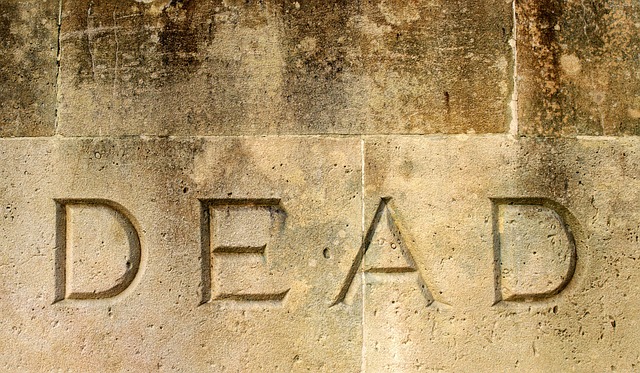
For miracle number two, we find Jesus on his way to Nain, a town in the Galilee area about 30 miles away from Capernaum. His disciples and a large crowd of people are traveling with Him. Upon His arrival, this crowd meets up with another large crowd. The two crowds could not have been more unalike. The crowd with Jesus is full of great joy and awe as they have witnessed great miracles and heard great teachings. The crowd coming out of the city is filled with great sorrow as they carry a dead man out, a widows only son. As great joy met great sorrow in that moment, Jesus is filled with compassion. The Greek word for compassion is splagchnizomai, and it means the inmost parts describing the heart, lungs, liver, and kidneys. This word gradually came to denote the seat of affection. Jesus isn’t just sad for the woman, he is moved from deep inmost parts of Himself for her. He sees her great pain. He knows she is in a precarious position now that her only son is gone. She is alone in the world without support, depending only on the graciousness of others. He is moved by the scene of great despair. And so, he approaches the mourning party and says, “Don’t cry.” The Greek word for cry is klaió, which means to weep aloud, or to express audible uncontainable grief. She isn’t just crying, she is beside herself with grief. Jesus sees that grief and says, I see your mourning heart. I understand your fear for the future. In this passage, Luke has called Jesus the Lord. The Greek word for the Lord here is kurios, a word that means a person who exercises absolute authority and rights. Jesus says, I am The Lord. I have absolute authority here and I am about to show you what that looks like.

And so, Jesus shows that authority by doing something unexpected and “unlawful”. He touches the open coffin. Numbers 19:11 says, “The person who touches any human corpse will be unclean for seven days.” When Jesus touched the open coffin, I can imagine the gasp from both crowds. What would they be thinking at this point? Maybe something like this: Why would He do this? We’ve never seen anything like this before! What’s going on? How dare He come in here and disrupt things! Throughout Luke so far, Jesus has shown the people He has authority over illnesses and nature and, His Word has authority in His teachings. Now, He is about to show them He has authority over death itself. He touches that open coffin because He knows something the crowds do not. He is going to call the dead to life. He was about to turn their mourning into laughter. And so, He speaks to the corpse as if he is already alive, “Young man, I tell you, get up!” Can you imagine the scene when that young man sits up and begins to speak? Just imagine if you were in a funeral and suddenly the dead person sits up and starts talking to the mourners. Shock, fear, awe, unimaginable thoughts, fainting, lack of words. These are just some of the reactions that might occur. I know I would be stunned into silence and then fear. Luke tells us the crowd was seized with fear, phobos, or great terror which prompted them to do the only thing they could, glorify God. They understood this could only come from God. They realized they were standing in the midst of a great prophet. Could He be the hoped for Messiah? Was God among them – Emmanuel? Their mourning had turned into laughing.

As I looked at these two miracles, I had to ask myself, “Do I have faith that will amaze God?” Am I poor in spirit, mourning my sin? Do I hunger and thirst after righteousness? Do I believe Jesus has authority over all things – even death? The young man in the story, and later Lazarus, was raised back to life for a time. They both died again. Now, we will be raised back to life to never die. Jesus had authority over sickness and death because He is the way the truth and the life. He is the Resurrection and the Life. His very Word is authority. It is said by the great Dwight L. Moody when he had to conduct a funeral once, “I began searching Scripture to find a funeral sermon delivered by Jesus. I searched in vain, because every funeral Jesus attended, He broke up by raising the dead.” We come to him broken and spilled out and He redeems us and fill us up because He is the great Redeemer. We come to Him in awe, ready to glorify God and He shows us wondrous things. We come to Him poor in spirit, hungering and thirsting and mourning and he blesses us beyond measure.
 Bible Study Blog