Religious Hypocrisy

Hypocrisy is defined as the practice of claiming a moral standard to which one’s own personal behavior does not meet. I think, if we are really honest, we would find we all are hypocrites in one way or another. As I was researching, I found this article from the National Library of Medicine that identifies four forms of hypocrisy – inconsistency, pretense, blame, and complacency. These four words sums up what hypocrisy is really all about. Inconsistency is not practicing what you preach. An example: A manager who tells his employees not to talk or text during the meeting, yet, when someone else is talking, he is texting. He feels he is above what he has asked others to do. Pretense is when you fake religious devotion just to ingratiate, or curry favor, from someone. These are people who are extra pious when they are around other believers, but someone else when they are around others. They want to be seen and admired for their religious fervor. Blame is criticizing someone else for the same faults you have. It is the “pot calling the kettle black” syndrome. In reality, this person wants to deflect attention from their own faults to the faults of others. Finally, complacency is doing the least amount possible, while ignoring the, often more important, demands of our faith. An example would be what we used to call the C and E Christian – the Christmas/Easter attender. They give just enough, say just enough, and attend just enough, to appear devoted, while serving as little as possible. The one thing I noticed about each of these is an inherent selfishness. And that is really what hypocrisy is all about – being selfish – and we all are selfish at one time or another. I can look at times in my life (too many!) when I have selfishly been hypocritical. I was only looking after my needs and wants and did just enough to get by, sometimes deflecting blame from myself onto someone else. As I read these words of Jesus, I know He is speaking to me.

Vs 37-41 As He was speaking, a Pharisee asked Him to dine with him. So He went in and reclined at the table. When the Pharisee saw this, he was amazed that He did not first perform the ritual washing before dinner. But the Lord said to him: “Now you Pharisees clean the outside of the cup and dish, but inside you are full of greed and evil. Fools! Didn’t He who made the outside make the inside too? But give from what is within to the poor, and then everything is clean for you.
Before we think of Jesus as being unhygienic, we have to understand what ritual washing was. This wasn’t just washing your hands, it was an entire religious system to show you were really pious. First, you had to use a particular stone vessel filled with water deemed ceremonially clean. Then, there was an intricate system of washing with rules for washing before, during and after a meal. They had it down to a science. If you were “really religious” you followed all the rules of washing in the order given. Jesus calls them out – “Now you Pharisees clean the outside of the cup and dish, but inside you are full of greed and evil.” He says this another time, in a different way, in Matthew 23:27, “Woe to you, scribes and Pharisees, hypocrites! You are like whitewashed tombs, which appear beautiful on the outside, but inside are full of dead men’s bones and every impurity.” In other words, the outside looks really great, but the inside… well that’s another matter altogether. Jesus calls them fools. The Greek word for fools is aphrón, which means to lack perspective or being short-sighted. They were so overly concerned about looking the part, they forgot about actually being the part. God is not as concerned about the outside as He is concerned about what’s inside – what we really think and believe. James 2:20 tells us, “Foolish man! Are you willing to learn that faith without works is useless?” God is concerned with us living out our faith. Psalm 139 reminds us that God knows everything about us: Lord, You have searched me and known me. You know when I sit down and when I stand up; You understand my thoughts from far away. You observe my travels and my rest; You are aware of all my ways. Before a word is on my tongue, You know all about it, Lord. Psalm 139:1-4. There is nothing we can say or do that God doesn’t know the actual intention. How often in my own life have I been short-sighted, or focus on the less important stuff? To many!! God wants us to focus on the things He is focused on. He wants us to be concerned about the things He is concerned about. That may mean changing our perspective and enlarging our site lines.
Vs 42-44 “But woe to you Pharisees! You give a tenth of mint, rue, and every kind of herb, and you bypass justice and love for God. These things you should have done without neglecting the others. “Woe to you Pharisees! You love the front seat in the synagogues and greetings in the marketplaces. “Woe to you! You are like unmarked graves; the people who walk over them don’t know it.”

You couldn’t say the Pharisees didn’t tithe. They were meticulous, down to a tenth of every herb they grew in their gardens. They gave no more and no less. We should take notice, Jesus didn’t fault their tithing, only their neglect of all the other important things. They were so focused on the exacting of their tithe, they lost focus of their true calling. They were concerned about being seen by others instead of being seen by God. Jesus speaks to this on another occasion (also about tithing). Sitting across from the temple treasury, He watched how the crowd dropped money into the treasury. Many rich people were putting in large sums. And a poor widow came and dropped in two tiny coins worth very little. Summoning His disciples, He said to them, “I assure you: This poor widow has put in more than all those giving to the temple treasury. For they all gave out of their surplus, but she out of her poverty has put in everything she possessed—all she had to live on.” Mark 12:41-44. God could see what was inside this woman’s heart – her desire to give all she had to the God she loved. This is what was lacking in the Pharisee’s lives.
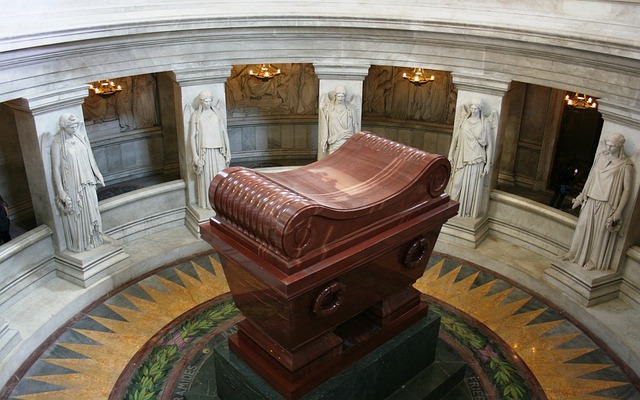
This next analogy of Jesus may need a little explanation: You are like unmarked graves; the people who walk over them don’t know it.” To understand what Jesus was alluding to, we must go to Numbers 19:16, “Anyone in the open field who touches a person who has been killed by the sword or has died, or who even touches a human bone, or a grave, will be unclean for seven days. For this reason, graves were marked very clearly, often with whitewash, so no one would accidentally walk over them, making themselves unclean for 7 days. In my travels, I have seen many graves and tombs. Some of them, like Napoleon’s tomb in Paris, (pictured above) are ornate and extravagant. In the end, it still holds nothing but death. Jesus is saying, you are unclean and don’t even know it. Worse, you are causing everyone else around you to be unclean because of your hypocrisy. And that is the real problem with our own hypocrisy. We cause others to stumble. We lead others astray. We cause them to focus on the wrong things, or, at the very least, the unimportant things, instead of pointing them to Christ.
Vs 45-52 One of the experts in the law answered Him, “Teacher, when You say these things You insult us too.” Then He said: “Woe also to you experts in the law! You load people with burdens that are hard to carry, yet you yourselves don’t touch these burdens with one of your fingers. “Woe to you! You build monuments to the prophets, and your fathers killed them, Therefore, you are witnesses that you approve the deeds of your fathers, for they killed them, and you build their monuments. Because of this, the wisdom of God said, ‘I will send them prophets and apostles, and some of them they will kill and persecute,’ so that this generation may be held responsible for the blood of all the prophets shed since the foundation of the world from the blood of Abel to the blood of Zechariah, who perished between the altar and the sanctuary. “Yes, I tell you, this generation will be held responsible. “Woe to you experts in the law! You have taken away the key of knowledge! You didn’t go in yourselves, and you hindered those who were going in.”

First off, this guy really didn’t hear Jesus at all! Second, by speaking up, he stood as a shining example of all Jesus had just said. Instead of some inner inspection, this expert in the law felt insulted. “You can’t possibly lump me into all this!” Jesus, doesn’t mince words – You load people with burdens that are hard to carry, yet you yourselves don’t touch these burdens with one of your fingers. The experts in the law were the ones who interpreted the law for the people. They laid down all the things you were suppose to do to be religious and holy. There was a law for everything you did in every day life. In fact, the laws concerning the Sabbath, a day that is a gift from God, could be especially restrictive. But, with these laws, these experts conceived different loopholes to get around some things. Jesus points one of these loopholes out in Matthew 12:9-14, “Moving on from there, He entered their synagogue. There He saw a man who had a paralyzed hand. And in order to accuse Him they asked Him, “Is it lawful to heal on the Sabbath?” But He said to them, “What man among you, if he had a sheep that fell into a pit on the Sabbath, wouldn’t take hold of it and lift it out? A man is worth far more than a sheep, so it is lawful to do what is good on the Sabbath.” Then He told the man, “Stretch out your hand.” So he stretched it out, and it was restored, as good as the other. But the Pharisees went out and plotted against Him, how they might destroy Him.” The last sentence says it all – instead of being excited for this man who no longer had a paralyzed hand, they were angry at having been publicly called out. They had conceived a loophole for pulling a sheep out, but not for changing a man’s life.
Next, Jesus tells them they had venerated the prophets of old, yet they could not see the prophets God was sending them at that moment. So, just like their ancestors before them, they would kill the prophets of God as well. And this proved to be true, as they crucified Jesus and sought to kill and destroy his disciples. Throughout this, Jesus has said the word “woe”. The Greek word for woe is ouai, which is an denunciation, and a term associated with grief. Yes, Jesus is denouncing their hypocrisy, but it is tinged with a great amount of grief at their short-sighted beliefs. This is not an attack or a vilification. It is with a great amount of sorrow and anguish that Jesus delivers these criticisms.
Lastly, he informs the experts, they have taken away the key of knowledge! Because of their legalistic approach, the people could never come up to the standard. They could never find a way to salvation. They caused people to be so wary and watchful of the intricacies of the law, they were unable to focus on all God had for them. This is what happens when we make our traditions the cornerstone of our faith instead of the Word of God. When our rules and regulations usurp God’s grace and mercy. There is a song from Fiddler on the Roof called “Tradition.” The tradition is for a matchmaker to set up the bride and groom. But Tevye’s daughter wants to marry a man she loves instead of the wealthy man she is set up with. So, he has a choice. Does he stick with tradition and make his daughter miserable, or does he go against tradition and allow for her happiness? He chooses her happiness over the constraints of tradition. He pays attention to her needs instead of an unyielding rule that would mean wealth but misery. When traditions takes our focus away from God, then tradition is wrong. When the legalistic rules cause us to fall instead of grow, we need to take a new look. This doesn’t mean we compromise truth and righteousness. It doesn’t mean we negate morality. It means we separate truth from rules and moral issues from religious politics. We concern ourselves with the state of hearts and lives instead of rigid constraints that have nothing to do with the truth of the gospel.
Vs 11:53-12:1-3 When He left there, the scribes and the Pharisees began to oppose Him fiercely and to cross-examine Him about many things, they were lying in wait for Him to trap Him in something He said. In these circumstances, a crowd of many thousands came together, so that they were trampling on one another. He began to say to His disciples first: “Be on your guard against the yeast of the Pharisees, which is hypocrisy. There is nothing covered that won’t be uncovered, nothing hidden that won’t be made known. Therefore, whatever you have said in the dark will be heard in the light, and what you have whispered in an ear in private rooms will be proclaimed on the housetops.
The hearts of these men did not change – much to the grief of Jesus. They were furious and began to look for ways to trap him. They became more obsessed than ever with their rules instead of the heart of the law of God. Jesus makes it very clear – they will be found out. Their sin of hypocrisy will be uncovered. Light will always overcome the darkness and secrets will be shouted from the rooftops. Numbers 32:23 reminds us that our sins will catch up to us. We can only run so far.

Inconsistency, pretense, blame, and complacency. These are the ways hypocrisy plays out. As I said in the beginning, the one thing in common is selfishness. The Pharisees and the experts in the law were only concerned about how they looked to the people around them. They wanted the people matched to a wealthy groom instead of being concerned with their spiritual needs. The groom couldn’t be that poor carpenter from Nazareth! He doesn’t even follow the rules of ceremonial washing. He heals people on the Sabbath. He dines with sinners and hangs out with “those other” people. His disciples aren’t even well read or up to the standard. But look at us. We have the right kind of disciples. We do all of the right things. Never mind that people around us are being hurt and forgotten. It’s really all about us getting our way. The opposite of selfishness is selflessness, generosity, consideration, and humility. Jesus was a servant and a shepherd. Even his criticism was saturated in grief. And, He calls us to be the same. I will leave you with Philippians 2:5-8: Make your own attitude that of Christ Jesus, who, existing in the form of God, did not consider equality with God as something to be used for His own advantage. Instead He emptied Himself by assuming the form of a slave, taking on the likeness of men. And when He had come as a man in His external form, He humbled Himself by becoming obedient to the point of death— even to death on a cross.
 Bible Study Blog