Readjusting In A Material World

Back in 1973, former Beatles member George Harrison wrote a song called “Living In The Material World.” Although his solution for getting out said material world is faulty, he does have it right when he says, “As I’m fated for the material world. Get frustrated in the material world. Senses never gratified, only swelling like a tide that could drown me in the material world.” We are all “fated” to live in a material world. We are born into it. The material world isn’t really the problem. It’s the wanting, the desire, the craving to have that’s the problem. This is why Exodus 20:17 says, “Do not covet your neighbor’s house. Do not covet your neighbor’s wife, his male or female slave, his ox or donkey, or anything that belongs to your neighbor.” To covet means to want, desire and crave something that isn’t yours. It’s such a dangerous trait and can lead to all kinds of evil, like stealing, lying, bitterness, and even murder.
There is an amazing movie that illustrates this very point called “The God’s Must Be Crazy.” The movie is set in the Kalahari Desert in Southern Africa. A bottle is tossed from an airplane landing in a remote part of the desert. It is found by the San, a remote, peaceful, and loving tribe who have never seen glass before. At first, they believe it is a gift from the gods and find it has many uses. But, as time goes on, they discover, for the first time, what it means to covet. Only one bottle has been sent, and suddenly, everyone needs it and wants it. Arguments ensue and fights break out, culminating in someone being hit over the head with the bottle. There is a very poignant scene with the entire tribe sitting in a circle with the bottle in the middle. They discuss what has happened and what they need to do about it. They conclude, the gods must be crazy for only sending one bottle. Their desire for peace once again means they must get rid of the thing that has brought this evil into their lives. So, it is decided that Xi will take the cursed bottle and toss it off the end of the earth. As we explore the areas of greed and covetousness, keep in mind where it leads.
Vs 13-21 Someone from the crowd said to Him, “Teacher, tell my brother to divide the inheritance with me.” “Friend,” He said to him, “who appointed Me a judge or arbitrator over you?” He then told them, “Watch out and be on guard against all greed because one’s life is not in the abundance of his possessions.” Then He told them a parable: “A rich man’s land was very productive. He thought to himself, ‘What should I do, since I don’t have anywhere to store my crops? I will do this,’ he said. ‘I’ll tear down my barns and build bigger ones and store all my grain and my goods there. Then I’ll say to myself, “You have many goods stored up for many years. Take it easy; eat, drink, and enjoy yourself.”’ “But God said to him, ‘You fool! This very night your life is demanded of you. And the things you have prepared—whose will they be?’ “That’s how it is with the one who stores up treasure for himself and is not rich toward God.”

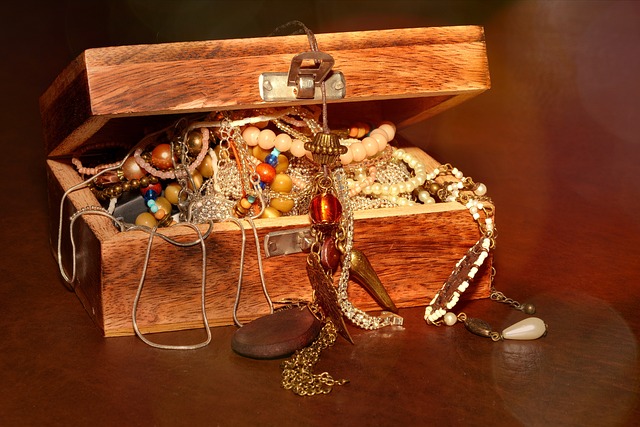
According to the law of the day, inheritance was divided between two brothers with the eldest receiving 2/3, and the younger receiving the remaining 1/3. We assume, by the nature of the request, this is probably the younger brother speaking. “Teacher, tell my brother to divide the inheritance with me.” In this passage, we find a man overly concerned about, either getting what he believes is due him, or his desire to have more than his share. His desire has turned into greed and, therefore, he covets what his brother has. How do we know it’s greed? Jesus, knowing his heart, tells us it’s all about greed. “Watch out and be on guard against all greed…” Jesus goes on to tell him ”…life is not in the abundance of his possessions.” In the material world we live in, it can be very difficult to internalize this. We need to readjust our desires to line up with God’s desire for us. To help this young man, Jesus tells him a parable. This parable shows the ultimate outcome of a greedy and covetous life. The old adage “you can’t take it with you” applies here. The man in the story can’t seem to have enough, so, instead of sharing or selling his excess, he stores it up. These days, he would have rented storage space for his excess. You can watch a few reality shows about storage units that have been abandoned for one reason or another. People’s things, eventually auctioned off to the highest bidder. In this story, the man stores up treasures for himself and ends up enjoying none of it. The desire for more and more destroys him in the end.
In Matthew 19 Jesus encounters the “rich young ruler”. He asks Jesus what he can do to have eternal life. Jesus answers, “If you want to enter into life, keep the commandments.” The young man answers “I have kept all these. What do I still lack?” Jesus’ answer is not to his liking. “If you want to be perfect,” Jesus said to him, “go, sell your belongings and give to the poor, and you will have treasure in heaven. Then come, follow Me.” When the young man heard that command, he went away grieving, because he had many possessions.” He is the man in the parable. He couldn’t part with his possessions. The material world he lived in possessed him. This is the hold our possessions can have on us as well, when that desire to have, is more important than our relationship with God. When we see possessions as more worthy to worship than the God of the universe. We trade eternal joy for what we think is happiness.
Vs 22-34 Then He said to His disciples: “Therefore I tell you, don’t worry about your life, what you will eat; or about the body, what you will wear. For life is more than food and the body more than clothing. Consider the ravens: They don’t sow or reap; they don’t have a storeroom or a barn; yet God feeds them. Aren’t you worth much more than the birds? Can any of you add a cubit to his height by worrying? If then you’re not able to do even a little thing, why worry about the rest? “Consider how the wildflowers grow: They don’t labor or spin thread. Yet I tell you, not even Solomon in all his splendor was adorned like one of these! If that’s how God clothes the grass, which is in the field today and is thrown into the furnace tomorrow, how much more will He do for you, you of little faith? Don’t keep striving for what you should eat and what you should drink, and don’t be anxious. For the Gentile world eagerly seeks all these things, and your Father knows that you need them. “But seek His kingdom, and these things will be provided for you. Don’t be afraid, little flock, because your Father delights to give you the kingdom. Sell your possessions and give to the poor. Make money-bags for yourselves that won’t grow old, an inexhaustible treasure in heaven, where no thief comes near and no moth destroys. For where your treasure is, there your heart will be also.

Research has found that anxiety has repercussions on our brains. It can cause the part of our brain that expresses emotions to grow, while, conversely, causing the part of our brain that plays a major part in memory and learning to shrink. Anxiety can also make it difficult for the brain to relay a logical response to the situation you are facing. In fact, worry and anxiety does not have one positive benefit to our brains or bodies. Jesus says, “Therefore I tell you, don’t worry about your life, what you will eat; or about the body, what you will wear. For life is more than food and the body more than clothing.” The Greek word for more is pleion, which is a comparative word. It is not just that life is more than food and clothes. It is comparatively more than just about food and clothes. It’s not a quantity, it is a quality. As believers, life is about trusting in God to supply our needs. We don’t worry about the things we need so we can get on with the important things of life like worship, serving others, loving others, meaningful work, etc… If we seek His kingdom first, God will provide for us. In fact, Jesus tells us the Father delights, eudokeó, meaning He is well pleased to give us the kingdom. So, He says, give to the poor freely, getting rid of your possessions to do so. It is better to make purses that won’t grow old, palaioó, meaning obsolete, but ones that are anekleiptos, unfailing. I find it fascinating that the word for grow old means obsolete. We are not to store up things in packages that no longer have any use. Instead, God wants us to store them up in places where our treasure will be in use forever.
Jesus ends the parable by saying, “for where your treasure is, there your heart will be also.” I find, if you want to know where someone’s heart is you need to, as they said in the film All The President’s Men, “follow the money.” What a person does with their money shows what they desire. It tells us what’s important to them. There are so many empty things to spend our money on these days. Things that will eventually waste away in a trash dump someday. If you want to take stock of what you don’t need in this life, moving will do it. My husband and I recently moved out of a house we have lived in for about 10 years. We had always thought we “traveled light”, but we were sadly mistaken. It was astounding the things we had accumulated in such a short period of time. It forced us to take stock of what was really important and what needed to be sold or given away. It has readjusted our “stuff meter” and recalibrated our thought pattern. Instead of being filled up with things, we want to be filled up with treasure that will last forever.

Finally, in J. R. R. Tolkien’s great work The Hobbit, we find a character named Gollum. In his former life, Gollum is a Stoor, or River Hobbit named Smeagol, who spends his day fishing. One fateful day, his relative and friend Deagol finds a ring in the river. As soon as Smeagol sees this ring, he craves it. His desire overtakes him, so he murders Deagol to possess it. This one act of covetousness transforms him from a happy Hobbit into the hideous, disfigured, creature we find in the novel. Yes, we live in a material world, but the material world does not have to live in us. We can readjust our lives to see material possessions as opportunities to serve. We can trust in God to provide for our needs as we store up treasures in heaven. We can find satisfaction, not, as George Harrison would say, by the lord Sri Krsna’s grace, but by the grace of Almighty God.
 Bible Study Blog