Repentance and Fruit: Changing our Minds and Hearts

Throughout the gospels, we find Jesus calling on people to repent. In his book The Role and Function of Repentance in Luke-Acts, Guy D. Nave Jr. says, “In Luke-Acts, everyone is eligible for membership in the community of God’s people. Such inclusivity requires a radical change in thinking on the part of many in the emerging religious community of Luke-Acts. Repentance in Luke-Acts represents this fundamental change in thinking that enables diverse individuals to receive the salvation of God and to live together as a community of God’s people.” The word repent in Greek is metanoeó. It literally means to to change one’s mind or purpose. It is not just a regret for sin committed or a promise of improvement of our behavior, it is, as Guy D. Nave Jr. says, a radical change in thinking. When Jesus called his disciples to follow Him, He was calling them to radically change their thinking, lifestyle, purpose and direction. Their lives were never going to be the same again. As we study this next section (which took me a couple of weeks!) keep in mind the call to a radical change.
Vs 1-5 At that time, some people came and reported to Him about the Galileans whose blood Pilate had mixed with their sacrifices. And He responded to them, “Do you think that these Galileans were more sinful than all Galileans because they suffered these things? No, I tell you; but unless you repent, you will all perish as well! Or those 18 that the tower in Siloam fell on and killed—do you think they were more sinful than all the people who live in Jerusalem? No, I tell you; but unless you repent, you will all perish as well!”

So this group of people came to Jesus to “report”. What they were really doing was asking – Why? Why do bad things happen to good people? It is a question often asked, and written about. Somehow, we believe storms should only come to those who “deserve” it. Jesus sets them straight right away. He goes straight for the real question in their hearts. “Do you think that these Galileans were more sinful than all Galileans because they suffered these things? No, I tell you; but unless you repent, you will all perish as well!” They were thinking these people had to have done something pretty horrible to have fallen in such a way. Jesus dispels that by letting them know this isn’t the case. As we live on this earth, we will all be subject to the things that happen around us. Rain falls on all of us. Disease is no respecter of the sinful or the “sinless”. Good people die each day in tragic manners. I find it amazing that we can believe in a suffering servant, yet think we will be spared the same suffering. We read about the suffering of the disciples, Paul, and other Christians of the day, yet somehow lack the understanding that we could, and possibly will, suffer in the same way. Where did the immunity understanding come from? I believe it came from the pious. Those who believe they are somehow above the evil of this world.
We see this played out in the book of Job. What did Job do “wrong”. Nothing. But his friends certainly ascribed to the philosophy that he had to have done something to deserve the tragedy he had encountered. Here is what Job’s friend Eliphaz says: Consider: who has perished when he was innocent? Where have the honest been destroyed? In my experience, those who plow injustice and those who sow trouble reap the same. They perish at a single blast from God and come to an end by the breath of His nostrils. Job 4:7-9. The disciples too had this philosophy. John 9:1-5 says, “As He was passing by, He saw a man blind from birth. His disciples questioned Him: “Rabbi, who sinned, this man or his parents, that he was born blind?” “Neither this man nor his parents sinned,” Jesus answered. “This came about so that God’s works might be displayed in him. We must do the works of Him who sent Me while it is day. Night is coming when no one can work. As long as I am in the world, I am the light of the world.” Jesus reminds us that the things we experience in this life are not because we are either good or bad, but because all are in need of repentance. Paul says it like this in Romans 3:23: For all have sinned and fall short of the glory of God. We all need to repent.
Vs 6-9 And He told this parable: “A man had a fig tree that was planted in his vineyard. He came looking for fruit on it and found none. He told the vineyard worker, ‘Listen, for three years I have come looking for fruit on this fig tree and haven’t found any. Cut it down! Why should it even waste the soil?’ “But he replied to him, ‘Sir, leave it this year also, until I dig around it and fertilize it. Perhaps it will bear fruit next year, but if not, you can cut it down.’”
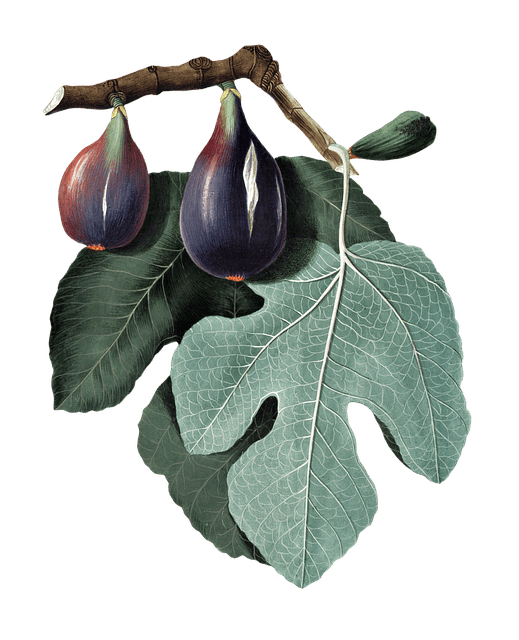
And so, Jesus gives us this parable to illustrate what He means. The short explanation – God is looking for fruit in our lives. He isn’t looking for those who say the right things or look good. He wants to see fruit. The fact is, the fruit we bear is indicative of what is inside. An apple tree produces apples and a watermelon plant produces watermelons. No matter how much it tries, brier will not produce anything productive. So, what kind of fruit is God looking for? We can start by looking at Galatians 5:22-23, “But the fruit of the Spirit is love, joy, peace, patience, kindness, goodness, faith, gentleness, self-control. Against such things there is no law.” Another passage that gives us direction is Ephesians 5:8-10; “For you were once darkness, but now you are light in the Lord. Walk as children of light for the fruit of the light results in all goodness, righteousness, and truth discerning what is pleasing to the Lord.”
Next, Jesus tells us no fruit could be found on this tree. He has given the tree three years to produce something, and now, the time has come for judgment. Yet, He is still willing to wait just a little longer. God’s desire is for us to produce fruit. He will give us a 2nd, 3rd, and sometimes, even a 4th chance. But, make no mistake. There will come a time when the chances are over. If our lives have not produced fruit, it will be cut down. There is a call for repentance. A call to produce good fruit. In all reality, our lives will produce something. It will either be the good fruit of the Spirit, or the bad fruit of the flesh. God came to this tree to gather figs, but found nothing. He calls us to walk in the light, “for the fruit of the light results in all goodness, righteousness, and truth discerning what is pleasing to the Lord.”
Vs 10-17 As He was teaching in one of the synagogues on the Sabbath, a woman was there who had been disabled by a spirit for over 18 years. She was bent over and could not straighten up at all. When Jesus saw her, He called out to her, “Woman, you are free of your disability.” Then He laid His hands on her, and instantly she was restored and began to glorify God. But the leader of the synagogue, indignant because Jesus had healed on the Sabbath, responded by telling the crowd, “There are six days when work should be done; therefore come on those days and be healed and not on the Sabbath day.” But the Lord answered him and said, “Hypocrites! Doesn’t each one of you untie his ox or donkey from the feeding trough on the Sabbath and lead it to water? Satan has bound this woman, a daughter of Abraham, for 18 years—shouldn’t she be untied from this bondage on the Sabbath day?” When He had said these things, all His adversaries were humiliated, but the whole crowd was rejoicing over all the glorious things He was doing.
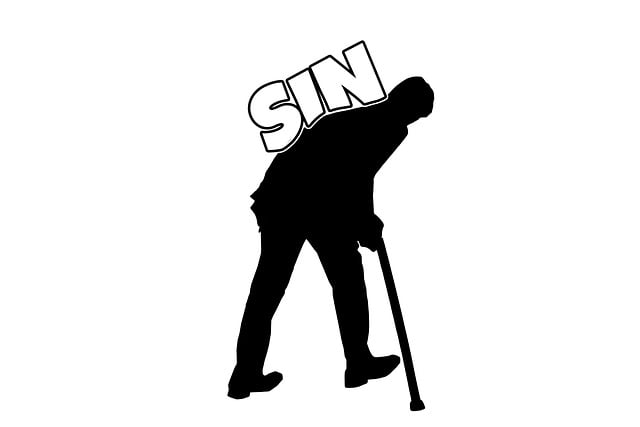
Next, we find Jesus once again teaching in a synagogue on the Sabbath. Here, He encounters a woman who has been disabled by a spirit for over 18 years. To be clear, not all physical ailments have a spiritual cause, but, it would be foolish to think that none are. Ones spiritual condition can have a physical consequence. Greed, anxiety, unforgiveness, bitterness… All these can impair us physically. We do not know the cause of this woman’s disability – but we know she wanted to be rid of it. She has come in desperation to the synagogue where she encounters Jesus. He sees in her something – perhaps the repentance He has called for – and responds by healing her. Her immediate response to her healing is praise. She rejoices to be rid of the burden – both physically and spiritually.
This is in obvious contrast to the leader of the synagogues response. Instead of praise, he responds in judgment. His puts his legalistic lenses on, “shakes his finger” and says, “There are six days when work should be done; therefore come on those days and be healed and not on the Sabbath day.” He is angry at the woman for daring to come and be healed on the Sabbath. Instead of marveling at the work of God, he only sees the rule book. Jesus immediately responds back – Hypocrite! Interestingly, the Greek word for hypocrite is hupokrités. It, of course, means a two-faced person, but it was also used as a title for an actor or performer. Here is the leader of the synagogue putting on a performance for the attenders. Look at me, and how spiritual I am, while that woman comes here looking for healing. Look at me, obviously, I know the law better than that guy. Here a miracle has been performed in a woman’s life which has resulted in praise, and all this leader can see is the “law” – notice the quotes. Jesus counters by pointing out how they have used the perfect and holy law of God to burden people, while at the same time, finding ways around it. They found a work around so they could loose an animal from it’s burden on the Sabbath, but condemn Him for loosing a woman from her burden. So, Jesus is asking, “are animals more important than this daughter of Abraham?” The humiliation is palatable. The Greek word for humiliation is kataischuno, which means to shame or disgrace or put to utter confusion. In the middle is the crowd who has come to they synagogue. They are watching and listening to this exchange. When Jesus’ response deals the humiliating blow to those who would use God’s law to burden rather than loose, they rejoice in what they have witnessed.
Perhaps Jesus is saying the same to those who would legalistically place burdens on those in their congregations. I just read a book by Philip Yancey entitled Where The Light Fell. In it, he describes the churches of his childhood and how their legalism bound up the people in the congregation. On one hand, we want to say there is freedom in Christ, while on the other we look out on this world of sin and try to shut ourselves away. We separate ourselves from the world instead of living as people of God in the world. We shake our finger at all the sin in the world instead of shining light into the darkness.
Vs 18-20 He said, therefore, “What is the kingdom of God like, and what can I compare it to? It’s like a mustard seed that a man took and sowed in his garden. It grew and became a tree, and the birds of the sky nested in its branches.” Again He said, “What can I compare the kingdom of God to? It’s like yeast that a woman took and mixed into 50 pounds of flour until it spread through the entire mixture.”
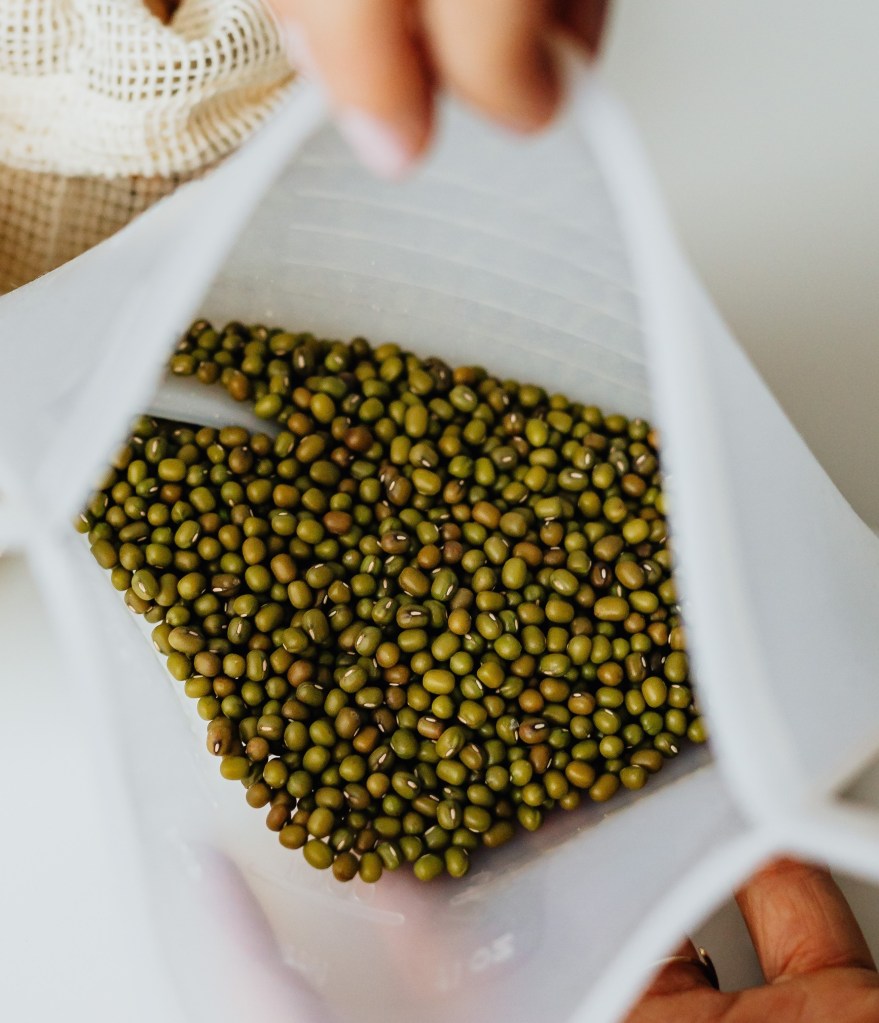
Jesus uses this moment to teach the crowd, and us, about the kingdom of God. What is it like? It is a mustard seed – small and seemingly insignificant. But, when this tiny seed is planted, it becomes a tree, large enough to host the birds of the sky. It is like a small amount of yeast mixed into a great amount of flour. It spreads throughout the whole mixture and causes the bread to rise up. So what is the kingdom of God like? It is a refuge for those in need of shelter. It permeates everything it comes into contact with, causing it to change and grow. The kingdom of God is not what you think. It is not something you expect. It does not conform to your rules. It is bigger than you think.
Throughout Scripture, Jesus has described the kingdom of God and of heaven in many ways. It is a growing seed in Mark 4:26-29. It is a priceless pearl in Matthew 13:44-46 and a large net in verses 47-50. In Matthew 18:22-35 it is a king who has come to settle his accounts and it is the land owner who hires laborers in Matthew 20:1-16. In each of these cases, the kingdom of heaven isn’t what you thought it would be. The seed grows after it is planted even though we have very little to do with it. We plant it, but God is the one who actually provides the growth. The pearl is worth a great deal, so much so we sell all we have to buy the land so we can own it. The net captures a great deal of fish, some bad and some good. Those bad fish will be thrown out. God will judge us by our fruit. The King will settle His accounts in the end. And the land owner can hire and pay wages at His discretion. There is no “fair”, only grace to all who are willing to work in the fields. The smallest of seeds can grow into a large tree and a little bit of yeast can permeate the whole dough.
Somewhere along the line, the teachers in Jesus day put God and His kingdom in a small box of legalistic rules. They took the gift of the law, and bound it up, making it even more impossible to keep. They didn’t get what the whole point of the law was all about. It wasn’t given to them to save them. It was given to them to show them, and us, what holiness looks like. The Torah is a target – a bullseye – one we will never be able to hit. This is the reason there was a need for constant sacrifice. We are totally incapable of being holy as God is holy outside of His grace. The holiness of God cannot be achieved by work or accomplishment. It was only achieved through Christ Jesus. His sacrifice put an end to the constant sacrifices in the temple. His death and resurrection put an end to the death sin had so long held us with. We now have freedom in Christ and can now actually realize a holy life. The law we never put into place to bind us up – sin had done that already. The law was put into place to show us our need for grace.
Grace has been extended to us through Christ’s death on the cross. Our acceptance of that grace is by our metanoeó – the changing of our mind and purpose. Jesus said in Luke 5:32, “I have not come to call the righteous, but sinners to repentance.” He is calling us to change our hearts, our minds, our purpose, and our direction. He is calling us to be light in a world filled with darkness. He is looking for the fruit that we bear for the kingdom of God. Finally, His desire is for us to extend the grace we have been given to those in need of it. Like the woman in the synagogue, there are those around us who seek the grace of God. Will we bind them up, or point them in the direction where they can be loosed? The kingdom of God is like a tiny mustard seed that, when planted, will grow to be something far greater than we can imagine. He has asked us to pray for His kingdom to come on earth as it is in heaven. He tells us in Luke 17:20-21, “…The coming of the kingdom of God is not something that can be observed, nor will people say, ‘Here it is,’ or ‘There it is,’ because the kingdom of God is in your midst.” The kingdom of God is in our midst and the Holy Spirit has been sent so we can be enabled to walk in the holiness of God. Our prayer as believers in Jesus Christ should be: May we have changed hearts and minds, a realigned purpose and direction, and open hands and ready feet that allows God to work in us so we can bear fruit in this world.
 Bible Study Blog