Beyond Lost and Found
In this next section, we come to, probably, the best known parables Jesus ever told. I have heard multiple sermons on them and have been done many Bible studies on these parables. I have even written two dramas based on these parables. The message: what has been lost has now been found. The good news: there is hope and love. So, what else can we possibly find in these amazing stories? Let’s dig a bit deeper and find out.

Vs 1-7 All the tax collectors and sinners were approaching to listen to Him. And the Pharisees and scribes were complaining, “This man welcomes sinners and eats with them!” So He told them this parable: “What man among you, who has 100 sheep and loses one of them, does not leave the 99 in the open field and go after the lost one until he finds it? When he has found it, he joyfully puts it on his shoulders, and coming home, he calls his friends and neighbors together, saying to them, ‘Rejoice with me, because I have found my lost sheep!’ I tell you, in the same way, there will be more joy in heaven over one sinner who repents than over 99 righteous people who don’t need repentance.
Once again the Pharisees have a complaint. This time it is because Jesus welcomes sinners and eats with them!” The word for sinners is hamartólos, which describes one who is wide of the mark, or one who is a blatant sinner. The Pharisees were very serious about righteous living. They considered people in two classes – righteous and unclean. The unclean were so wide of the mark they were considered unworthy to even hear the Word of God. These Pharisees would not even allow the hamatolos to sit in their presence to listen to them. So here is Jesus eating with, and allowing those who willfully sin to come and listen to Him. In response to their objection, Jesus tells them a few parables. The first is about a lost sheep.

Since most of us no longer live in an agricultural environment, some of the parable may be lost on us. The people hearing this parable though would understand. To catch us city folks up: we have to understand that sheep are not the smartest animal ever created. First, they can get lost really easily. Second, they stray, heedless to any danger and are incapable of finding their way back on their own. (Perhaps this is the reason we are likened to sheep!) Third, a sheep can actually get lost, bleat for the flock, hear the flock and still run in the opposite direction trying to find the flock. They are helpless, heedless and hopeless when it comes to getting lost. So, here we have a shepherd with 99 sheep in the open pasture and 1 out lost somewhere. He leaves those 99 in that open pasture and precedes to look for the 1 lost one. Finding it, he puts that sheep on his shoulders and carries it home. Here is where we often leave the story. The sheep was lost and now it is found. But, if we leave it here, we will miss the whole point of Jesus’ story. There is something beyond the lost and found. The point Jesus was making for the Pharisees is not that God will search for the lost and find them, although that was a new concept to them – God searching for us that is. The point is the joy that the shepherd has when the 1 that was lost is now found. Notice, Jesus tells them the shepherd joyfully puts it (the sheep) on his shoulders. He then rejoices with his friends and neighbors. Jesus tells us, “there will be more joy in heaven over one sinner who repents than over 99 righteous people who don’t need repentance.” This was the oversight of the Pharisees. They were so consumed with the jots and tittles of the law, they were unable to rejoice when sinners come back to God – even the hamatolos. They were so eager to separate themselves from any appearance of sin, they couldn’t see that these sinners had come to repent. Jesus goes on with the next parable.

Vs 8-10 “Or what woman who has 10 silver coins, if she loses one coin, does not light a lamp, sweep the house, and search carefully until she finds it? When she finds it, she calls her women friends and neighbors together, saying, ‘Rejoice with me, because I have found the silver coin I lost!’ I tell you, in the same way, there is joy in the presence of God’s angels over one sinner who repents.”
Once again, there is something familiar that has been lost. In the Greek, the coin is described as a drachmas, which is worth about $50 in today’s U. S. Dollar. It was about a days wage in Biblical times. So, the coin did have value, but after a bit of research I found something very interesting that goes beyond the intrinsic value of the coin. In Biblical times, one mark of a married woman was a necklace or headdress made up of 10 silver coins. The bridegroom would negotiate with the father a price or dowry for the young woman. When that was settled, he would give the woman 10 coins as to symbolize a covenant or promise for marriage. It would be a little like today’s engagement ring. So, let’s look at it like this: what woman wouldn’t turn the house upside down to find her lost engagement ring!! I can tell you she would sweep every crevice of that house, check every drawer and clean every corner to find it. When she di, she would most certainly call everyone she knows to tell them all about it! Jesus has painted a beautiful picture here of a bride finding her lost coin. As much as she rejoices in finding her coin, God rejoices even more when a sinner repents. We can also see in this parable an illustration of the bride and the bridegroom. The bride is elated that she found the coin and the Bridegroom is elated when a sinner repents.
Vs 11-32 He also said: “A man had two sons. The younger of them said to his father, ‘Father, give me the share of the estate I have coming to me.’ So he distributed the assets to them. Not many days later, the younger son gathered together all he had and traveled to a distant country, where he squandered his estate in foolish living. After he had spent everything, a severe famine struck that country, and he had nothing. Then he went to work for one of the citizens of that country, who sent him into his fields to feed pigs. He longed to eat his fill from the carob pods the pigs were eating, but no one would give him any. When he came to his senses, he said, ‘How many of my father’s hired hands have more than enough food, and here I am dying of hunger! I’ll get up, go to my father, and say to him, Father, I have sinned against heaven and in your sight. I’m no longer worthy to be called your son. Make me like one of your hired hands.’ So he got up and went to his father. But while the son was still a long way off, his father saw him and was filled with compassion. He ran, threw his arms around his neck, and kissed him. The son said to him, ‘Father, I have sinned against heaven and in your sight. I’m no longer worthy to be called your son.’ “But the father told his slaves, ‘Quick! Bring out the best robe and put it on him; put a ring on his finger and sandals on his feet. Then bring the fattened calf and slaughter it, and let’s celebrate with a feast, because this son of mine was dead and is alive again; he was lost and is found!’ So they began to celebrate. “Now his older son was in the field; as he came near the house, he heard music and dancing. So he summoned one of the servants and asked what these things meant. ‘Your brother is here,’ he told him, ‘and your father has slaughtered the fattened calf because he has him back safe and sound.’ “Then he became angry and didn’t want to go in. So his father came out and pleaded with him. But he replied to his father, ‘Look, I have been slaving many years for you, and I have never disobeyed your orders, yet you never gave me a young goat so I could celebrate with my friends. But when this son of yours came, who has devoured your assets with prostitutes, you slaughtered the fattened calf for him.’“‘Son,’ he said to him, ‘you are always with me, and everything I have is yours. But we had to celebrate and rejoice, because this brother of yours was dead and is alive again; he was lost and is found.’”

The final parable is the longest, and one I have heard many a sermons and talks on. We have an interesting situation here. The youngest son is demanding his share of the estate from the father before his father has died. This is a greedy and inconsiderate request on the part of this son. He does not care how this may hurt his father. You can almost see Jesus’ audience shaking their heads in disdain. The Greek term for share is epiballon meros, which means to lay hold of my portion. He wanted to lay his hands on his inheritance immediately. When you think about it, in all reality, this son’s inheritance wasn’t really his to ask for at that point. The rightful owner of this portion was still the father’s. But this father, in his love for his son, gave him his inheritance. A few days later, this son takes off on his own, turning his back on the father and family, and begins to live prodigally. The Greek word for prodigal is asōtōs, which means to live wastefully or loosely. Over time, the son wastes all he had and then disaster struck- a famine struck, ending his prodigal lifestyle. You can almost here Jesus’ audience (especially the Pharisees) “serves him right for his distasteful request.” After this, the son ends up working every Jewish person’s nightmare job – feeding pigs. This would have been beyond offensive and unacceptable to any righteous Jewish person. This son had sunk to the lowest of low and the Pharisees, along with many in the audience, must have shuttered in revulsion. But, this is not the end of the story for this young man.

There finally comes a moment when the son comes to himself. He wakes up from his selfish slumber and realizes, “how many of my father’s hired hands have more than enough food, and here I am dying of hunger!” If he could beg forgiveness and return to his father’s house as a hired hand he could at least have room and board. So, he turns from his place of moral depravity and begins the journey to his father’s house. He reasons, I will never be able to return to the status of a son, but at least I will not be living in my current unclean manner. Can you picture the next scene? The son is rounding the bend and he sees his father’s house way off in the distance. He knows he will soon be there. He slowly continues his trek when suddenly he sees someone running toward him. As he squints for a better look, he is shocked to find it is his father running toward him, his eyes filled with compassion and joy. As his father comes to him, he is grabbed up in a huge hug. The father’s happiness is overflowing. The son says, ‘Father, I have sinned against heaven and in your sight. I’m no longer worthy to be called your son,’ but the father continues as if he hasn’t heard the son. Instead, he tells a servant to put a robe on his son and ring on his finger. He further instructs the servant to slaughter the fatted calf and get a party started. Can you imagine the shock and surprise of the son? He can’t believe the forgiveness he is receiving from the father. He came with bowed head and a repentant heart ready to be taken in as a hired hand, someone who could be dismissed at anytime, and here he was being honored as a son.
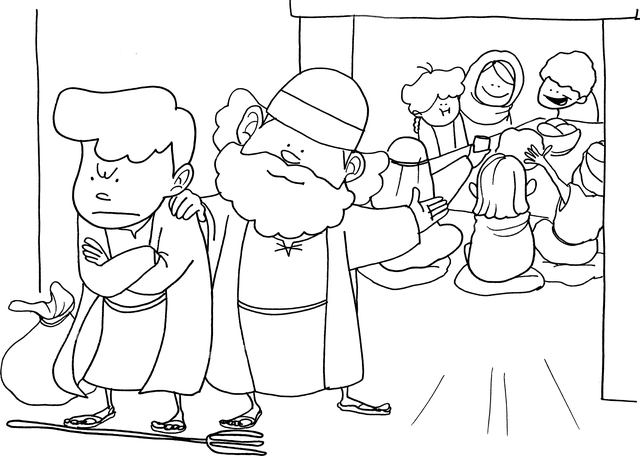
Unlike the other two stories, there is a second portion to this parable. We come upon the older son in the story. He is the one who didn’t ask for his inheritance early. He is the one who has stayed with the father. He is the one who has worked under his father the entire time his younger brother was off doing who knows what. He has come in from the fields when, instead of the quiet peaceful house he was expecting, he hears music and dancing pouring out of the house. What could it possibly be? Why is dad giving a party? He asks a servant and is told it is for his brother who has returned. Let’s think for a moment on how this made this older, more responsible brother feel. You can hear him right? WHAT! This is for that no good, selfish, rotten brother of mine? Here I’ve been faithful and responsible all this time and I never get anything. He comes waltzing back and he gets a party. Let’s be honest. Most of us would agree with the older brother’s assessment. We may have even expressed the same thing at some point. How can that guy receive forgiveness? Why would you let him or her back into your graces? This attitude didn’t come out of no where. There must have been some pent up bitterness and harbored anger towards his brother, and now, it was coming out. He doesn’t even want to go the party so his father has to come out to him to plead with him. His reply? ‘Look, I have been slaving many years for you, and I have never disobeyed your orders, yet you never gave me a young goat so I could celebrate with my friends. But when this son of yours came, who has devoured your assets with prostitutes, you slaughtered the fattened calf for him.’ In reality, the older son has allowed his bitterness to cloud all that he has. He had, for years. spent one on one time with the father. He has, and will have, all his father owns one day. Instead of focusing on the blessings, he has focused on his bitterness. It has robbed him of his joy. And this is what the father points out to him. “You have always been with me and all I have is yours – but right now it’s time to rejoice for the one who has been lost is now found.“

And this is what Jesus was trying to teach the Pharisees – and us. The stories reveals something beyond the lost and found. Jesus is trying to convey to them the joy God experiences when one person repents and comes to Him. Here He is, surrounded by sinners who desire to come to him. They are the lost sheep wandering aimlessly who the shepherd has come to find. They are the lost coin the bride has searched for diligently. They are the prodigal son, willfully sinning, but returning to themselves and begging for forgiveness. They have no hope to be called sons, yet the Father gathers them to Himself as His children. There is joy at their return. People are called, parties are given, there is music and dancing and a great banquet is prepared. The Pharisees can’t help but recognize themselves in the older brother. They are upset that these unclean people would even be considered in the kingdom of God. They are focused on “it’s not fair” rather than sharing in the joy of the return. They stand outside looking in at the party, pouting and judging. Jesus pleads with them to join in on the celebration. All I have is yours. You have been with me from the beginning. Come and share my joy at the return of those who have once been lost.

This is Jesus’ plea to us as well. It is so easy to judge others, to become bitter because things aren’t fair. The message is clear – there is grace for all who repent and return. There is joy when one who has been lost is now found. As children of God, we can share in that grace and joy. The great pastor Charles Spurgeon said of this passage; “The truth here taught is just this: that mercy stretches forth her hand to misery, that grace receives men as sinners, that it deals with demerit, unworthiness and worthlessness; that those who think themselves righteous are not the objects of divine compassion, but the unrighteous, the guilty and the undeserving, are the proper subjects for the infinite mercy of God; in a word, that salvation is not of merit but of grace.” There is joy in this – salvation is because of the grace and mercy of God to all who come to Him. Let us be joyful when the sinner, who was lost, has now been found!
 Bible Study Blog