Joyous Service
In chapter 18 we looked at how we need to open our eyes to see clearly. Today, we are going to see that when our eyes are opened, it will always lead to joyous service. Unlike the rich young ruler, we do not serve in order to obtain eternal life. We serve because God has granted us, through His grace, eternal life. We serve out of love, and a desire to praise the One who gives us mercy.

Vs 1-10 He entered Jericho and was passing through. There was a man named Zacchaeus who was a chief tax collector, and he was rich. He was trying to see who Jesus was, but he was not able because of the crowd, since he was a short man. So running ahead, he climbed up a sycamore tree to see Jesus, since He was about to pass that way. When Jesus came to the place, He looked up and said to him, “Zacchaeus, hurry and come down because today I must stay at your house.” So he quickly came down and welcomed Him joyfully. All who saw it began to complain, “He’s gone to lodge with a sinful man!” But Zacchaeus stood there and said to the Lord, “Look, I’ll give half of my possessions to the poor, Lord! And if I have extorted anything from anyone, I’ll pay back four times as much!” “Today salvation has come to this house,” Jesus told him, “because he too is a son of Abraham. For the Son of Man has come to seek and to save the lost.”

Does everyone remember the song from Sunday School? Zacchaeus was a wee little man, a wee little man was he. He climbed up in a sycamore tree for the Lord he wanted to see… In this passage, we find a chief tax collector named Zacchaeus. Because of his position, we know a few things about him. He was very rich, extremely disliked, even hated, quite short and he knew he was lacking something. Jesus had come into Jericho bringing the crowds who had been following him with him. They were there to see Him and great anticipation was in the air. They believed He was the Messiah and they couldn’t wait for Him to proclaim Himself. There was a problem though. Their recognition of the Messiah was very different from the reality of who Jesus is. They wanted freedom, but it was a temporal freedom from the oppressive Roman empire. They couldn’t conceive the Messiah being there to give them spiritual freedom from sin and death. Their viewpoint was very shortsighted. It is in this environment in which we find Zacchaeus trying desperately to see Jesus. He is so desperate, he becomes like a child and climbs a tree. As we found in chapter 18, becoming like a child is a prerequisite to receiving the kingdom of God, so, Zacchaeus threw away all inhibitions and climbed a tree. As Jesus came by, he recognized Zacchaeus’ desperation so He stops, looks up and says, “Zacchaeus, hurry and come down because today I must stay at your house.”

What I came to find in this scripture is a contrast between Zacchaeus’ and the crowds reaction. Zacchaeus “quickly came down and welcomed Him joyfully,” while the crowd “began to complain.” Zacchaeus has no illusions of his righteousness. He knew he had wronged many people, cheating them out of excess taxes, and enriching himself in the process. He was the lowest of the low in everyone’s estimation and he knew it. When he encountered Jesus, he became joyful. The Greek word for joyfully is chairó, which means a joy that comes from receiving grace. Jesus was giving him grace and he knew it! The crowd, on the other hand, felt they deserved the same attention this hated sinner got. They complained about Jesus even bothering with this guy at all, saying, “He’s gone to lodge with a sinful man!” They were unable to see their own sin – they had a log in their eye but worried about the speck in Zacchaeus’ eye, Matthew 7:3-5.
Zacchaeus’ joy turned into repentance and immediate service. It prompts him to give and restore the taxes he had stolen. Indeed, salvation has come to this house. The moment salvation entered into Zacchaeus’ heart, joy flooded his life which poured out as service to the Lord. He didn’t even wait until Jesus got to his house. His encounter with Jesus changed the entire trajectory of his life. From now on, he was going to serve. He was going to spread joy and mercy to those around him. This is what happens when salvation enters our life. Isaiah 45:8 says it this way, “Heavens, sprinkle from above, and let the skies shower righteousness. Let the earth open up so that salvation will sprout and righteousness will spring up with it. I, Yahweh, have created it.” Again in Isaiah 12:2-3, Indeed, God is my salvation; I will trust Him and not be afraid, for Yah, the Lord, is my strength and my song. He has become my salvation.” You will joyfully draw water from the springs of salvation... Finally, Jesus said in John 4:13-14, “Everyone who drinks from this water will get thirsty again. But whoever drinks from the water that I will give him will never get thirsty again—ever! In fact, the water I will give him will become a well of water springing up within him for eternal life.” True salvation will always produce joyful service. Meanwhile, the crowd only grumbled with their dissatisfaction. They missed Jesus’ mission statement, “For the Son of Man has come to seek and to save the lost.” So, Jesus addresses this with the crowd in the following parable.
Vs 11-27 As they were listening to this, He went on to tell a parable because He was near Jerusalem, and they thought the kingdom of God was going to appear right away. Therefore He said: “A nobleman traveled to a far country to receive for himself authority to be king and then return. He called 10 of his slaves, gave them 10 minas, and told them, ‘Engage in business until I come back.’ “But his subjects hated him and sent a delegation after him, saying, ‘We don’t want this man to rule over us!’ “At his return, having received the authority to be king, he summoned those slaves he had given the money to, so he could find out how much they had made in business. The first came forward and said, ‘Master, your mina has earned 10 more minas.’ “‘Well done, good slave!’ he told him. ‘Because you have been faithful in a very small matter, have authority over 10 towns.’ “The second came and said, ‘Master, your mina has made five minas.’ “So he said to him, ‘You will be over five towns.’ “And another came and said, ‘Master, here is your mina. I have kept it hidden away in a cloth because I was afraid of you, for you’re a tough man: you collect what you didn’t deposit and reap what you didn’t sow.’ “He told him, ‘I will judge you by what you have said, you evil slave! If you knew I was a tough man, collecting what I didn’t deposit and reaping what I didn’t sow, why didn’t you put my money in the bank? And when I returned, I would have collected it with interest!’ So he said to those standing there, ‘Take the mina away from him and give it to the one who has 10 minas.’ “But they said to him, ‘Master, he has 10 minas.’ “‘I tell you, that to everyone who has, more will be given; and from the one who does not have, even what he does have will be taken away. But bring here these enemies of mine, who did not want me to rule over them, and slaughter them in my presence.’”
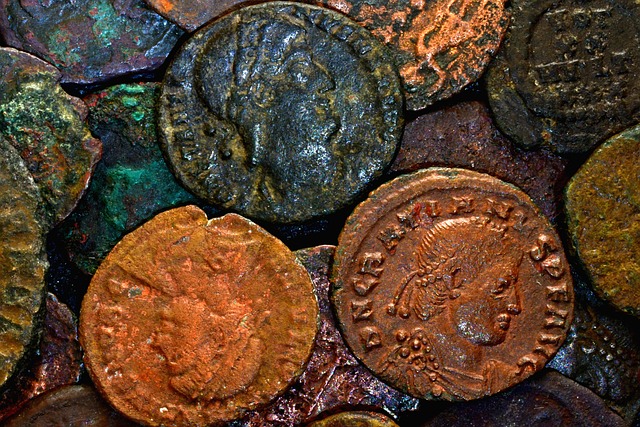
Jesus knew the hearts of the people and He knew their expectations. He also knew their shouts of praise would soon turn to shouts of condemnation. He was so very close to his appointed destination – just 25 miles or 40 kilometers away from Jerusalem. He knew His time was short, so he once again begins to teach using a parable called the parable of the minas. This parable is very similar to the parable of the talents, but varies in a couple of aspects. First, in the number of servants and amount given each. In the parable of the talents, there are three servants with each one being given a different amount. In the parable of the minas, there are ten servants, with each one being given the same amount. Second, the monetary value. According to the Encyclopedia Britannica, “the mina, or minah, was a basic standard of weight among the ancient Hebrews. In the sacred system of weights, the sacred mina was equal to 60 shekels, and 60 sacred minas equaled 1 sacred talent. So, in the parable of the minas, the servants were given less money than the parable of the talents. Third, the outcome of the slaves, especially the third slave is different. In the parable of the talents, the third slave was tossed out into outer darkness. In the parable of the minas, the third slave lost his gift and did not have a chance to rule. Finally fourth, the purpose of the master was different. In the parable of the talents, the master went on a journey of undisclosed purpose. In the parable of the minas, the master had a particular purpose: “A nobleman traveled to a far country to receive for himself authority to be king and then return.” In this parable, Jesus is subtly telling the crowd that He, like the nobleman, was going to a “far off country” to receive authority to be king. And so here is the summery of the parable of the minas:
The nobleman gives 10 slaves, 10 minas – we can concluded from this that each slave got 1 minas each – and instructs them to ‘Engage in business until I come back.’ As he is leaving, his subjects, who do not want him to be king, send a delegation ahead of him to try and stop it. They do not succeed and the nobleman comes back as a king. At this point he first calls his slaves in for accounting. What did they do with their minas in his absence? We get to see three different scenarios with three different outcomes. Slave number one – he takes the one minas and turns it into 10. The masters says to him, “Well done, good slave!’ he told him. Because you have been faithful in a very small matter, have authority over 10 towns.’ Slave number two – he takes the one minas and turns it into 5. The master says to him, “You will be over five towns.” Finally the third slave – he takes the one minas and… well he doesn’t do anything. He is fearful of the master and so he hides it away in a cloth. He did not follow the master’s instructions. He didn’t engage in business, but stored away his minas and did nothing. The master’s response to him is outrage. “I will judge you by what you have said, you evil slave!” Not only did he lose the minas given him, he lost the opportunity to rule over even one town and his minas was given to the one who earned 10 minas. Here, the slaves question the master. Why does the one who already has 10 minas get another one? The king’s response is this: “I tell you, that to everyone who has, more will be given; and from the one who does not have, even what he does have will be taken away.” After dealing with his slaves, the king then deals with those subjects who rejected him and sent the delegation to try and stop his appointment. His judgment is swift and definite – they are slaughtered in his presence.

There is, I believe, a dual audience for this parable. One for the audience in Jesus’ day and one for the audience of today. First, let’s deal with the audience in Jesus’ day. Jesus is the nobleman who has gone on a journey to receive authority – that is to His death on the cross. He would become the Lamb of God who takes away the sins of the world and would be granted all authority as King of kings and Lord of lords. Jesus entrusted His followers with gifts and instructed them to engage in the business of the kingdom of God until He returned. In His day, the subjects who send the delegation to try and stop Him receiving His authority were the religious rulers of the day – the Pharisees and Sadducee. They, in turn, tried to turn the people against Jesus, and succeeded in some cases. Those who grumbled against the slave with 10 minas receiving one extra are the crowd who grumbled against Jesus going to Zacchaeus’ house. Why should he get a visit when we have been the faithful following crowd? What about us? It isn’t fair!

And now for the audience that is today. Jesus is King of kings and Lord of lords. He is our resurrected, redeeming Savior and God has given Him all authority. After His resurrection in Matthew 28:17-20 Jesus says, “When they saw Him, they worshiped, but some doubted. Then Jesus came near and said to them, “All authority has been given to Me in heaven and on earth. Go, therefore, and make disciples of all nations, baptizing them in the name of the Father and of the Son and of the Holy Spirit, teaching them to observe everything I have commanded you… He has left us, His followers, with instructions to go, baptize, teach. He has left us with His example of what a servant is as he taught, healed, touched, and ministered. He has given us the gift of the Holy Spirit who guides, comforts, and empowers. He has given us the gifts of the Spirit of prophecy, teaching, showing mercy, having faith, healing, miracles, discernment, and wisdom, to name a few. What we do with these gifts is totally up to us.
We have some choices. We can engage with joy and abandonment or we can squander our opportunities and wrap them up in a cloth. If we choose the cloth, it is important to note the Greek word for cloth in this passage is soudarion. It is the word used for the face cloth for the dead. We find this term in John 11:44 when Lazarus comes from the tomb: “The dead man came out bound hand and foot with linen strips and with his face wrapped in a soudarion.” The third slave had wrapped up his minas in a cloth for the dead. When we do not use the gifts God has given us to further His kingdom, we have essentially wrapped them up and put them in the place where things go to die. But, when we use the gifts and opportunities God has for us to engage in the “business” of the kingdom, amazing things will happen. We will find abundant joy in serving our King. When He comes again, we will hear the words, “well done good and faithful servant.” The more we engage, the more gifts and the more empowerment we will find available. When I was living and working in the mission field, I discovered, firsthand, the many gifts available exactly when I needed them. I was never without resources to do what God had called me to do. The more I did, the more resources, both physical and spiritual, were available for me. When we walk in faith, knowing God has called us to go, baptize and teach and when we know His promise to be with us to the end of the age, we can be assured His resources will never run out. This is not to say things will be easy – no, it is the narrow gate we enter and the hard road we travel – but all our needs will be met.

I will leave this study with the testimony of George Muller. If you are not acquainted with him or his writings, it would be worth your while to read his book Answers to Prayer. George Muller was a man of great faith who joyfully served God. In 1836, he opened up and ran an orphanage By 1870 there were over 1700 orphans in five orphanage houses in his care. If that wasn’t amazing enough, he did all this without soliciting donations or going into debt. He just prayed in faith for God to provide the resources he needed to meet the needs of so many children. Here is one well documented instance: ”Thanks was given for breakfast when all the children were sitting at the table even though there was nothing to eat in the house. As they finished praying, the baker knocked on the door with sufficient fresh bread to feed everyone, and the milkman gave them plenty of fresh milk because his cart had broken down in front of the orphanage.” This is just one of many answers to prayer.
Another provision of resources involved the weather: While crossing the Atlantic in August 1877, his ship ran into thick fog. He explained to the captain that he needed to be in Quebec by the following afternoon, but Captain Dutton said he was slowing the ship down for safety and Müller’s appointment would have to be missed. Müller asked to use the chart-room to pray for the lifting of the fog. The captain followed him down, claiming it would be a waste of time. After Müller prayed a very simple prayer, the captain started to pray, but Müller stopped him. Müller said, “Captain, I have known my Lord for more than 50 years and there is not one instance that I have failed to have an audience with the King. Get up, Captain, for you will find the fog has gone.” When the two men went back to the bridge, they found the fog had lifted, and Müller was able to keep his appointment. In this day and age, I believe we have forgotten that God is still on His throne and He still provides for our every need. I believe the reason is twofold. One, we don’t have is because we do not ask, and two, we don’t have it because we do not believe. Paul said in Philippians 4:18-20, “But I have received everything in full, and I have an abundance. I am fully supplied, having received from Epaphroditus what you provided—a fragrant offering, an acceptable sacrifice, pleasing to God. And my God will supply all your needs according to His riches in glory in Christ Jesus. Now to our God and Father be glory forever and ever. Amen.”
 Bible Study Blog