Questions, Questions, and more Questions

From the beginning of Jesus’ ministry, the Pharisees, scribes, experts in the law and Sadducee opposed His ministry. Luke 11:53-54 sums it up: When He left there, the scribes and the Pharisees began to oppose Him fiercely and to cross-examine Him about many things; they were lying in wait for Him to trap Him in something He said. They plotted and schemed. They thought long and hard about questions they could ask that might trap Him. Sooner or later, they thought, He will make a mistake and then we’ve got Him! They were like a spider stalking their prey, just waiting for the right moment to pounce. Have you ever met people like that? The boss that waits for their employees to make an error so they can appear better. The wife or husband who baits their spouse and chalks up every wrongdoing. The teacher or coach who looks for mistakes so they can jump on them. The bullies and know-it-alls just waiting to set a trap. Jesus was on to them though and He called them out on many occasions. In these next few verses, we find the Pharisees and other religious leaders putting Christ to the test.
Vs 9-19 Then He began to tell the people this parable: “A man planted a vineyard, leased it to tenant farmers, and went away for a long time. At harvest time he sent a slave to the farmers so that they might give him some fruit from the vineyard. But the farmers beat him and sent him away empty-handed. He sent yet another slave, but they beat that one too, treated him shamefully, and sent him away empty-handed. And he sent yet a third, but they wounded this one too and threw him out. “Then the owner of the vineyard said, ‘What should I do? I will send my beloved son. Perhaps they will respect him.’ “But when the tenant farmers saw him, they discussed it among themselves and said, ‘This is the heir. Let’s kill him, so the inheritance will be ours!’ So they threw him out of the vineyard and killed him. “Therefore, what will the owner of the vineyard do to them? He will come and destroy those farmers and give the vineyard to others.” But when they heard this they said, “No—never!” But He looked at them and said, “Then what is the meaning of this Scripture: The stone that the builders rejected— this has become the cornerstone? Everyone who falls on that stone will be broken to pieces, and if it falls on anyone, it will grind him to powder!” Then the scribes and the chief priests looked for a way to get their hands on Him that very hour, because they knew He had told this parable against them, but they feared the people.

Jesus is not daunted at all by the threats He has received. He knows His mission and will not be deterred. And, He knows the hearts of those who oppose Him as well. In this parable He puts them on alert. It is a familiar story as tenant farming was a common practice in Jesus’ day, so the listeners would have recognized the scenario. The Pharisees also recognized the story and knew who the characters in the parable really were. Throughout history, God had sent His people prophets to warn them, to try to help them adjust their behavior, and revamp their ways. A call to repentance was often their cry, but one by one, the people rejected and even killed them. In Luke 11:37-54, Jesus calls out the hypocrisy of the Pharisees, and the experts in the law with verses 47-51 specifically calling them out for their treatment of the prophets. “Woe to you! You build monuments to the prophets, and your fathers killed them. Therefore, you are witnesses that you approve the deeds of your fathers, for they killed them, and you build their monuments. Because of this, the wisdom of God said, ‘I will send them prophets and apostles, and some of them they will kill and persecute,’ so that this generation may be held responsible for the blood of all the prophets shed since the foundation of the world from the blood of Abel to the blood of Zechariah, who perished between the altar and the sanctuary. “Yes, I tell you, this generation will be held responsible.” This was not a new pronouncement, but, this one cut deeper with Jesus’ declaration that the owner of the vineyard would “come and destroy those farmers and give the vineyard to others.”
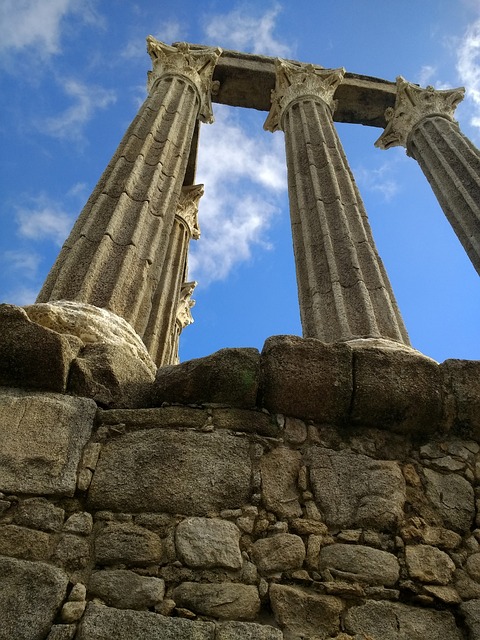
This parable also shows us that Jesus knew He would die at the hands of these men who opposed Him. He was God’s Son and the One who was promised. He was, to quote Psalm 118:22-24: “The stone that the builders rejected has become the cornerstone. This came from the Lord; it is wonderful in our eyes. This is the day the Lord has made; let us rejoice and be glad in it.” We find that verses 26-27 of this Psalm have described His earlier triumphal entry. The Pharisees would have been familiar with this Psalm, which is perhaps the reason they objected to the people’s pronouncement in the first place. Now, Jesus is pointing it out once again, going further to identify Himself with the subject of this Psalm. There would have been no mistaking Jesus’ intent. He had just proclaimed Himself the Messiah and they had to stop Him. The only thing stopping them, for now, is the fear of the people who were also listening to Jesus. These were the same people who had, a few days before shouted “Blessed is He who comes in the Name of the Lord.” They were hanging on every word Jesus spoke and many of them would have understood the indictment of the Pharisees and other religious leaders. Right now, these religious leaders were walking on thin ice. They had to come up with a good trap.
Vs 20-26 They watched closely and sent spies who pretended to be righteous, so they could catch Him in what He said, to hand Him over to the governor’s rule and authority. They questioned Him, “Teacher, we know that You speak and teach correctly, and You don’t show partiality, but teach truthfully the way of God. Is it lawful for us to pay taxes to Caesar or not?” But detecting their craftiness, He said to them, “Show Me a denarius. Whose image and inscription does it have?” “Caesar’s,” they said. “Well then,” He told them, “give back to Caesar the things that are Caesar’s and to God the things that are God’s.” They were not able to catch Him in what He said in public, and being amazed at His answer, they became silent.
So, with the need to come up with a good trap, they send in spies who pretend to be righteous. The Greek word for righteous is dikaios, which means to be innocent. So these spies were pretending their innocence, just asking their “innocent” questions. They begin this bit of drama by piling on the flattery; “we know that You speak and teach correctly, and You don’t show partiality, but teach truthfully the way of God.” Have you ever heard the term “butter them up”? It is a technique by which someone praises a person so they can gain their support or trust. These spies thought if they started off the conversation by telling Jesus how awesome He was, He would be so flattered, He wouldn’t see the trap coming. They obviously didn’t know Jesus. Finally, they get to the question: “Is it lawful for us to pay taxes to Caesar or not?” For the average person, this would have been a great trap – a no win situation. If Jesus had answered yes, He would become very unpopular with the people as they would see it as a denial of the supremacy of God, as well as a support of the hated Roman empire. But, if He said no, then He would become an enemy of Rome and they would have a reason to turn Him in to the government authorities. Instead, Jesus astounds them with His answer. He asks them to give Him a coin, then asks them a very simple question – whose image is on this coin? There is only one answer – it is Caesar. So Jesus says to them: “give back to Caesar the things that are Caesar’s and to God the things that are God’s.” In spite of themselves, they are amazed at Jesus’ answer to the point of silence. They had nothing more to ask or say – at least on that day.
Vs 27-39 Some of the Sadducees, who say there is no resurrection, came up and questioned Him: “Teacher, Moses wrote for us that if a man’s brother has a wife, and dies childless, his brother should take the wife and produce offspring for his brother. Now there were seven brothers. The first took a wife and died without children. Also the second and the third took her. In the same way, all seven died and left no children. Finally, the woman died too. In the resurrection, therefore, whose wife will the woman be? For all seven had married her.” Jesus told them, “The sons of this age marry and are given in marriage. But those who are counted worthy to take part in that age and in the resurrection from the dead neither marry nor are given in marriage. For they cannot die anymore, because they are like angels and are sons of God, since they are sons of the resurrection. Moses even indicated in the passage about the burning bush that the dead are raised, where he calls the Lord the God of Abraham and the God of Isaac and the God of Jacob. He is not God of the dead but of the living, because all are living to Him.” Some of the scribes answered, “Teacher, You have spoken well.” And they no longer dared to ask Him anything.
Next, the Sadducees take their turn to question Jesus. Before we get to their question, it would be a good idea to look at the differences between the Pharisees and Sadducees. This will explain their particular question. These sects of religious leadership were two groups divided by some very distinctive theological issues. First though, let’s look at the things they both agreed on: 1) There was only One true God, 2) God was the Creator of all things 3) Israel had been selected by God as His chosen people, 4) They would have God’s protection if they were obedient, but would be punished if they were not and, (for this Bible Study) 5) they both wanted to see Jesus’ influence obliterated and Him executed.
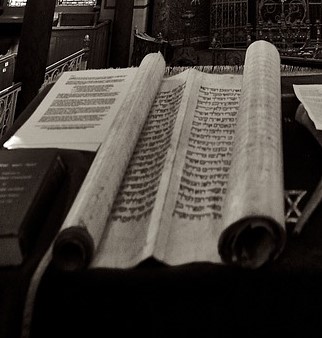
Because most of us are better acquainted with the Pharisees, we will start with their distinctive beliefs. They were, first of all, devoted to the strict observance of the will of God as spelled out in the Laws of Moses. In order to be capable of observing the Laws of Moses, they devised a set of prescriptive behaviors to follow, and they believed if this prescribed behavior could be followed to the letter, the Law would be observed. These prescribed behaviors were an oral tradition added to the written Law of Moses (the 5 books of the Torah). We have read in several places where Jesus took issue with the extra load these traditions had laid upon the people. One example is healing on the Sabbath. At around 200 BCE, this oral law was written down into what is now known as the Mishnah, which is the core of the Talmud. Finally, the Pharisees believed the dead would be resurrected at the end of time. On a socio-economic level, most Pharisees were not considered elite, although some were wealthy. They were also not heavily involved in the political scene.
The Sadducees, on the other hand, were wealthy Jewish aristocrats, mostly from Jerusalem, and politically influential. Their political influence meant they often collaborated with Roman officials. Most Sadducees were priest, but not all priests were Sadducees. And, most of the Sanhedrin was made up of Sadducees. They were closely connected to the Temple and it’s practices believing that only the Torah was sacred. They did not have an extra oral tradition but emphasized strict adherence to the Law of Moses as written in the Torah, and strict adherence to the Temple worship and sacrifices. Most importantly to this text, they did not believe in the resurrection.

The question they raised is quite interesting, and I believe it was meant to show how “right” they were about the resurrection, or lack thereof. The idea is based on Deuteronomy 25:5-6: If brothers are living together and one of them dies without a son, his widow must not marry outside the family. Her husband’s brother shall take her and marry her and fulfill the duty of a brother-in-law to her. The first son she bears shall carry on the name of the dead brother so that his name will not be blotted out from Israel. With this in mind, they concocted an elaborate story to show how ridiculous the resurrection is, as brother after brother dies leaving this widow without a son. She finally dies, so they ask whose wife would she be in the, you can almost hear them say, “so called” resurrection. They had probably used this same argument with the Pharisees with great success but Jesus is not stumped. He begins his answer by correcting their skewed assumption. The resurrection is not a continuation of life as we know it. It is a totally different situation. There will be no marriage or giving of marriage. There will be no death. Revelation 21:3-5 gives us a beautiful picture: Look! God’s dwelling is with humanity, and He will live with them. They will be His people, and God Himself will be with them and be their God. He will wipe away every tear from their eyes. Death will no longer exist; grief, crying, and pain will exist no longer, because the previous things have passed away. Then the One seated on the throne said, “Look! I am making everything new.” Jesus was telling the Sadducees the same thing – the old order of things will pass away and God will make something new! Jesus also used the Torah as proof of the resurrection. Remember, the Torah was, to them was totally sacred. Jesus quotes Exodus 3:6 – Then He continued, “I am the God of your father, the God of Abraham, the God of Isaac, and the God of Jacob.” Moses hid his face because he was afraid to look at God. In this Scripture, Jesus shows that God is, not was the God of Abraham, Isaac and Jacob. The only way for this to be true would mean there had to be a resurrection to life. Even the scribes had to applaud this answer. After this display of supreme Biblical knowledge, no one dared to ask Jesus anymore questions.
Vs 41-44 Then He said to them, “How can they say that the Messiah is the Son of David? For David himself says in the Book of Psalms: The Lord declared to my Lord, ‘Sit at My right hand until I make Your enemies Your footstool.’ David calls Him ‘Lord’; how then can the Messiah be his Son?”
Jesus continued response to these questions was to show who He was as the Messiah. They had asked Him many questions to trap Him. He responds by asking a question of His own – Do you know who I am? After all of this, why do you find it so hard to believe? They thought they knew everything there was to know about the Messiah. They had read and studied the Torah and the prophets after all. Here Jesus quotes Psalm 110:1 – The Lord declared to my Lord, ‘Sit at My right hand until I make Your enemies Your footstool.’ His point was this: David calls the future Messiah his Lord instead of his son. David recognized who the Messiah was to be. Revelation 22:16 further explains this: “I, Jesus, have sent My angel to attest these things to you for the churches. I am the Root and the Offspring of David, the Bright Morning Star.” Isaiah 11:1-2 also says, Then a shoot will grow from the stump of Jesse, and a branch from his roots will bear fruit. The Spirit of the Lord will rest on Him—a Spirit of wisdom and understanding, a Spirit of counsel and strength, a Spirit of knowledge and of the fear of the Lord. If David recognizes who the Messiah is, why hadn’t they?

Questions, questions and more questions. How many of us have asked God similar questions throughout our lives? We pretend innocence around others as we publicly “ask” our questions. We question God’s motives out of a arrogant heart. And that is the key. It is not that God doesn’t want us to question Him, it is out of what kind of heart are we asking the questions. The Psalms and the Prophets are full of questions and groanings. Here are a few examples: Psalm 10:1 – Lord, why do You stand so far away? Why do You hide in times of trouble? Psalm 44:23-24 – Wake up, Lord! Why are You sleeping? Get up! Don’t reject us forever! Why do You hide Yourself and forget our affliction and oppression? The entire book of Habakkuk asks God questions like “where are you God when I need you?” “Why do bad things happen to good people?” “Why do good things happen to bad people?” “Am I going to make it through this trial?” The questions of Moses in Exodus 3-4 are our best example. At first, he is asking sincere questions, but then his questions come out of a heart making excuses and wanting to get out of the task God is asking of him. God’s response tells us when he crossed the line! It is all about asking with a unadulterated heart ready to receive the answer God will give. I leave us with this thought from Matthew 7:7-8 “Keep asking, and it will be given to you. Keep searching, and you will find. Keep knocking, and the door will be opened to you. For everyone who asks receives, and the one who searches finds, and to the one who knocks, the door will be opened.
 Bible Study Blog