Betrayal and Denial

To be betrayed by someone is probably one of the worst thing that can happen. It is horrible to have someone we thought we could trust let us down. The best example of a betrayal I can think of is when a man by the name of Jon Vogel, betrayed the Ten Boon family. During WWII, the Ten Boon family began to hide Jews and other resistance fighters in their home. Their story is told in Corrie Ten Boon’s book The Hiding Place. On February 28, 1944, the Ten Boom family was betrayed and the Gestapo raided their home, arresting the family and other visitors in their home. Miraculously, none of the Jews hidden that day were found. Ultimately, Corrie’s father and her sister Betsie died in prison and a concentration camp respectively. Corrie survived the ordeal because of a miraculous clerical error. During her time in the concentration camp, she finds out that it was Vogel who had betrayed their family. She is so angry, she feels, like most of us would, she could actually kill him. When she talks to her sister Betsie about her feelings, she learns what forgiveness really is: “Betsie, don’t you feel anything about Jan Vogel? Doesn’t it bother you?” “Oh yes, Corrie! Terribly! I’ve felt for him ever since I knew—and pray for him whenever his name comes into my mind. How dreadfully he must be suffering!” This is not what she anticipates and it changes her heart and attitude on what true forgiveness is. She too is able to forgive the one who betrayed her. We know Jesus was ultimately betrayed by Judas Iscariot, but He was also denied, and His disciples displayed a great lack of comprehension of the seriousness of the situation during His last moments before His trial and crucifixion. All of these are different types of betrayal.
The word betrayal has many synonyms. To break one’s promise to, to let down, deceive, denounce, squeal on, rat out, sell someone out, be disloyal to… In the next series of passages, we will find how the disciples let Jesus down, how one sold Him out, and how another denounced Him.
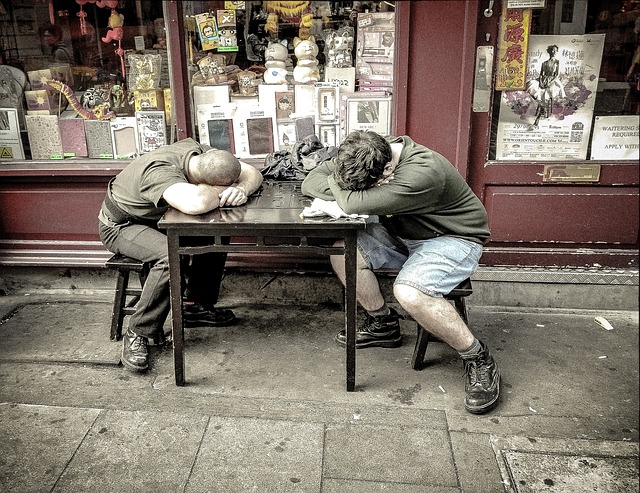
Vs 39-46 He went out and made His way as usual to the Mount of Olives, and the disciples followed Him. When He reached the place, He told them, “Pray that you may not enter into temptation.” Then He withdrew from them about a stone’s throw, knelt down, and began to pray, “Father, if You are willing, take this cup away from Me—nevertheless, not My will, but Yours, be done.” Then an angel from heaven appeared to Him, strengthening Him. Being in anguish, He prayed more fervently, and His sweat became like drops of blood falling to the ground. When He got up from prayer and came to the disciples, He found them sleeping, exhausted from their grief. “Why are you sleeping?” He asked them. “Get up and pray, so that you won’t enter into temptation.”
Jesus comes to the Mount of Olives and gives his disciples clear instructions: “Pray that you may not enter into temptation.” The Greek word for temptation is peirasmos, which means a test or trial that can lead to falling into temptation. He has told them they need to be ready. Jesus wants them to be aware and equipped to withstand the temptation that will be coming. He then goes a short distance away, and begins to pray. He asks God, if He is willing, to take the cup away from Him nevertheless, not My will, but Yours, be done. It was not God’s will for the cup to be taken from Him. Jesus’ road to the cross was going to be so demanding, God sends Him an angel to strengthen Him for the journey. Knowing what lies before Him, Jesus prayers become anguished and fervent and He begins to sweat blood. This is known as hematohidrosis, a condition possibly caused when an individual is suffering from extreme levels of stress. Afterwards, the skin becomes very tender and is easily broken.
After this, Jesus comes back to his disciples, but He doesn’t find them ready or praying. Instead, they are sleeping. In the book of Mark, we find Jesus had come to them three times. Every time they were sleeping. They had betrayed Jesus trust in them. They had let Him down. More importantly, they had opened themselves up to further temptation and trial. They were not ready for what was coming next.
Vs 47-53 While He was still speaking, suddenly a mob was there, and one of the Twelve named Judas was leading them. He came near Jesus to kiss Him, but Jesus said to him, “Judas, are you betraying the Son of Man with a kiss?” When those around Him saw what was going to happen, they asked, “Lord, should we strike with the sword?” Then one of them struck the high priest’s slave and cut off his right ear. But Jesus responded, “No more of this!” And touching his ear, He healed him. Then Jesus said to the chief priests, temple police, and the elders who had come for Him, “Have you you come out with swords and clubs as if I were a criminal? Every day while I was with you in the temple complex, you never laid a hand on Me. But this is your hour—and the dominion of darkness.”

The next betrayal is by Judas. Earlier, he had sold Jesus out to the Pharisees for 30 pieces of silver. He now approaches Jesus and gives Him a kiss. In the culture of first-century Israel, this kind of kiss was a common greeting. We find similar greetings in modern France or Belgium where friends greet each other with a kiss on the cheek. Here, it is a sign of deep respect, honor, and brotherly love. It is tragic that Judas chose a greeting of honor to betray Jesus and Jesus notes this when He says, “Judas, are you betraying the Son of Man with a kiss?” Suddenly, His disciples are aware of what was happening. Their first response is to fight by the sword. “Lord, should we strike with the sword?” One of them, identified in the book of John as Peter, does take out his sword and cuts an ear off of the high priest’s slave. Jesus stops them immediately. This was not going to do anything but get them killed. The temple police, chief priests and elders were there. They had clubs and other weapons at the ready. Finally, Jesus notes the time of their ambush. Every day while I was with you in the temple complex, you never laid a hand on Me. But this is your hour—and the dominion of darkness.” They had come at night, hidden by the darkness. This can also elude to their dark hearts. The Greek word for dominion is exousia, which means power, authority and influence. Their time had come to carry out, what in spite of their motives would be the will of the Father. Their dark hearts were ready.
Vs 54-62 They seized Him, led Him away, and brought Him into the high priest’s house. Meanwhile Peter was following at a distance. They lit a fire in the middle of the courtyard and sat down together, and Peter sat among them. When a servant saw him sitting in the firelight, and looked closely at him, she said, “This man was with Him too.” But he denied it: “Woman, I don’t know Him!” After a little while, someone else saw him and said, “You’re one of them too!” “Man, I am not!” Peter said. About an hour later, another kept insisting, “This man was certainly with Him, since he’s also a Galilean.” But Peter said, “Man, I don’t know what you’re talking about!” Immediately, while he was still speaking, a rooster crowed. Then the Lord turned and looked at Peter. So Peter remembered the word of the Lord, how He had said to him, “Before the rooster crows today, you will deny Me three times.” And he went outside and wept bitterly.
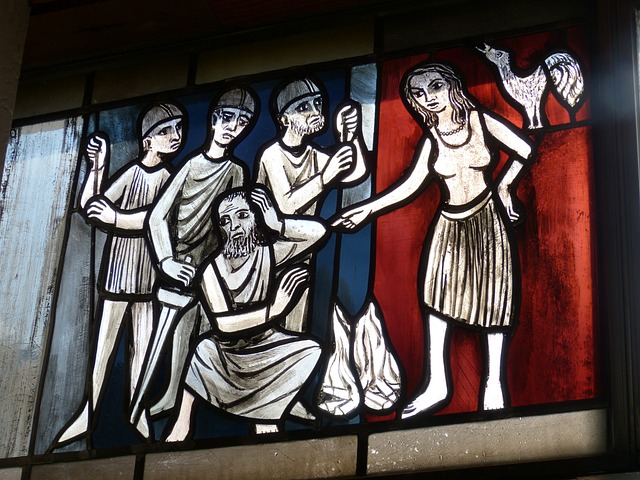
And now, the last betrayal – the denial. Peter would end up denouncing the One he had followed for three years. He would allow his fear to dictate his actions. Jesus is taken to the house of the high priest and, instead of following out in the open, Peter follows at a distance. He comes to the house and he tries to blend in by sitting with the servants at the fire. But, he is noticed and recognized. One of the servants sees him and says, “This man was with Him too.” Peter instantly denies it: “Woman, I don’t know Him!” Have you ever been in a situation like that? You’re doing everything not to be noticed, but someone notices you? Now everyone is looking at you and they notice you too. This is what happened with the second person. Perhaps after the first woman’s declaration, he really looks at him and says, “You’re one of them too!” Peter says, “Man, I am not!” Now everyone’s eyes are on him around the fire. No one says anything for a while, but finally someone else is convinced. He notices Peter’s clothing and style. He is a Galilean. The other two had to be right. This guy must know Jesus, and so he says, “This man was certainly with Him, since he’s also a Galilean.” Peter’s response: “Man, I don’t know what you’re talking about!” In the books of Matthew and Mark it says Peter cursed and swore an oath with his denial to make his point. Just then, Peter hears the rooster crow. Looking up, Peter finds Jesus looking at him. The Greek word for look is emblepó. It is a word describing a concentrated sustained, locked in gaze. They locked eyes and Peter knew he had fallen to the very temptation he swore to Jesus he would not fall to. He thought he was ready to go to battle for Jesus, but, in the end, he wasn’t.
I believe these three types of betrayals are a warning to us as the church right now. First. are we ready for the trials and temptations that will come, or have we, like the disciples, fallen asleep? Jesus asked them to be ready and pray so they would not fall. Without exception, all the disciples ended up falling asleep. After Jesus’ arrest, almost all fled the scene. Peter did follow, but at a distance so he would not be discovered. And, only one will be with Jesus at the cross. This is what happens when we do not stay at the ready. We allow the things around us to dampen or discourage our faith. It leads to apathy and a lack of passion and we find ourselves sleeping instead of praying.
Second, there are those who outright betray their faith. They walk away completely, wanting nothing more to do with God. Maybe, like Judas, they had a different idea as to who God is and what He would do for them. When things didn’t go their way, their faith faltered and they walked away doing more harm than good to the church. They are, for one reason or another, disillusioned and they will take it out on the church. My father use to call them backdoor Christians. They come in through the front door all excited, only to be disappointed for one reason or another, and exit out the backdoor never to return. Most will bad mouth the church and faith.
Finally, there are those who outright deny. They are afraid to stand out, so, they end up trying to blend into the world around them. They don’t want to be noticed. When people do notice them, they simply deny, deny, deny. They might even go to church, but they don’t get too involved. They are more concerned with how others see them. They want to seem good, but not too good. Their faith is only based on what it can get them at the time. It could also be the reason we are seeing emptier and emptier churches today.
This reminds me of a song written in 1978 by Keith Green called Asleep in the Light. The second verse goes like this: “Oh, bless me, Lord, bless me, Lord” You know, it’s all I ever hear. No one aches, no one hurts, no one even sheds one tear. But, He cries, He weeps, He bleeds and He cares for your needs. And you just lay back and keep soaking it in.” A later verse says: Oh, can’t you see it’s such sin? The world is sleeping in the dark. That the church just can’t fight ’cause it’s asleep in the light. How can you be so dead when you’ve been so well fed? Jesus rose from the grave and you can’t even get out of bed. Oh, Jesus rose from the dead. Come on, get out of your bed. These words seem pretty harsh, but, I read them as a warning to the church. After all, isn’t this what Jesus was warning the disciples about in the garden? He said – Be ready and pray – and they fell asleep. Believe me, if they can do it, all of us can. It’s easy to say bless me, but harder to go to work and be a blessing to those around us. It’s easy to say, I will pray for you, but harder to stand in the gap for those in need. It’s easy to sit back in a nice big comfortable church, but harder to really do what it takes to be ready. It’s easy to go to sleep in the light as the darkness continues to surround us. This is why Jesus says to us – “Pray that you may not enter into temptation.” Recall the words of Jesus in Luke 21:34-35 “Be on your guard, so that your minds are not dulled from carousing, drunkenness, and worries of life, or that day will come on you unexpectedly like a trap. For it will come on all who live on the face of the whole earth. We must be ready. We cannot be sleeping in the light while there are those lurking in the dark ready to trip us up. No, we must “be alert at all times, praying that you may have strength to escape all these things that are going to take place and to stand before the Son of Man.” Luke 21:36
 Bible Study Blog