He’s Alive!
Jesus is the Lamb of God who takes away the sins of the world. He is our Yom Kippur, (our Day of Atonement), our Passover Lamb, and the sin sacrifice in fulfillment of all Scripture. Now, He is the Resurrection and the Life. We do not worship a dead god. We worship a risen Savior. We do not just remember his death at Passover. We remember the body that was broken, the blood that was spilled and the hope of life eternal. We have gone to the cross and the grave. Now we come to the morning of His resurrection.
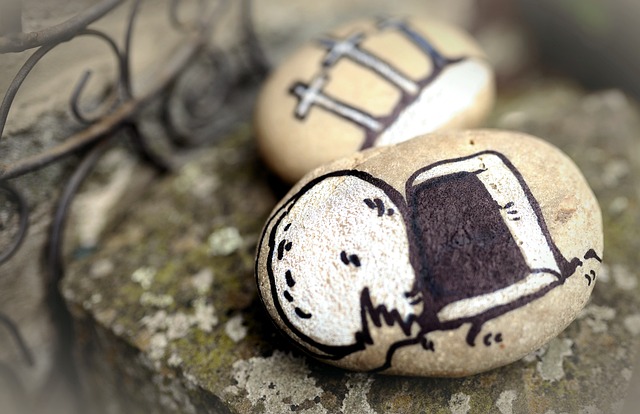
Vs 1-8 On the first day of the week, very early in the morning, they came to the tomb, bringing the spices they had prepared. They found the stone rolled away from the tomb. They went in but did not find the body of the Lord Jesus. While they were perplexed about this, suddenly two men stood by them in dazzling clothes. So the women were terrified and bowed down to the ground. “Why are you looking for the living among the dead?” asked the men. “He is not here, but He has been resurrected! Remember how He spoke to you when He was still in Galilee, saying, ‘The Son of Man must be betrayed into the hands of sinful men, be crucified, and rise on the third day’?” And they remembered His words.
Jesus had told them He would die and rise again. Somehow, they had, in their great grief and shock, forgotten those words of hope. Then He took the Twelve aside and told them “Listen! We are going up to Jerusalem. Everything that is written through the prophets about the Son of Man will be accomplished. For He will be handed over to the Gentiles, and He will be mocked, insulted, spit on; and after they flog Him, they will kill Him, and He will rise on the third day.” Luke 18:31-33 Here they are though, expecting death when there is life. They had prepared for a dead body instead of a risen Savior. The angels say as much when they ask them, “Why are you looking for the living among the dead?” This is the important question we must ask ourselves. How often do we look for the living among the dead? Maybe it’s old traditions that hold us back from experiencing all God has for us. Maybe it’s bad habits or even not so bad habits. Whatever it is we are holding on to, we must release it. Look for the living among the living!
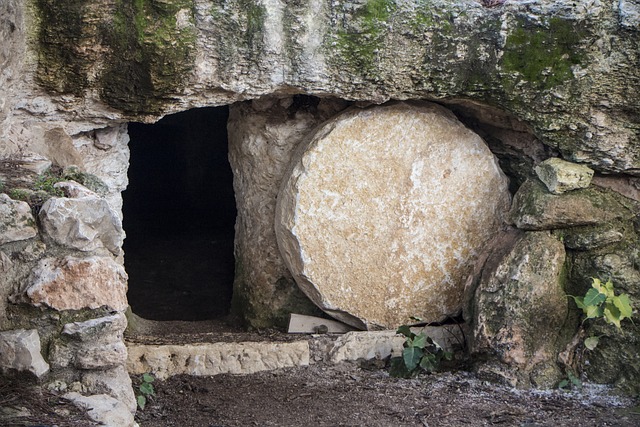
Vs 9-12 Returning from the tomb, they reported all these things to the Eleven and to all the rest. Mary Magdalene, Joanna, Mary the mother of James, and the other women with them were telling the apostles these things. But these words seemed like nonsense to them, and they did not believe the women. Peter, however, got up and ran to the tomb. When he stooped to look in, he saw only the linen cloths. So he went home, amazed at what had happened.
The women, having witnessed an extraordinary event, ran and reported everything to the disciples, but the disciples did not believe them. The Greek word for nonsense is leros, which means silly talk or folly. Coming from women at that time, their word was not credible. They found their talk silly. They were reaching for something that just wasn’t possible. But Peter was moved enough to go and check it out. He found the tomb just as the women had said and, even more amazing, the linen cloths were there without the body. When he saw this, he knew something had happened and he went away marveling at what he saw. Still, he did not understand the words of Jesus. He didn’t fully understand what had taken place yet. He still couldn’t get his head around a risen Savior. But he was about to.
Vs 13-24 Now that same day two of them were on their way to a village called Emmaus, which was about seven miles from Jerusalem. Together they were discussing everything that had taken place. And while they were discussing and arguing, Jesus Himself came near and began to walk along with them. But they were prevented from recognizing Him. Then He asked them, “What is this dispute that you’re having with each other as you are walking?” And they stopped walking and looked discouraged. The one named Cleopas answered Him, “Are You the only visitor in Jerusalem who doesn’t know the things that happened there in these days?” “What things?” He asked them. So they said to Him, “The things concerning Jesus the Nazarene, who was a Prophet powerful in action and speech before God and all the people, and how our chief priests and leaders handed Him over to be sentenced to death, and they crucified Him. But we were hoping that He was the One who was about to redeem Israel. Besides all this, it’s the third day since these things happened. Moreover, some women from our group astounded us. They arrived early at the tomb, and when they didn’t find His body, they came and reported that they had seen a vision of angels who said He was alive. Some of those who were with us went to the tomb and found it just as the women had said, but they didn’t see Him.”

Meanwhile, two of the disciples who had been in the room when the women came, decided to walk back to where they were staying in Emmaus. They were arguing about the events that had happened. We can only guess at the argument. Was it about what they women had told them? Was it’s Peter’s report about the empty tomb? We do know they still believed Jesus was dead. How do we know this? Jesus tells us as much. As they are walking Jesus begins to walk with them while they are still debating the issue. He finally asks them what they are talking about and they can’t believe He hasn’t heard. “Are You the only visitor in Jerusalem who doesn’t know the things that happened there in these days?”
Vs 25-32 He said to them, “How unwise and slow you are to believe in your hearts all that the prophets have spoken! Didn’t the Messiah have to suffer these things and enter into His glory?” Then beginning with Moses and all the Prophets, He interpreted for them the things concerning Himself in all the Scriptures. They came near the village where they were going, and He gave the impression that He was going farther. But they urged Him: “Stay with us, because it’s almost evening, and now the day is almost over.” So He went in to stay with them. It was as He reclined at the table with them that He took the bread, blessed and broke it, and gave it to them. Then their eyes were opened, and they recognized Him, but He disappeared from their sight. So they said to each other, “Weren’t our hearts ablaze within us while He was talking with us on the road and explaining the Scriptures to us?”
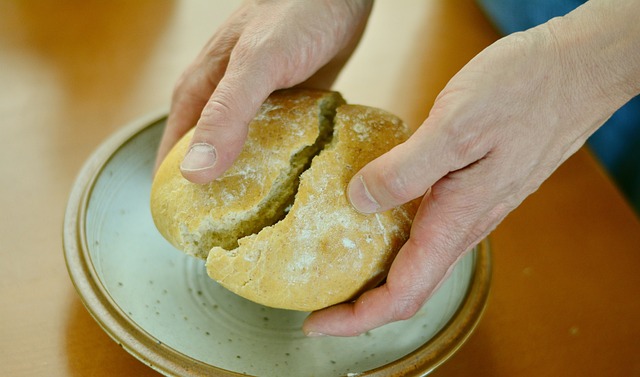
As we see, Jesus can’t believe they don’t believe the evidence right in front of them. They are still looking for the dead among the living. And so, He takes them on a journey through Scripture, leading them through all the passages that concern Himself. He shows them the crucifixion was a fulfillment of all of Scripture, yet they still do not understand. It isn’t until he blessed and broke the bread that their eyes were finally opened. They finally began to understand why there hearts were ablaze. The Greek word for ablaze is kaió, which means to kindle or to light. The light had finally been switched on in their hearts and they understood everything He had been telling them.
I want to take a moment here to look at one thing. I find it interesting that Jesus revealed Himself to people other than the Eleven at first. He first showed Himself to the women who came to the tomb: But the angel told the women, “Don’t be afraid, because I know you are looking for Jesus who was crucified. He is not here! For He has been resurrected, just as He said. Come and see the place where He lay. Then go quickly and tell His disciples, ‘He has been raised from the dead. In fact, He is going ahead of you to Galilee; you will see Him there.’ Listen, I have told you.” So, departing quickly from the tomb with fear and great joy, they ran to tell His disciples the news. Just then Jesus met them and said, “Good morning!” They came up, took hold of His feet, and worshiped Him. Then Jesus told them, “Do not be afraid. Go and tell My brothers to leave for Galilee, and they will see Me there.” Matthew 28:5-10. Then He showed Himself to these two disciples who were leaving Jerusalem. For whatever reason, Jesus chose to show Himself to these believers first. He knew they would then take the message back to the Eleven.
Vs 33-49 That very hour they got up and returned to Jerusalem. They found the Eleven and those with them gathered together, who said, “The Lord has certainly been raised, and has appeared to Simon!” Then they began to describe what had happened on the road and how He was made known to them in the breaking of the bread. And as they were saying these things, He Himself stood among them. He said to them, “Peace to you!” But they were startled and terrified and thought they were seeing a ghost. “Why are you troubled?” He asked them. “And why do doubts arise in your hearts? Look at My hands and My feet, that it is I Myself! Touch Me and see, because a ghost does not have flesh and bones as you can see I have.” Having said this, He showed them His hands and feet. But while they still were amazed and unbelieving because of their joy, He asked them, “Do you have anything here to eat?” So they gave Him a piece of a broiled fish, and He took it and ate in their presence. Then He told them, “These are My words that I spoke to you while I was still with you—that everything written about Me in the Law of Moses, the Prophets, and the Psalms must be fulfilled.” Then He opened their minds to understand the Scriptures. He also said to them, “This is what is written: The Messiah would suffer and rise from the dead the third day, and repentance for forgiveness of sins would be proclaimed in His name to all the nations, beginning at Jerusalem. You are witnesses of these things. And look, I am sending you what My Father promised. As for you, stay in the city until you are empowered from on high.”
And they did. That very hour they left and traveled the seven miles back to Jerusalem to give the disciples the good news. To add an exclamation point to their story, Jesus appears to everyone in the room, yet they still did not believe. They thought they were seeing a ghost. The Greek word for terrified is ptoeó, which means to be panicked. Even after the testimony of the women and the two disciples from Emmaus, they still could not believe. Jesus asks them why they are troubled. The Greek word for troubled is tarassó, which means to be perplexed or agitated. He had appeared to them in person, and showed them His hands and feet, yet they still did not believe. Once again, Jesus takes them through Scripture to show them why it was necessary for all these things to happen.

In order for Scripture to be fulfilled, Jesus had to suffer and die. It was spelled out in Isaiah 53. These are words the disciples would have been very familiar with. He was despised and rejected by men, a man of suffering who knew what sickness was. He was like someone people turned away from; He was despised, and we didn’t value Him. Yet He Himself bore our sicknesses, and He carried our pains; but we in turn regarded Him stricken, struck down by God, and afflicted. But He was pierced because of our transgressions, crushed because of our iniquities; punishment for our peace was on Him, and we are healed by His wounds. We all went astray like sheep; we all have turned to our own way; and the Lord has punished Him for the iniquity of us all. He was oppressed and afflicted, yet He did not open His mouth. Like a lamb led to the slaughter and like a sheep silent before her shearers, He did not open His mouth. He was taken away because of oppression and judgment; and who considered His fate? For He was cut off from the land of the living; He was struck because of my people’s rebellion. They made His grave with the wicked and with a rich man at His death, although He had done no violence and had not spoken deceitfully. Isaiah 53:3-9.

In order for forgiveness to be extended, blood had to be spilled. The offerings throughout Exodus and Leviticus required a blood sacrifice. Sin required the spilling of blood. A missionary friend of mine told a story once that illustrates this. One day, he encountered some men in a village who had never heard the gospel of Jesus Christ before. They had a chicken and were taking it to an altar to sacrifice it. The missionary asked them why? They told him one of the men had wronged the other so, in order to restore their relationship, he was sacrificing his chicken. The missionary asked why he couldn’t just give the other man a live chicken. He said the men looked at him almost incredulously. Don’t you know, they asked? There has to be blood spilled. We don’t like the idea of the spilling of blood. It’s messy and gruesome, but, if we want to talk about the love and grace of God, we have to talk about the blood as well. There is no way around it. In His infinite mercy, God had set up a sacrificial system for His people so they could remain in relationship with Him. But, because the priest who were carrying out the system were also guilty of sin, Scripture could not be fulfilled perfectly through it. This system was only a foreshadowing of the perfect sacrifice that was to come – Jesus our Messiah. He was the perfect Lamb of God. He was the perfect unblemished sin and burnt offerings. He was our Yom Kippur. He was the fulfillment of all Scripture as He bled and died on the cross for our sins. Yes, blood had to be spilled so we might come into a relationship with a perfect and holy God.
Finally, in order for there to be totally victory over sin and death there had to be a resurrection. Right before Jesus brought Lazarus back to life he said to Martha, “I am the resurrection and the life. The one who believes in Me, even if he dies, will live. Everyone who lives and believes in Me will never die—ever. Do you believe this?” John 11:25-26. In 1 Corinthians 15, Paul is dealing with an issue in the church – basically, there were those who did not believe in the resurrection. Here is what he says in verses 12-19 Now if Christ is proclaimed as raised from the dead, how can some of you say, “There is no resurrection of the dead”? But if there is no resurrection of the dead, then Christ has not been raised; and if Christ has not been raised, then our proclamation is without foundation, and so is your faith. In addition, we are found to be false witnesses about God, because we have testified about God that He raised up Christ—whom He did not raise up if in fact the dead are not raised. For if the dead are not raised, Christ has not been raised. And if Christ has not been raised, your faith is worthless; you are still in your sins. Therefore, those who have fallen asleep in Christ have also perished. If we have put our hope in Christ for this life only, we should be pitied more than anyone. Finally, Paul finishes this portion of his letter with this: Death, where is your victory? Death, where is your sting? Now the sting of death is sin, and the power of sin is the law.
But thanks be to God, who gives us the victory through our Lord Jesus Christ! 1 Corinthians 15:55-57. Through Christ’s resurrection, the sting of death and the power of sin has been vanquished.
And this is the good news we have to tell. Sin does not have to take us captive anymore. In His great mercy and love, God made a way for us to come back into relationship with Him through the death and resurrection of Jesus Christ our Lord and Savior. He died, once for all, as the perfect, holy, unblemished sacrifice. He was buried, and then rose again conquering sin and death. In Adam, we only had death to look forward to, but in Christ, we are made alive because He is Alive!
 Bible Study Blog