Pentecost
Before we begin this lesson, I want to apologize for the huge delay in blogs. I started teaching again this fall and have been playing catch up ever since! I will endeavor to be better in the future!
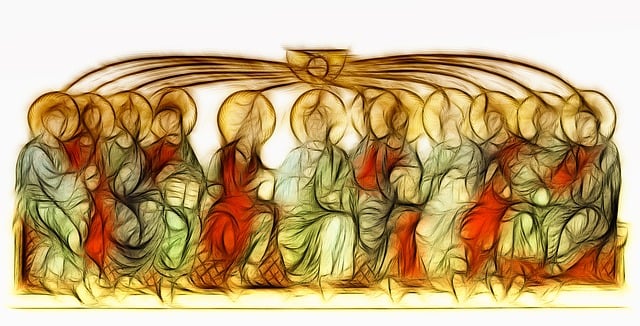
In Leviticus 23, God gives the people of Israel a list of holy days they are to observe. In verses 15-22, He describes a day called Shauvot. The meaning of the word is 50. It occurred 50 days after the Sabbath of Passover, which was a day of celebrating the first fruits. Shauvot is a celebration of the giving of the Torah. Traditionally, the Jewish people come together in an all-nighter to read the 10 commandments, the book of Ruth and eat dairy products such as cheesecake. The Greek word for Shauvot is, you guessed it, Pentecost. So the disciples of Jesus came together in the upper room for an all-nighter to read the Torah, pray and probably read the book of Ruth. As to the dairy thing, I don’t think it became a tradition until later. Some say the tradition comes from the fact the Promised Land was called the land of milk and honey.
You might be asking why the book of Ruth? Leviticus 23:22 gives us a clue: “When you reap the harvest of your land, you are not to reap all the way to the edge of your field or gather the gleanings of your harvest. Leave them for the poor and the foreign resident; I am Yahweh your God.” If you recall, in the book of Ruth, she had gone to the field of Boaz to gather grain for herself and Naomi. Boaz, being a righteous man, not only leaves the edges of his field for those in need, he has his workers pull out some of the best stalks for Ruth to glean. The end of the book of Ruth also gives us the linage of David beginning with Judah’s son Perez and going through Boaz’s son by Ruth. These were the things on the minds of the disciples when the giving of the Holy Spirit came upon them. This day was no mere coincidence. It had been planned for perfectly, by God, from the very beginning. The table was set. The disciples were together in the upper room, the masses were gathered in Jerusalem for the festival and, God was about to fulfill the festival of Shauvot!

Vs 1-13 When the day of Pentecost had arrived, they were all together in one place. Suddenly a sound like that of a violent rushing wind came from heaven, and it filled the whole house where they were staying. And tongues, like flames of fire that were divided, appeared to them and rested on each one of them. Then they were all filled with the Holy Spirit and began to speak in different languages, as the Spirit gave them ability for speech. There were Jews living in Jerusalem, devout men from every nation under heaven. When this sound occurred, a crowd came together and was confused because each one heard them speaking in his own language. And they were astounded and amazed, saying, “Look, aren’t all these who are speaking Galileans? How is it that each of us can hear in our own native language? Parthians, Medes, Elamites; those who live in Mesopotamia, in Judea and Cappadocia, Pontus and Asia, Phrygia and Pamphylia, Egypt and the parts of Libya near Cyrene; visitors from Rome, both Jews and proselytes, Cretans and Arabs – we hear them speaking the magnificent acts of God in our own languages.” They were all astounded and perplexed, saying to one another, “What could this be?” But some sneered and said, They’re full of new wine!”
This particular feast was always very well attended by the diaspora of the Jewish nation. The good traveling conditions probably had a lot to do with it. Many would come to Jerusalem, all speaking their native languages. It is in this setting that the Holy Spirit comes upon the disciples. As they sat together in the upper room praying and reading Scripture, it happens. It is not a soft whisper or a warm fuzzy feeling. No, when the Holy Spirit came in that place the sound was like a violent rushing wind. It was a sound that made you pay attention, and, it was loud enough to draw a crowd. The sound was accompanied by the sight of what appeared like tongues of fire on each of the disciples heads and then, they began to speak in other languages. This event took them out of their upper room into the streets of Jerusalem where God had gathered a crowd. When they spoke, everyone from everywhere could understand them. The crowd was astounded. They recognized the men as Galileans and were perplexed as to how they could have learned so many languages. Why was it perplexing? Well, Galileans were not known to be very cultured or well spoken. Quite the opposite. They were considered uncultured and very poor speakers, lacking the refinement of other cultures in Israel. Some even thought they were drunk. It’s amazing to me how we try to explain away God’s amazing deeds. We can’t understand it, so the only explanation is they’re drunk. I’m not sure how being drunk suddenly enables the tongue to speak in other languages but… I really think it is because people have a hard time believing in the miracles and works of God. This may be one of the reasons our churches are dry and in need of revival. We have ceased to experience, and expect the power of the Holy Spirit in a way that would draw men to Christ. The Holy Spirit came with the sound of a violent rushing wind and a crowd came to see what was going on. The disciples were ready for them with a message of hope and power. Today, the church needs to be just as ready to see the power of God at work.

Vs 14-21 But Peter stood up with the Eleven, raised his voice, and proclaimed to them: “Men of Judah and all you residents of Jerusalem, let me explain this to you and pay attention to my words. For these people are not drunk, as you suppose, since it’s only nine in the morning. On the contrary, this is what was spoken through the prophet Joel: And it will be in the last days, says God, that I will pour out My Spirit on all humanity; then your sons and your daughters will prophesy, your young men will see visions, and your old men will dream dreams. I will even pour out My Spirit on My male and female slaves in those days, and they will prophesy. I will display wonders in the heaven above and signs on the earth below: blood and fire and a cloud of smoke. The sun will be turned to darkness and the moon to blood before the great and remarkable Day of the Lord comes. Then everyone who calls on the name of the Lord will be saved.
Peter, the one who had once denied Christ, raises his voice and fully embraces the mercy and grace that had been bestowed on him. He stands before this crowd of people and gives witness to Christ, his Savior and Lord. He quickly dismisses the idea that they are drunk as absurd. He then begins his sermon with a quote from Joel 2:28-32. These verses give us the promise of the pouring out of the Holy Spirit. The Holy Spirit has always been at work throughout Scripture. Under the old covenant, there were men and women who were filled with the Holy Spirit, but it was not poured out on all humanity until this day on Pentecost. Peter points out that this is the evidence of the promise spoken so very long ago. He then began to connect Scripture to the truth of Christ.
Vs 22-28 “Men of Israel, listen to these words: This Jesus the Nazarene was a man pointed out to you by God with miracles, wonders, and signs that God did among you through Him, just as you yourselves know. Though He was delivered up according to God’s determined plan and foreknowledge, you used lawless people to nail Him to a cross and kill Him. God raised Him up, ending the pains of death, because it was not possible for Him to be held by it. For David says of Him: because He is at my right hand, I will not be shaken. Therefore my heart was glad, and my tongue rejoiced. Moreover, my flesh will rest in hope, because You will not leave me in Hades or allow Your Holy One to see decay. You have revealed the paths of life to me; You will fill me with gladness in Your presence.
Many of the people there had witnessed Jesus’ miracles and teaching. Some had witnessed His death on the cross. Peter tells them that Christ’s crucifixion was all a part of the plan. The Savior of the world had to come as the Lamb of God. He had to die. Blood had to be spilled. Peter then bares witness of His resurrection and connects the Davidic promise to the Messiah. He quotes Psalm 16: 7-10 – I will praise the Lord who counsels me— even at night my conscience instructs me. I keep the Lord in mind always. Because He is at my right hand, I will not be shaken. Therefore my heart is glad and my spirit rejoices; my body also rests securely. For You will not abandon me to Sheol; You will not allow Your Faithful One to see decay. In other words, David recognizes that, although he will die one day, there will come one after him that will not decay. He will not be abandoned in the place of the dead. He will rise again to life eternal. See how Peter continues his sermon:
Vs 29-36 “Brothers, I can confidently speak to you about the patriarch David: He is both dead and buried, and his tomb is with us to this day. Since he was a prophet, he knew that God had sworn an oath to him to seat one of his descendants on his throne. Seeing this in advance, he spoke concerning the resurrection of the Messiah: He was not left in Hades, and His flesh did not experience decay. “God has resurrected this Jesus. We are all witnesses of this. Therefore, since He has been exalted to the right hand of God and has received from the Father the promised Holy Spirit, He has poured out what you both see and hear. For it was not David who ascended into the heavens, but he himself says: The Lord declared to my Lord, ‘Sit at My right hand until I make Your enemies Your footstool.’ “Therefore let all the house of Israel know with certainty that God has made this Jesus, whom you crucified, both Lord and Messiah!”
Peter quotes Psalm 110:1. Through the testimony of David, Jesus is the One who sits at the right hand of God Almighty. He is the Lord and the Messiah. He is the One all of Israel had been waiting and longing for. Peter then reminds them that they were the ones who crucified Jesus. They shouted Crucify Him. They went along with it, but God, in his infinite mercy, offers them salvation. Jesus’ blood was spilled so they might come into relationship with a Holy and Awesome God. This is the good news Peter is sharing with them. What is their response?
Vs 37-40 When they heard this, they came under deep conviction and said to Peter and the rest of the apostles: “Brothers, what must we do?” “Repent,” Peter said to them, “and be baptized, each of you, in the name of Jesus Christ for the forgiveness of your sins, and you will receive the gift of the Holy Spirit. For the promise is for you and for your children, and for all who are far off, as many as the Lord our God will call.” And with many other words he testified and strongly urged them, saying, “Be saved from this corrupt generation!” So those who accepted his message were baptized, and that day about 3,000 people were added to them.
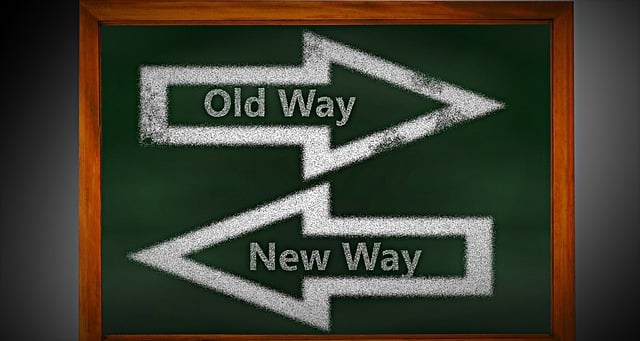
They came under deep conviction! Was it Peter’s sermon that convicted? I don’t think so. Yes, his sermon was used by God, but the Holy Spirit had come upon this place. It was the Spirit of God who convicted those who heard the gospel message. They wanted to know what they needed to do and Peter says – Repent and be baptized. To the ears of today, repentance sounds like a harsh word. It has been used to guilt us and shame us into salvation. But repentance isn’t a word of shame, it is a word of beginnings. The Greek word for repent is metanoeó. It is a compound word. Meta means to be changed after being with and noeo means to think differently afterwards. To repent is to be changed because we have been with God which results in a different way of thinking. Think about this for a moment. When we really encounter God, it will have a cataclysmic effect on us. We often think of a cataclysm as something negative, but Georges Cuvier, a zoologist in the late 18th century, said that cataclysms end the life of organisms at the end of a geological period. The new beginning, the result of the cataclysm, can be either positive or negative. Our encounter with God is a cataclysm that ends our old way of life giving way to a new beginning in Christ. This only happens when we repent. We have to die to the flesh to give way to the spirit. There has to be a cataclysm in our life to make way for the new beginning. This cataclysm is God’s work on the cross for us. It is through Christ that sin and death were defeated. Salvation isn’t anything we can achieve through the works we do. We can’t earn it, but, we must be the ones who decide to repent and allow God to work in us to make that cataclysmic change. Without repentance, salvation will never be ours. Then Peter says to be baptized. This is an outward symbol of the change we have decided to make in our lives. We are standing in front of everyone declaring our allegiance to God. No one can make a mistake or think otherwise. Then comes the promise – we will also receive the gift of the Holy Spirit. He will come and dwell within us. On that day, 3000 people declared their devotion and loyalty to Christ.

Vs 41-47 And they devoted themselves to the apostles’ teaching, to the fellowship, to the breaking of bread, and to the prayers. Then fear came over everyone, and many wonders and signs were being performed through the apostles. Now all the believers were together and held all things in common. They sold their possessions and property and distributed the proceeds to all, as anyone had a need. Every day they devoted themselves to meeting together in the temple complex, and broke bread from house to house. They ate their food with a joyful and humble attitude, praising God and having favor with all the people. And every day the Lord added to them those who were being saved.
The word for devoted in Greek is proskartereó, which means to attend constantly, or to be steadfast. These new believers didn’t just come to faith and then go on with their normal everyday lives. The gospel of Jesus Christ changed everything about them – again it was cataclysmic! They hungered for the truth. They desired to fellowship and break bread together. They set their hearts toward a life of prayer, seeking God. It says, “then fear came over everyone…” The Greek word for fear is phobos. We get the word phobia from it. While a phobia can be an irrational fear, it can also mean dread, obsessive fear and over awed. These new believers developed a fear of God to the point where they dreaded sin, were awed with His wonders and developed a passion for the things of God. This is what the fear of the Lord does. In 1 Samuel 12:24-25 it says, Above all, fear the Lord and worship Him faithfully with all your heart; consider the great things He has done for you. However, if you continue to do what is evil, both you and your king will be swept away.” The phrase “above all” in Hebrew is ak which is to surely, or to only fear God. There is a warning attached to this which will come to life in chapter 5 of Acts. For now, the believers were properly fearful. They held a new understanding of the greatest commandments – to love the Lord your God with all your heart, soul and mind and to love your neighbor as yourself. They exemplified what it meant to be the people of God, and God blessed them. Notice that it says, “the Lord added to them those who were being saved.” The apostles didn’t add to the numbers. The people didn’t add to the numbers. The great works of the apostles didn’t add to the numbers. God did the work.

I think the message of Pentecost can be summed up in one way – it’s all about God. When God first ordained Shauvot, He did so by giving us the Torah, His Word. He then fulfilled Shauvot on the day of Pentecost by giving us His Spirit so we could understand and follow His Word. John 1:1-5 reminds us that, “In the beginning was the Word, and the Word was with God, and the Word was God. He was with God in the beginning. All things were created through Him, and apart from Him not one thing was created that has been created. Life was in Him, and that life was the light of men. That light shines in the darkness, yet the darkness did not overcome it. And then, in verse 14, “The Word became flesh and took up residence among us. We observed His glory, the glory as the One and Only Son from the Father, full of grace and truth.” God gave us His Word through the Torah. God gave us His Word through His Son Jesus Christ. God continues to give us His Word through the Holy Spirit. When we, the people of God, become fully invested in His Word through salvation that is in Jesus Christ, and His Spirit fills us, then God works through us to see His kingdom prosper and grow. But, make no mistake, it is His work, not ours. The lives that were changed on the day of Pentecost over 2000 years ago, were multiplied because of God’s cataclysmic work in their lives, not the words or works of the apostles. The lives that will change today will be because of God’s work as we are empowered by the Holy Spirit to speak and do His will and work.
 Bible Study Blog