Stephen: Christianity’s First Martyr
Have you ever had people lie about you or try to get people to believe you did something you really didn’t do? How did that make you feel? It’s frustrating and disappointing when people don’t believe your word. No matter how hard you try, they won’t change their mind. This is where Stephen found himself on his last day of life. He was standing before the Sanhedrin defending his faith, yet, there were those in the room who flat out lied, and those who refused to believe the truth. Stephen gives us an example of how to cope with fabrications, deceptions and the “fake news” of his day.

Vs 8-15 Stephen, full of grace and power, was performing great wonders and signs among the people. Then some from what is called the Freedmen’s Synagogue, composed of both Cyrenians and Alexandrians, and some from Cilicia and Asia, came forward and disputed with Stephen. But they were unable to stand up against his wisdom and the Spirit by whom he was speaking. Then they persuaded some men to say, “We heard him speaking blasphemous words against Moses and God!” They stirred up the people, the elders, and the scribes; so they came, dragged him off, and took him to the Sanhedrin. They also presented false witnesses who said, “This man does not stop speaking blasphemous words against this holy place and the law. For we heard him say that Jesus, this Nazarene, will destroy this place and change the customs that Moses handed down to us.” And all who were sitting in the Sanhedrin looked intently at him and saw that his face was like the face of an angel.
The first thing I noticed in this passage is that Stephen was full of grace and power. The Greek word for grace is charis and the Greek word for power is dunamis. Charis is the same word used to describe Jesus in Luke 2:52 – And Jesus increased in wisdom and stature, and in favor (charis) with God and with people. The word dunamis means miraculous power. It is where we get our word dynamic. It is a force that stimulates change or progress. Stephen was full of grace, the favor of God, and he had a dynamic power as he spoke and performed wonders and signs among the people. He spoke with authority and people were listening to him. This didn’t set too well with a few people. They began to debate with Stephen, but they were unable to withstand the truth. Stephen spoke with a wisdom that was beyond him.
On an aside note that will connect some things later on, Cilicia was the region in which Paul came from – Tarsus is the capital of the Cilician region. Paul (or Saul as he was known then) becomes a witness at some point to the grace and power of Stephen. At this point though, Stephen is debating with those from the Freedman’s Synagogue, a synagogue comprised of those who had been enslaved but freed through manumission, or freed by their owners voluntarily. They had set up their own synagogue in the city. So here we are inside a debate. The men from the Freedman’s Synagogue couldn’t stand up to the truth. They couldn’t stand up to the charis and dunamis that was displayed through Stephen because of the power of the Holy Spirit. When this happened, instead of bowing to the truth, they came back with a lie. Instead of conceding, they denied the truth and persuaded others to be false witnesses against Stephen. The Greek word for persuaded is hupoballó. It is where we get our word hyperbole and it means to throw or put under. Basically, these guys threw Stephen under the bus. They couldn’t debate him, so they decided to save their own pride by making Stephen look like a liar and blasphemer. They dragged Stephen off to the Sanhedrin and presented hyperbole saying, “we heard him say that Jesus, this Nazarene, will destroy this place and change the customs that Moses handed down to us.” And here is the amazing thing – when they fixed their gaze on him, what they saw was the face of an angel. Everything about Stephen contradicted what was being said about him. This should have ended it, but they were willing to allow falsehood into their midst.
Stephen’s Sermon – In chapter 7 of Acts, we have an account of Stephen’s final sermon. This is his defense of the gospel of Jesus Christ. Notice I say a defense of the gospel – not a defense of himself. He did not see a need to defend himself, but he did want to make clear to these men the truth of the gospel. So, he methodically sketches out how God has been at work throughout history and how Jesus Christ is the fulfillment of all God has wanted to do in the lives of the people of Israel and the world. I have broken it down into several sections and will highlight particular passages.
Vs 7:1-8 Is this true?” the high priest asked. “Brothers and fathers,” he said, “listen: The God of glory appeared to our father Abraham when he was in Mesopotamia, before he settled in Haran and said to him: Get out of your country and away from your relatives, and come to the land that I will show you. “Then he came out of the land of the Chaldeans and settled in Haran. From there, after his father died, God had him move to this land you now live in. He didn’t give him an inheritance in it, not even a foot of ground, but He promised to give it to him as a possession, and to his descendants after him, even though he was childless. God spoke in this way: His descendants would be strangers in a foreign country, and they would enslave and oppress them 400 years. I will judge the nation that they will serve as slaves, God said. After this, they will come out and worship Me in this place. Then He gave him the covenant of circumcision. After this, he fathered Isaac and circumcised him on the eighth day; Isaac did the same with Jacob, and Jacob with the 12 patriarchs.
Stephen begins by reminding them of their heritage. He begins with Abraham and the promise God gave to him. A promise of an inheritance, but not one that Abraham was going to enjoy. It was a future inheritance for his descendants. He shows them that God can still speak even though the inheritance was in the future and even though the temple was not evidenced. God didn’t need a temple to be present or to speak.

Vs 9-16 “The patriarchs became jealous of Joseph and sold him into Egypt, but God was with him and rescued him out of all his troubles. He gave him favor and wisdom in the sight of Pharaoh, king of Egypt, who appointed him ruler over Egypt and over his whole household. Then a famine and great suffering came over all of Egypt and Canaan, and our ancestors could find no food. When Jacob heard there was grain in Egypt, he sent our ancestors the first time. The second time, Joseph was revealed to his brothers, and Joseph’s family became known to Pharaoh. Joseph then invited his father Jacob and all his relatives, 75 people in all, and Jacob went down to Egypt. He and our ancestors died there, were carried back to Shechem, and were placed in the tomb that Abraham had bought for a sum of silver from the sons of Hamor in Shechem.
Next, Stephen reminds them how they came to be in Egypt. He shows them that God took something meant for harm and redeemed it to be something for the good of His people. He allowed Joseph to be sold into slavery so he could go before his brothers to Egypt. In this way, Joseph was able to set things up for his family’s deliverance from the great famine. He shows them that God sent a redeemer ahead before they even knew they would need a redeemer. He is painting a picture of a future redeemer that will be sent.

Vs 17-36 “As the time was drawing near to fulfill the promise that God had made to Abraham, the people flourished and multiplied in Egypt until a different king who did not know Joseph ruled over Egypt. He dealt deceitfully with our race and oppressed our ancestors by making them leave their infants outside, so they wouldn’t survive. At this time Moses was born, and he was beautiful in God’s sight. He was cared for in his father’s home three months, and when he was left outside, Pharaoh’s daughter adopted and raised him as her own son. So Moses was educated in all the wisdom of the Egyptians and was powerful in his speech and actions. “As he was approaching the age of 40, he decided to visit his brothers, the Israelites. When he saw one of them being mistreated, he came to his rescue and avenged the oppressed man by striking down the Egyptian. He assumed his brothers would understand that God would give them deliverance through him, but they did not understand. The next day he showed up while they were fighting and tried to reconcile them peacefully, saying, ‘Men, you are brothers. Why are you mistreating each other?’ “But the one who was mistreating his neighbor pushed him away, saying: Who appointed you a ruler and a judge over us? Do you want to kill me, the same way you killed the Egyptian yesterday? “At this disclosure, Moses fled and became an exile in the land of Midian, where he fathered two sons. After 40 years had passed, an angel appeared to him in the wilderness of Mount Sinai, in the flame of a burning bush. When Moses saw it, he was amazed at the sight. As he was approaching to look at it, the voice of the Lord came: I am the God of your fathers—the God of Abraham, of Isaac, and of Jacob. So Moses began to tremble and did not dare to look. “Then the Lord said to him: Remove the sandals from your feet, for the place where you are standing is holy ground. I have observed the oppression of My people in Egypt; I have heard their groaning and have come down to rescue them. And now, come, I will send you to Egypt. “This Moses, whom they rejected when they said, Who appointed you a ruler and a judge? this one God sent as a ruler and a redeemer by means of the angel who appeared to him in the bush. This man led them out and performed wonders and signs in the land of Egypt, at the Red Sea, and in the wilderness 40 years.
Stephen then reminds them how God led his people back to the Promised Land. They had become comfortable in Egypt and stayed, until a new king was on the throne who did not know Joseph enslaved them. So, God, in the midst of turmoil, chose Moses to deliver the people. But Moses was rejected by the Israelites. Moses fled but God brought him back to redeem the people in their suffering. He showed them that God, rose up a redeemer for them that they rejected. Stephen continues to paint the picture of a future redeemer that would be rejected.
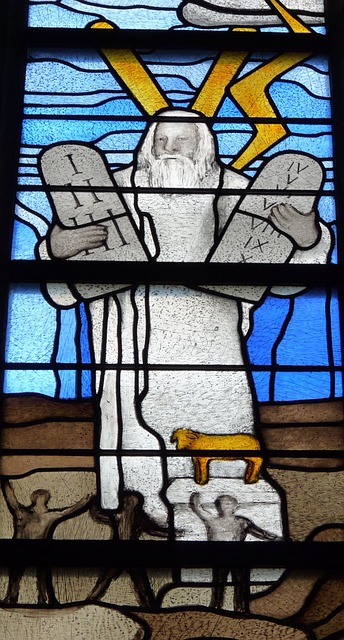
Vs 37-43 “This is the Moses who said to the Israelites, God will raise up for you a Prophet like me from among your brothers. He is the one who was in the congregation in the wilderness together with the angel who spoke to him on Mount Sinai, and with our ancestors. He received living oracles to give to us. Our ancestors were unwilling to obey him, but pushed him away, and in their hearts turned back to Egypt. They told Aaron: Make us gods who will go before us. As for this Moses who brought us out of the land of Egypt, we don’t know what’s happened to him. They even made a calf in those days, offered sacrifice to the idol, and were celebrating what their hands had made. Then God turned away and gave them up to worship the host of heaven, as it is written in the book of the prophets: House of Israel, did you bring Me offerings and sacrifices 40 years in the wilderness? No, you took up the tent of Moloch and the star of your god Rephan, the images that you made to worship. So I will deport you beyond Babylon!
Stephen then reminds them that Moses prophesied that “God will raise up for you a Prophet like me from among your brothers. He is the one who was in the congregation in the wilderness together with the angel who spoke to him on Mount Sinai, and with our ancestors.” Once again, the people rejected Moses and, instead, began to worship other gods. Stephen showed them that this was a pattern for God’s people throughout history. They would reject and come back to God over and over again. It would be the cause of their deportation to Babylon. This is a warning to the men who were sitting in judgement over Stephen at the time. If they continue to reject Christ, they too could be exiled.

Vs 44-53 “Our ancestors had the tabernacle of the testimony in the wilderness, just as He who spoke to Moses commanded him to make it according to the pattern he had seen. Our ancestors in turn received it and with Joshua brought it in when they dispossessed the nations that God drove out before our fathers, until the days of David. He found favor in God’s sight and asked that he might provide a dwelling place for the God of Jacob. But it was Solomon who built Him a house. However, the Most High does not dwell in sanctuaries made with hands, as the prophet says: Heaven is My throne, and earth My footstool. What sort of house will you build for Me? says the Lord, or what is My resting place? Did not My hand make all these things? Resisting the Holy Spirit “You stiff-necked people with uncircumcised hearts and ears! You are always resisting the Holy Spirit; as your ancestors did, so do you. Which of the prophets did your fathers not persecute? They even killed those who announced beforehand the coming of the Righteous One, whose betrayers and murderers you have now become. You received the law under the direction of angels and yet have not kept it.”
Stephen finally reminds them of the tabernacle of the testimony. It traveled with God’s people to the Promised Land and was there until a house was finally built by Solomon. But he reminds them that God doesn’t dwell in sanctuaries made by man, “Heaven is My throne, and earth My footstool. What sort of house will you build for Me? says the Lord, or what is My resting place?” Even though they had the patriarchs, the prophets, the tabernacle, and the temple, they rejected God over and over again. The picture I have chosen for the beginning of this section shows what would come to pass just a few years after this mock trial. It would be destroyed in 70 AD. Stephen lays it on the line, “You stiff-necked people with uncircumcised hearts and ears! You are always resisting the Holy Spirit; as your ancestors did, so do you. Which of the prophets did your fathers not persecute? They even killed those who announced beforehand the coming of the Righteous One, whose betrayers and murderers you have now become. You received the law under the direction of angels and yet have not kept it.” Stephen’s message had become clear to them. He was showing them time after time how they had rejected God’s plan in favor of something else. They had rejected God’s chosen redeemer in favor of worshiping idols, and finally, they had rejected God’s Son which would lead to exile. Their reaction was visceral and instantaneous.

Vs 54-60 When they heard these things, they were enraged in their hearts and gnashed their teeth at him. But Stephen, filled by the Holy Spirit, gazed into heaven. He saw God’s glory, with Jesus standing at the right hand of God, and he said, “Look! I see the heavens opened and the Son of Man standing at the right hand of God!” Then they screamed at the top of their voices, covered their ears, and together rushed against him. They threw him out of the city and began to stone him. And the witnesses laid their robes at the feet of a young man named Saul. They were stoning Stephen as he called out: “Lord Jesus, receive my spirit!” Then he knelt down and cried out with a loud voice, “Lord, do not charge them with this sin!” And saying this, he fell asleep.
They weren’t just angry, they were enraged. The Greek word used for enraged is diaprió, which means to be cut to the heart. They were so cut to the heart, they began to gnash their teeth. Instead of submitting to the Holy Spirit, they reacted with a mad rage. Their eyes were fixed on the object of their rage, while, in stark contrast, Stephen was filled with the Holy Spirit and turned his gaze toward heaven. He knew where to fix his eyes. He declared the glory of God and was a witness to Christ standing at the right hand of God. This pushes these men over the limit. They hear only blasphemy and, in a terrifying rage, they scream and rush at Stephen. They drag him outside the city and begin to throw stones at him. The Greek term used here to describe this mad rush is hormao, which is the same term used to describe the rush of the pigs over the cliff into the sea in Mark 5:13. But Stephen continues to seek the One who will be his eternal comfort. He calls out to God and, like Jesus, speaks words of forgiveness; “Lord, do not charge them with this sin!” It is important to note here that Saul (later Paul) is present. He is not participating in the actual stoning, but, he is a witness – and more than that, he is a trusted member of the Sanhedrin evidenced by the fact that they trusted him with their robes. Acts 8:1 is telling – Saul agreed with putting him to death. He wasn’t just an inactive participant, he fully agreed with the deed that was being done. This event sets up the next phase of Acts – from the Apostles to the ministry of the man who would become Paul.

More importantly, we need to explore what this passage teaches us about our relationship with Christ. I think it is found in one word – peace. Yesterday in my Sunday School class we talked about peace in the midst of the storm. To fully understand what real peace is we have to understand what biblical peace really is. The word peace in Hebrew is shalom. It is important to note that shalom comes from the root word shalam. (Root words in Hebrew are very important!) The word shalam was used in Exodus 21-22 fourteen times and means to make something whole or to restore. So the idea of wholeness and restoration is carried over into the word shalom. When we think of peace, we often think of the absence of conflict or war, but, this is not the true meaning of biblical peace. As always, God is looking at the heart of the matter, how we can have peace deep within – a peace beyond our understanding. This leads us to this true biblical meaning of shalom, evidenced by Stephen in this passage, by the way. When everyone around Stephen was raging, he still had peace. Why? Because he was complete and whole in Christ. He wasn’t relaying on outside circumstances to be peaceful. War was raging around him, yet he remained at peace. As the church looks forward in these days of unrest, and, as the world rages against truth, we can, like Stephen, speak the truth with the absolute assurance that no matter what happens, we have the peace of Christ. We are complete and whole in Him and Him alone. We have been fully restored in Him. Philippians 4: 4-7 reminds us to, “Rejoice in the Lord always. I will say it again: Rejoice! Let your graciousness be known to everyone. The Lord is near. Don’t worry about anything, but in everything, through prayer and petition with thanksgiving, let your requests be made known to God. And the peace of God, which surpasses every thought, will guard your hearts and minds in Christ Jesus.” As long as our eyes are fixed on Jesus Christ, the “source and perfecter of our faith,” we can rejoice in the midst of the rage around us. We don’t have to worry about what they are saying about us or doing to us. We can withstand all the stones the world can throw at us because we have the peace of God which surpasses every thought, and that peace that leads to completeness and wholeness will guard your hearts and minds in Christ Jesus.
 Bible Study Blog