In the next couple of chapters, we will briefly leave the ministry of Saul (Paul) and focus on the ministry of Peter. We will see how God, through Peter, begins to set up the ministry Paul will undertake for the rest of his life. Meanwhile, Paul is in Tarsus for the next several years perfecting his tent making skills and fellowshipping with believers there. We know from Paul’s letters that he spent 15 days with Peter before leaving Jerusalem, but nothing is known as to what they spoke about. It was significant enough for Paul to mention this meeting in Galatians 1:18 though. After Paul leaves Jerusalem, we take up Peter’s story.

Vs. 32-35 As Peter was traveling from place to place, he also came down to the saints who lived in Lydda. There he found a man named Aeneas, who was paralyzed and had been bedridden for eight years. Peter said to him, “Aeneas, Jesus Christ heals you. Get up and make your bed,” and immediately he got up. So all who lived in Lydda and Sharon saw him and turned to the Lord.
Before this period, the apostles resided in Jerusalem where they taught and discipled the many new believers. At first, the people stayed on after Pentecost, then they returned home, but would come to Jerusalem from all over the region to meet with the apostles. After the death of Stephen, many believers were scattered to the far winds and did not return to Jerusalem, “On that day a severe persecution broke out against the church in Jerusalem, and all except the apostles were scattered throughout the land of Judea and Samaria.” Acts 8:1. Because “those who were scattered went on their way preaching the message of good news,” (Acts 8:4), there was a need for the apostles to travel far and wide to disciple and encourage new believers.
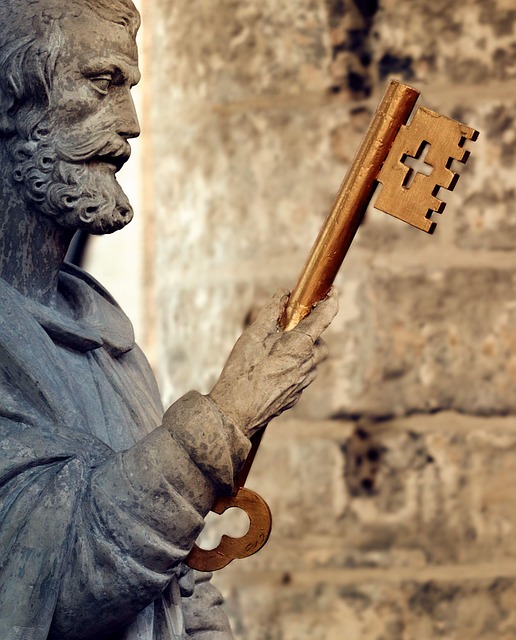
In this passage, it is the first time believers are referred to as saints, hagios in the Greek. The word hagios means to be holy and set apart. This did not mean they were perfect in any way, only that they had set themselves apart from the current culture. This would have been a difficult position to take, but these believers wanted to make sure everyone around them knew there was something different in their lives. The place Peter traveled to is called Lydda. This city is now called Lod (the site of Ben Gurion airport) and is about 25 miles northwest of Jerusalem. It would take about 11-12 hours to walk there from Jerusalem, so this was quite the journey. There, Peter finds a man named Aeneas who is paralyzed and bedridden. How did he find him? We don’t know for sure, but what I do know is Peter was ready to be an instrument of Christ. He went to Lydda with expectancy. He knew God was going to do a mighty work and he is ready for whatever comes his way. When he finds this man, he says “Jesus Christ heals you.” He does not take the credit, nor does he make any bones about who it is that does the healing. He always points the way to Jesus.

There are two things that struck me in this short passage. 1) the meaning of saints and 2) the expectancy Peter has for God to work. I don’t know about you, but it can be hard to be a saint in today’s world. There are so many temptations and distractions around making it difficult to be set apart from the culture. Everything around us wants to distract and tempt – social media, politics, television, busy lives, even doing too many “good things”. We can tend to get so stressed out we forget to sit and listen to the One who gives us peace and direction. I find myself on my phone a lot! Does that sound familiar to anyone? It’s so easy to get caught up in what is going on around us, we forget God wants us to sit and listen to His direction with the expectancy that He is going to do something amazing through us if we let Him. That leads me to the second thing – Peter’s expectancy. As he is ministering and preaching he finds a man who needs God’s touch. He listens to the Lord’s leading and heals him. He is ready for whatever. He is anticipating the work of God. I believe it is because of this, Peter has the next amazing experience.
Vs. 36-42 In Joppa there was a disciple named Tabitha, which is translated Dorcas. She was always doing good works and acts of charity. In those days she became sick and died. After washing her, they placed her in a room upstairs. Since Lydda was near Joppa, the disciples heard that Peter was there and sent two men to him who begged him, “Don’t delay in coming with us.” So Peter got up and went with them. When he arrived, they led him to the room upstairs. And all the widows approached him, weeping and showing him the robes and clothes that Dorcas had made while she was with them. Then Peter sent them all out of the room. He knelt down, prayed, and turning toward the body said, “Tabitha, get up!” She opened her eyes, saw Peter, and sat up. He gave her his hand and helped her stand up. Then he called the saints and widows and presented her alive. This became known throughout Joppa, and many believed in the Lord.

Next, Peter travels another 4-5 hours to Joppa, modern day Jaffa. You may recall this is the point of departure for the prophet Jonah as he tried to run from God. In Joppa we meet another disciple of Christ named Tabitha or Dorcas. She is a good woman known for doing acts of charity. Unfortunately, she becomes ill and dies. Amazingly, although she is dead, the disciples still send two men to Lydda to get Peter. I’m not quite sure what they think he is going to do, but they have faith. So these two men walk 4-5 hours from Joppa to Lydda to get Peter. Once they get there, they show us they expect something to happen because they want Peter to come back with them immediately. “Don’t delay in coming with us.” So off the three men go, another 4-5 hours, back to Joppa. When Peter gets there, he is confronted by the weeping widows. They are showing him the work Tabitha had done. They are bearing testimony of her charity and her walk with the Lord. They are grief stricken. Peter follows the leading of Jesus and sends them out of the room. He prays and knows what God is asking him to do. “Tabitha, get up!” I find this extraordinary. Peter is asking this dead woman to rise up, and when she does, he brings her to the saints and widows alive. The question for me is, why did Peter believe he could ask this? How did he come to the conclusion God was asking him to call her out of the grave so to speak? I mean this is reminiscent of the young son of the widow in Nain who Jesus raised from the dead, (Luke 7:11-17). But where does Peter get the idea that he too can do this?
It is from Jesus himself, “I assure you: The one who believes in Me will also do the works that I do. And he will do even greater works than these, because I am going to the Father. Whatever you ask in My name, I will do it so that the Father may be glorified in the Son. If you ask Me anything in My name, I will do it.” John 14:12-14. Peter knows and understands the power and leading of the Holy Spirit in his life and he, once again, points to the Adonai Rapha – the Lord the healer. He shows them that Jesus is truly the resurrection and the life. The response was belief in Jesus. I have to ask myself, do I have that much faith? Do I believe in the power of the Holy Spirit? Peter sure did, and was a living testimony of the Holy Spirit’s power in his life. He allowed God to direct his paths and was instrumental in many people coming to faith because of it. Throughout his life, Peter continued to be obedient to God and, as we will see, had a significant impact on the future ministry of Paul. I believe the transition from ministry to only the Jews to the “ends of the earth” begins, strangely enough, in the next verse.

Vs. 43 And Peter stayed on many days in Joppa with Simon, a leather tanner.
When I first read through this, I have to be honest, this verse was not a standout. Why would Luke include this seemingly innocuous piece of information in his letter? There has to be a reason, so I started to read more about it. As I began to research and study, the significance finally hit me. This single act of staying with a local tanner starts Peter on his next journey as the intermediary between the original apostles and Paul. How, you might ask? By staying with a leather tanner. You read that right – by staying with a leather tanner. To fully understand the amazing significance of this statement, one has to understand what it meant to be a tanner in the Biblical world. Remember, a tanner was a person who worked with hides of animals to make leather. On the surface it seems pretty straight forward and meaningless. Why would that be significant? It is because this person worked with dead animals, thus making that person routinely ceremonially unclean. Most people avoided tanners – for many reasons. First, the smell. When you work with dead animals, it tends to smell a bit, rotting flesh being what it is. Second, tanners were relegated to living at the edge of town or even beyond, depending on where the winds blew. Third, although tanning was not forbidden, customarily, tanners were often treated like outcasts and pushed to the fringes of religious and polite society. They might as well have been Gentiles. So, Peter staying with a tanner was a bit out of the norm. After such a public and amazing miracle, people had to notice where he stayed. It would have turned their idea of what was “right” upside down. The gospel wasn’t just for the select few, it was for everyone who calls on the name of the Lord. Jesus tells us in Luke 5:32 that “I have not come to call the righteous, but sinners to repentance.” Now Peter is showing that even tanners are included. Those on the fringe of society, those who are downtrodden, those who are on the edges, and, in just a few days, even Gentiles are welcome in the kingdom of God.
 Bible Study Blog