The Transforming Gospel

Change is never easy, especially when it’s not wanted. Most of of like the way things are. But one thing I’ve learned in life, things are gonna change. The other thing I find people don’t like is being wrong. We like our own ideas of how things work and how things are. In this passage, we find the church at a crossroad.
From the beginning of time, God had a plan to bring us to Himself. He worked out a perfect order of things to come. He chose a people to carry out His plan and gave them all the tools to work with. He gave them the Law, so they could see for themselves they had no capacity without Him to be holy. He set up an elaborate system of festivals, offerings, and a temple, all designed to point to one very significant person – the Messiah – who was holy and would fulfill that Law. He then gave them a directive – they were to be a light to all nations so all nations would come to the Light. They were supposed to be a beacon, leading people to be transformed by the power of God. But, somewhere along the line, they misunderstood the directive. They thought it was only about themselves. Their interpretation of Scripture was broken and needed to be fixed. Before we shake our heads and wonder at their misunderstanding, we probably need to look in the mirror first. Haven’t we have all done the same thing? We all have our own ideas of how things ought to be done. We all have our own broken interpretations that need to be fixed. That’s when it takes a new vision to get us on the right track again. Our perceived direction needs a bit of a transformation.
Vs 1-3 The apostles and the brothers who were throughout Judea heard that the Gentiles had welcomed God’s message also. When Peter went up to Jerusalem, those who stressed circumcision argued with him, saying, “You visited uncircumcised men and ate with them!”
Does it seem odd to you in this day and age that the salvation of the Gentiles was being questioned? We can’t imagine a time when salvation wasn’t for everyone. But, if we look at it from their perspective, we begin to understand a bit more. The idea that the Law was still a part of their salvation was embedded in their minds. Their understanding of Scripture was focused on what they had to do in order to please God. They still stressed many of the commandments they had followed all their lives, like keeping kosher, and circumcision. They still followed the letter of the Law without a thought to how that bound them up from being a light to the nations. Don’t get me wrong. There was nothing wrong with the Law. God’s Law is perfect and holy. It was put into place to help us see what holiness looks like. It was there to set them apart. It was there to call them to obedience. There is absolutely nothing wrong with any of that. God’s Word still calls us to obedience. It still calls us not to be conformed to the world but transformed by the renewing of our minds. It still calls us to be holy as God is holy. What it does not call us to do is place the burden of the Law on people’s shoulders. The Law cannot and will not be kept apart from Christ. Without Him, we are all lost. The call to follow the Law is not the problem, it is thinking we can still attain holiness through it that is.
This would be an argument within the church for a very long time. We will find this issue coming up again and again throughout Paul’s letters and we will encounter it again later in Acts. What I find interesting here is, it was the focus of their attention, Instead of being excited with the glorious news that Gentiles had come to the Messiah, they were concerned with Peter’s behavior. Listen to what they said: “You visited uncircumcised men and ate with them!” The first thing they said was NOT “wow, Gentiles came to know the Lord.” or “We are watching Scripture fulfilled in our day as light is dawning for the Gentiles”. No the first thing that was said was an accusation. Peter had “broken” the Law.

How often do we fall into this same trap? We get so fixated on our traditions and rules we neglect the glorious celebration when someone comes to faith. We don’t recognize what God is doing because we are too concerned with how things “should” be done. All they could see was Peter’s perceived disobedience. He had to be doing something wrong because their laws and traditions said so. One doesn’t just go around eating and visiting anyone. There are rules that need to be followed. They have to become like us first, then we can introduce them to Christ. Sound familiar? We sing Just as I am without one plea and Amazing grace how sweet the sound that saved a wretch like me and yet I’ve seen people look sideways at visitors if they aren’t dressed just right or look the way we think they ought to. We have to ask ourselves, “do I really believe people can come to the Messiah just as they are?” “Do I really believe grace is so amazing that it can be transform lives by the power of God?” Peter had been confronted by God in such a way that his thinking was reformed. His interpretation of Scripture was adjusted. It’s hard to read in the dark, but when the light comes on, we see things as they really are. God turned on the light and Peter finally read Scripture the way God intended it to be read.
Vs 4-18 Peter began to explain to them in an orderly sequence, saying: “I was in the town of Joppa praying, and I saw, in a visionary state, an object that resembled a large sheet coming down, being lowered by its four corners from heaven, and it came to me. When I looked closely and considered it, I saw the four-footed animals of the earth, the wild beasts, the reptiles, and the birds of the sky. Then I also heard a voice telling me, ‘Get up, Peter; kill and eat!’ “‘No, Lord!’ I said. ‘For nothing common or ritually unclean has ever entered my mouth!’ But a voice answered from heaven a second time, ‘What God has made clean, you must not call common.’ “Now this happened three times, and then everything was drawn up again into heaven. At that very moment, three men who had been sent to me from Caesarea arrived at the house where we were. Then the Spirit told me to accompany them with no doubts at all. These six brothers accompanied me, and we went into the man’s house. He reported to us how he had seen the angel standing in his house and saying, ‘Send to Joppa, and call for Simon, who is also named Peter. He will speak a message to you that you and all your household will be saved by.’ “As I began to speak, the Holy Spirit came down on them, just as on us at the beginning. Then I remembered the word of the Lord, how He said, ‘John baptized with water, but you will be baptized with the Holy Spirit.’ Therefore, if God gave them the same gift that He also gave to us when we believed on the Lord Jesus Christ, how could I possibly hinder God?” When they heard this they became silent. Then they glorified God, saying, “So God has granted repentance resulting in life even to the Gentiles!”
Instead of trying to “defend” himself, or play the “hey I’m an apostle of Jesus” card, Peter begins to, in the Greek, ektithemi to them kathexes. He declared everything to them in a very orderly and succinct narrative so there would be no misunderstandings. As I read through this narrative, I found 10 things Peter emphasized. 1) he had been praying when all this took place. 2) he had a vision from God. 3) he had resisted the message of this vision at first. 4) God made things clear to him. 5) the vision happened three times. 6) at that moment… 7) the Holy Spirit was directing. 8) he took 6 witnesses with him. 9) he witnessed the work of the Holy Spirit. 10 he remembered the words of the Lord. Let’s look at these 10 emphasis.

1) Prayer: Nothing happens without prayer. We must be in communication with God in order to be ready to be transformed. It was while Peter was in the act of praying that he received 2) a Vision from God. This wasn’t something Peter designed or came up with. This was from God. 3) At first, Peter resisted the vision. Peter was honest with them. He had resisted what God was saying. He too had been under the impression that Gentiles couldn’t come to faith unless they followed certain laws. And, he had been a good Jew all his life, never eating with outsiders and always keeping kosher. He didn’t make this decision lightly, but 4) God made it clear – But a voice answered from heaven a second time, ‘What God has made clean, you must not call common.’ When God spoke, Peter listened. It is something we need to practice as well. This vision wasn’t a one time thing either, 5) it happened three times. In our last study of Acts 10, we talked about the number three in a Hebrew and Jewish context. It is a number that means emphasis. The fact that this vision happened three times really spoke to these Jewish hearers. God was making sure they paid attention. He was emphasizing this point. Then, Peter made sure to tell them it was 6) “at that moment”. There wasn’t a delay in God’s answer or direction. Right then, three men showed up and the vision became obvious. He was to go. But Peter made sure they understood it wasn’t just something he went along with. It was 7) only at the direction of the Holy Spirit. Peter had prayed, had seen a vision and then was led by God through the Holy Spirit to go. Then, 8) Peter took six witnesses with him. This wasn’t something he did on his own. There were six other men who came and witnessed what God was doing. When talking about witnesses in a court of law, the Torah very specifically says in Deuteronomy 19:15 there needs to be at least 2-3 witnesses. Although Peter wasn’t doing something requiring a court of law, he wanted them to know there were enough witnesses to corroborate the facts. Then Peter told them what they had all seen and experienced: 9) the Holy Spirit is at work in the lives of Gentiles. This was both shocking to Peter and his witnesses as well as the Jewish leaders in Jerusalem. This was beyond what they believed could or would happen. The fact that God would pour out His Spirit on the Gentiles meant they could come to faith without taking on the traditions of the Law. It was here that Peter reminded them of the words of Jesus: 10) John baptized with water, but you will be baptized with the Holy Spirit.’ Therefore, if God gave them the same gift that He also gave to us when we believed on the Lord Jesus Christ, how could I possibly hinder God?” These words of Jesus came to life before Peter’s eyes and they came to life for the Jewish leaders in Jerusalem as well. How could they hinder God? How could they question what God was saying and doing here? They couldn’t. If God poured out His Spirit on the Gentiles, then they had to be accept them into the family of grace.
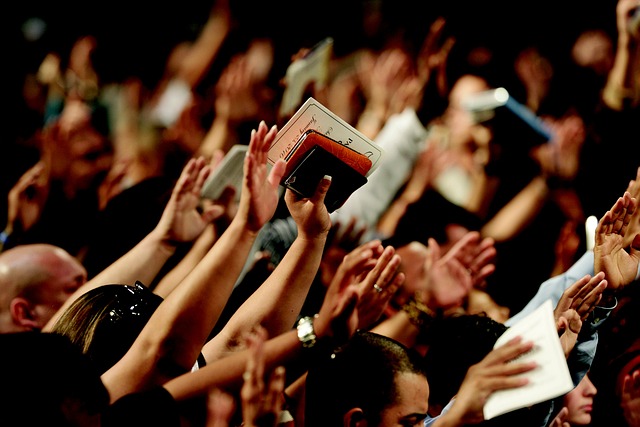
I love what happened next. “When they heard this they became silent. Then they glorified God, saying, “So God has granted repentance resulting in life even to the Gentiles!” There was silence. They were stunned into a silent contemplation of all that Peter had said. How could they hinder God? They couldn’t. They wouldn’t. There was nothing left to do but accept and glorify God for His amazing grace. I don’t want to pass over this passage without making sure this point is understood. These Jewish leaders who had been so sure they were right about their traditions glorified God for doing something new in their midst. Their old way of thinking was totally blown out of the water. They had to rethink everything they knew. As we will see in later passages, this was something they would grapple with for a very long time. Traditions are hard to part with. A particular way of thinking isn’t easy to change. This is the way things have always been… This is the way we’ve always done it…
The Hebrew word for tradition is masoret, which comes from the root meaning “to give, to transfer, to deliver”. Traditions are important in many ways. They ground us and provide a sense of continuity and stability in a changing world. One of my favorite musicals is The Fiddler on the Roof. In the musical, the main character, Tevye, wrestles with a changing world on one side and tradition on the other. His daughters don’t want to follow the old traditions when it comes to getting married. Each daughter presents a new idea that moves further away from those old traditions until Tevye can’t move another step away. In the case of the third daughter he wouldn’t budge at all. But they would all find the world moved them anyway. They had to look at something else to provide their stability. They had to find other ways to work in a changing world.

In the same way, the church here had come to a crossroads. They were singing “Tradition, tradition,” while, God was showing them what He had in mind all along. They wanted to hang on to their old ways, when God was doing a new thing – which, in all actuality, was what God intended in the first place. In Isaiah 43:16-19 it says, “This is what the Lord says—who makes a way in the sea, and a path through surging waters, who brings out the chariot and horse, the army and the mighty one together (they lie down, they do not rise again; they are extinguished, quenched like a wick)— “Do not remember the past events, pay no attention to things of old. Look, I am about to do something new; even now it is coming. Do you not see it? Indeed, I will make a way in the wilderness, rivers in the desert.” They couldn’t see a way through the tradition, but God was making a way in the sea and a path through the surging waters. They couldn’t imagine life without traditions, but God was doing something new and something even more exciting was coming. They couldn’t envision life without their traditions, but God was forging rivers in the desert. This is what happens when the transforming power of the gospel of Jesus Christ touches lives. Something was just about to explode throughout the empire.
 Bible Study Blog