Paul and Barnabas: A Light to the Nations

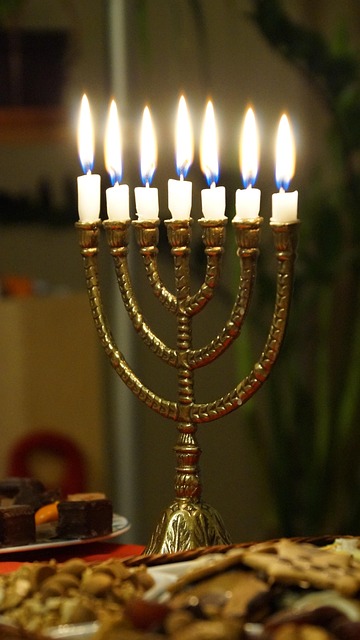
When I looked up the word light in the Oxford Language dictionary, it gave me the following meaning: Light is the natural agent that stimulates sight and makes things visible. The Bible speaks of light often – over 200 times in fact. We first see the word light n in Genesis 1:3, ” Then God said, “Let there be light,” and there was light.” God is the creator of light. He illuminated all things. Then, in Exodus we see God commanding His people to fashion a lamp to be lit in the temple. The menorah is both practical and a spiritual symbol. We know that it will illustrate for us Jesus as the light of the world. The Psalms are filled with poetry about light. Psalm 27:1 says, The Lord is my light and my salvation— whom should I fear? The Lord is the stronghold of my life— of whom should I be afraid? Again in Psalm 47:3, Send Your light and Your truth; let them lead me. Let them bring me to Your holy mountain, to Your dwelling place. Finally, Psalm 119:105 shows us that God’s word is a “light, Your word is a “lamp for my feet and a light on my path.” In the sermon on the mount, Jesus spoke often about light: quoting Isaiah 9 He said, “The people who live in darkness have seen a great light, and for those living in the shadowland of death, light has dawned.” Later in the sermon Jesus says, “You are the salt of the earth. But if the salt should lose its taste, how can it be made salty? It’s no longer good for anything but to be thrown out and trampled on by men. You are the light of the world. A city situated on a hill cannot be hidden. No one lights a lamp and puts it under a basket, but rather on a lampstand, and it gives light for all who are in the house. In the same way, let your light shine before men, so that they may see your good works and give glory to your Father in heaven.” Finally, Jesus said of Himself, “I am the light of the world. Anyone who follows Me will never walk in the darkness but will have the light of life.” We are to walk in the light and be a light to be world around us. Paul and Barnabas understood this and carried this light with them everywhere they went.
Vs 12:25 After they had completed their relief mission, Barnabas and Saul returned to Jerusalem, taking along John who is called Mark. Vs13:1-3 In the church that was at Antioch there were prophets and teachers: Barnabas, Simeon who was called Niger, Lucius the Cyrenian, Manaen, a close friend of Herod the tetrarch, and Saul. As they were ministering to the Lord and fasting, the Holy Spirit said, “Set apart for Me Barnabas and Saul for the work I have called them to.” Then after they had fasted, prayed, and laid hands on them, they sent them off.

Somewhere after completing their relief mission and returning to Jerusalem, Barnabas and Saul made their way to Antioch. Let’s return to Acts 11:22-26 for a moment to recall a bit of background: Then the report about them was heard by the church that was at Jerusalem, and they sent out Barnabas to travel as far as Antioch. When he arrived and saw the grace of God, he was glad and encouraged all of them to remain true to the Lord with a firm resolve of the heart, for he was a good man, full of the Holy Spirit and of faith. And large numbers of people were added to the Lord. Then he went to Tarsus to search for Saul, and when he found him he brought him to Antioch. For a whole year they met with the church and taught large numbers. The disciples were first called Christians at Antioch. Antioch was a major city in the Roman province of Syria, and was located in what is now the Hatay province of Turkey. It was not only a very important city in the Roman world, it was a base for the work Paul, Barnabas and later Silas would do in the Gentile world. In this same passage we discover what relief mission Paul and Barnabas were on: In those days some prophets came down from Jerusalem to Antioch. Then one of them, named Agabus, stood up and predicted by the Spirit that there would be a severe famine throughout the Roman world. This took place during the time of Claudius. So each of the disciples, according to his ability, determined to send relief to the brothers who lived in Judea. They did this, sending it to the elders by means of Barnabas and Saul. Acts 11:27-30.
It tells us here that the prophets and teachers were ministering to the Lord and fasting. They were ready and willing to hear from the Lord and the Holy Spirit directed them to “set apart for Me Barnabas and Saul for the work I have called them to.” Let’s unpack a couple of things here. First, the Greek word for set apart is aphorizó and it means to separate or to set apart for a specific purpose or role. In this passage we will find that Saul and Barnabas will be set apart. They have been selected for a specific purpose. They aren’t just going out to preach, they have a particular mission they are going to undertake. Second, the Greek word for “I have called” is proskaleó: which means to summons or to invite. I find this interesting. God invited Paul and Barnabas to answer this very specific call. It was not a command, but an invitation to join God in exciting ministry. Third, before they went out, they fasted and prayed some more. How often do we say yes to the call of God in our lives and just take off to do it? I know I have. Not Paul and Barnabas. They didn’t just pack up and head out. They stopped, prayed, fasted and waited on the Lord to guide them. I believe this is an important point that many of us miss. We must be in prayer and fasting before the sending to hear the call of God and we must then be in prayer and fasting after we receive the call of God to understand He is the only one who can sustain us when we answer His call. Paul and Barnabas knew this invitation was something they could not do on their own. They needed the guidance and sustenance of the Holy Spirit to carry it out.
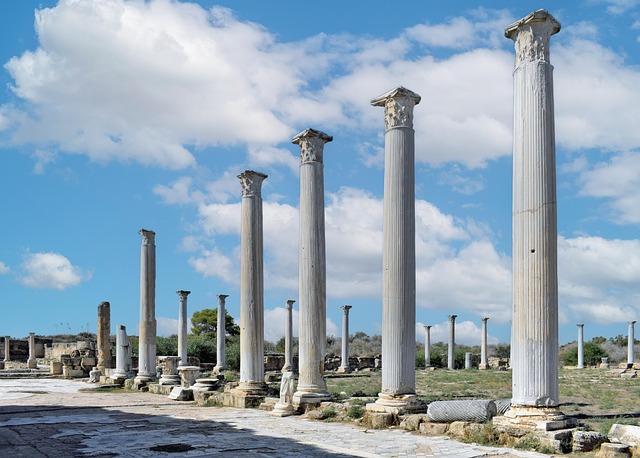
Vs 4-12 Being sent out by the Holy Spirit, they came down to Seleucia, and from there they sailed to Cyprus. Arriving in Salamis, they proclaimed God’s message in the Jewish synagogues. They also had John as their assistant. When they had gone through the whole island as far as Paphos, they came across a sorcerer, a Jewish false prophet named Bar-Jesus. He was with the proconsul, Sergius Paulus, an intelligent man. This man summoned Barnabas and Saul and desired to hear God’s message. But Elymas the sorcerer (this is the meaning of his name) opposed them and tried to turn the proconsul away from the faith. Then Saul—also called Paul—filled with the Holy Spirit, stared straight at the sorcerer and said, “You son of the Devil, full of all deceit and all fraud, enemy of all righteousness! Won’t you ever stop perverting the straight paths of the Lord? Now, look! The Lord’s hand is against you. You are going to be blind, and will not see the sun for a time.” Suddenly a mist and darkness fell on him, and he went around seeking someone to lead him by the hand. Then the proconsul, seeing what happened, believed and was astonished at the teaching about the Lord.
So we can get a barring on where Paul and Barnabas headed let’s find out where all these places are. Seleucia was the port at Antioch. In fact, it was considered the key port in Syria at the time. From there, they began their trip to Cyprus. They land in the city of Salamis, a major city on the eastern coast of Cyprus, and it’s largest port city. At the time, there was a very large Jewish population in Salamis and there were multiple synagogues in the city. As we will see, Paul and Barnabas’ custom to begin their ministry in a city is to start by proclaiming God’s message in the Jewish synagogues. Another point to note is that John Mark was their assistant at this time. They then proceed to go across the entire island of Cyprus to Paphos, which was at least a 2 day walking journey across the island.
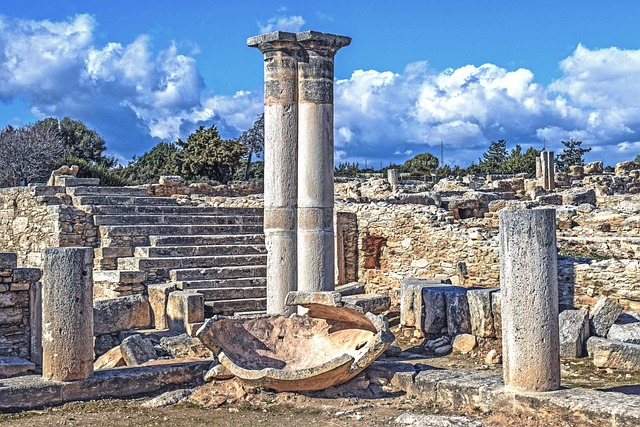
As they finally came to Paphos, they most likely encountered a few things. First would be the temple of Aphrodite, the Greek goddess of eros love, beauty, pleasure and procreation. Paphos was considered the place where the goddess’s arose from the sea and where her worship was first established, so the worship of Aphrodite was widely practiced here. Second, when they came to speak to Sergius Paulus, they encountered a man named Elymas.
Sergius Paulus was the proconsul, which meant he was an administrator or the governor of the province. Elymas, on the other hand, was a sorcerer or magician and an apparent advisor to Sergius Paulus. Sergius Paulus wanted to hear more of what Paul and Barnabas had been preaching in the synagogues but the man who had his ear wanted none of it. Elymas currently had the proconsul’s ear and saw his influence being threatened by Paul and Barnabas so, the first thing he does is try regain the proconsul attention. Paul was having none of that and called him out. The Lord’s hand was against Elymas and he was blinded and humbled. As we look at this, I want us to notice a couple of things. First, we should not be surprised when there is opposition to the message of Christ. In fact, when people are genuinely open to the gospel, we should expect the enemy to attack. One of the most effective ways the enemy attacks is to throw water on the fire. It’s okay to have casual interest, but at a genuine yearning for the gospel, the enemy will work to dissuade and dilute the effect. He will use people to pull the person away from the truth, or even use the church itself as they deal with internal battles. Second, we see Paul was filled by the Holy Spirit to act. Paul and Barnabas were ready for the attack. Remember, they had prayed and fasted after their calling, and I’m sure they were in continual prayer. They understood there was going to opposition to the gospel and were open to hearing from the Holy Spirit. So when the Holy Spirit led, they followed and acted. Third, Paul spoke the truth and called out the evil that stood in the way of the gospel. I believe we, as the church, are sometimes afraid to speak the truth and call evil what it is. We fear judging others, or hurting someone or making waves, so we remain silent. Instead, we need to be prepared to speak when the Spirit says speak.
Vs 13-15 Paul and his companions set sail from Paphos and came to Perga in Pamphylia. John, however, left them and went back to Jerusalem. They continued their journey from Perga and reached Antioch in Pisidia. On the Sabbath day they went into the synagogue and sat down. After the reading of the Law and the Prophets, the leaders of the synagogue sent word to them, saying, “Brothers, if you have any message of encouragement for the people, you can speak.”
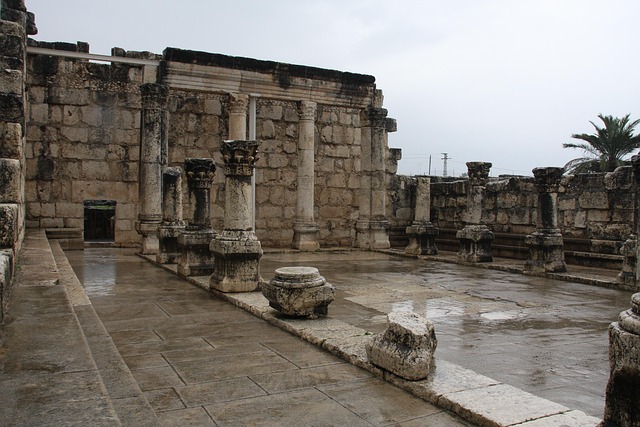
From Cyprus, Paul and Barnabas then sailed to Perga in Pamphylia, a 185 mile journey by sea. Perga is in what is now modern day Turkey. At this point, John Mark left the group and went back to Jerusalem. We don’t know why he left, but we do know this was a sore point with Paul and would later come between he and Barnabas. They continued on to Antioch in Pisidia (not to be confused with Antioch in Syria.) It was about a 2 day walking journey. We know this area as Galatia, and Paul would later write the churches in this area the letter to the Galatians. The first place Paul and Barnabas went when they got there was, you guessed it, the synagogue. There, they were asked to speak a message of encouragement. One notable practice of the synagogue at this time was they would invite strangers, particularly those who were learned, to address the congregation. This was an awesome opportunity and Paul took full advantage of it. What follows is a wonderful history lesson mapping out God’s amazing plan to bring salvation to the world.
Vs 16-41 Then Paul stood up and motioned with his hand and said: “Men of Israel, and you who fear God, listen! The God of this people Israel chose our ancestors, exalted the people during their stay in the land of Egypt, and led them out of it with a mighty arm. And for about 40 years He put up with them in the wilderness; then after destroying seven nations in the land of Canaan, He gave their land to them as an inheritance. This all took about 450 years. After this, He gave them judges until Samuel the prophet. Then they asked for a king, so God gave them Saul the son of Kish, a man of the tribe of Benjamin, for 40 years. After removing him, He raised up David as their king and testified about him: ‘I have found David the son of Jesse, a man loyal to Me, who will carry out all My will.’ “From this man’s descendants, according to the promise, God brought the Savior, Jesus, to Israel. Before He came to public attention, John had previously proclaimed a baptism of repentance to all the people of Israel. Then as John was completing his life’s work, he said, ‘Who do you think I am? I am not the One. But look! Someone is coming after me, and I am not worthy to untie the sandals on His feet.’ “Brothers, sons of Abraham’s race, and those among you who fear God, the message of this salvation has been sent to us. For the residents of Jerusalem and their rulers, since they did not recognize Him or the voices of the prophets that are read every Sabbath, have fulfilled their words by condemning Him. Though they found no grounds for the death penalty, they asked Pilate to have Him killed. When they had fulfilled all that had been written about Him, they took Him down from the tree and put Him in a tomb. But God raised Him from the dead, and He appeared for many days to those who came with Him from Galilee to Jerusalem, who are now His witnesses to the people. And we ourselves proclaim to you the good news of the promise that was made to our ancestors. God has fulfilled this for us, their children, by raising up Jesus, as it is written in the second Psalm: You are My Son; today I have become Your Father. Since He raised Him from the dead, never to return to decay, He has spoken in this way, I will grant you the faithful covenant blessings made to David. Therefore He also says in another passage, You will not allow Your Holy One to see decay. For David, after serving his own generation in God’s plan, fell asleep, was buried with his fathers, and decayed. But the One God raised up did not decay. Therefore, let it be known to you, brothers, that through this man forgiveness of sins is being proclaimed to you, and everyone who believes in Him is justified from everything that you could not be justified from through the law of Moses. So beware that what is said in the prophets does not happen to you: Look, you scoffers, marvel and vanish away, because I am doing a work in your days, a work that you will never believe, even if someone were to explain it to you.”
From the Exodus through the judges, Samuel to Saul and finally David we see God’s plan unfold. We stop at David and are reminded that from him a Savior would come. Paul then draws a line from David to Jesus. We see the confirmation from John the Baptist and then the fulfillment of prophecy as Jesus dies, is put in a tomb and raises from the dead just as Psalm 2:7 says – I will declare the Lord’s decree: He said to Me, “You are My Son; today I have become Your Father. And in Psalm 16:10 – For You will not abandon me to Sheol; You will not allow Your Faithful One to see decay. Paul then gives them a warning – do not disregard this absolutely encouraging message!

Vs 42-52 As they were leaving, the people begged that these matters be presented to them the following Sabbath. After the synagogue had been dismissed, many of the Jews and devout proselytes followed Paul and Barnabas, who were speaking with them and persuading them to continue in the grace of God. The following Sabbath almost the whole town assembled to hear the message of the Lord. But when the Jews saw the crowds, they were filled with jealousy and began to oppose what Paul was saying by insulting him. Then Paul and Barnabas boldly said: “It was necessary that God’s message be spoken to you first. But since you reject it and consider yourselves unworthy of eternal life, we now turn to the Gentiles! For this is what the Lord has commanded us: I have made you a light for the Gentiles to bring salvation to the ends of the earth.” When the Gentiles heard this, they rejoiced and glorified the message of the Lord, and all who had been appointed to eternal life believed. So the message of the Lord spread through the whole region. But the Jews incited the prominent women, who worshiped God, and the leading men of the city. They stirred up persecution against Paul and Barnabas and expelled them from their district. But they shook the dust off their feet against them and went to Iconium. And the disciples were filled with joy and the Holy Spirit.
They unfortunately did not listen to Paul’s warning. At first appearance, they wanted Paul to come back and explain more. They were open to hearing the truth. They begged them, and some even followed after them, to come back the next Sabbath and continue their teaching. Paul and Barnabas persuaded them to continue in the grace of God. They wanted these hearers to continue seeking and following the truth. But the next week when the whole town came to hear the message, suddenly those same devout Jews became jealous. The Greek word for jealousy is zelos, which means zeal or to boil over with. It can be used in a positive or negative manor. In this context, we see they were “filled with jealousy.” They were literally boiling over with a zealous jealousy. They thought this message was just for them. They didn’t want to share or even believe the Gentiles could come to faith. As long as the message was directed at them, they were fine, even encouraging. But once they saw the message was for everyone, they closed their minds and began to oppose Paul and Barnabas. They didn’t want to accept the fact, that Jesus was the Savior of the world and that the Gentiles could also receive grace. Paul and Barnabas’ response was bold. Their explanation was frank and straight to the point. Let’s unpack what they said to them.
“It was necessary that God’s message be spoken to you first. But since you reject it and consider yourselves unworthy of eternal life, we now turn to the Gentiles! For this is what the Lord has commanded us: I have made you a light for the Gentiles to bring salvation to the ends of the earth.” Later in his writings to the Romans Paul says in 1:16 – For I am not ashamed of the gospel, because it is God’s power for salvation to everyone who believes, first to the Jew, and also to the Greek. Then again in 2:9-11 – affliction and distress for every human being who does evil, first to the Jew, and also to the Greek; but glory, honor, and peace for everyone who does what is good, first to the Jew, and also to the Greek. There is no favoritism with God. The Jews are God’s chosen people. He chose them to be the ones to bring Salvation to the world through Jesus the Messiah and to be a light to the nations. Paul quotes Isaiah 49:6: “It is not enough for you to be My Servant raising up the tribes of Jacob and restoring the protected ones of Israel. I will also make you a light for the nations, to be My salvation to the ends of the earth.” This is a verse these very devout Jews would know well. It is a command from God to His people. They are not to be satisfied with just raising up the tribes of Jacob, they need to seek a wider perspective. They are to be a light for the nations. Later in Isaiah 60:1-3 it says, Arise, shine, for your light has come, and the glory of the Lord shines over you. For look, darkness covers the earth, and total darkness the peoples; but the Lord will shine over you, and His glory will appear over you. Nations will come to your light, and kings to the brightness of your radiance. It was a prophecy and a privilege. They were told by God they would be a part of His amazing plan to bring Salvation to the world. Paul and Barnabas were living and walking fulfillment of prophecy. The apostles of Jesus were evidence of the power of God. Paul and Barnabas, because of God’s command in Isaiah, had to present the gospel to the Jews first. But many of them rejected it and, thus, rejected being a part of God’s purpose in their lives. They didn’t want to be a light to the nations. They wanted to keep things just among themselves. They wanted to hide that light under a bushel.
Because Paul and Barnabas took their commission for God seriously, the Gentiles “rejoiced and glorified the message of the Lord.” They were ecstatic to know they could come to faith in Christ. Because of this, the message spread through the whole Galatia region. Churches were started and men and women came to faith in Christ. All because Paul and Barnabas understood their mission. All because they understood what God had called them to do. All because they understood they were to be a light to the nations.
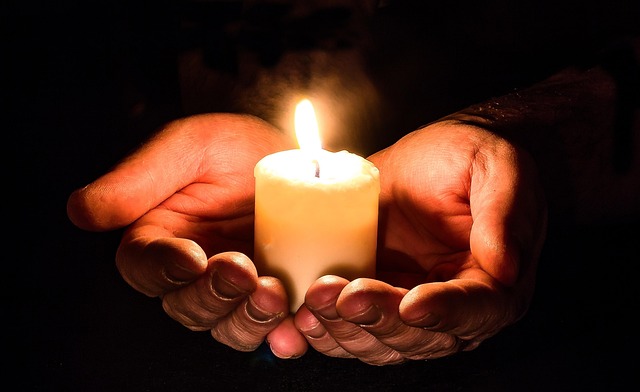
In turn, God has called each of us to be a light and shine it everywhere we go. We currently live in a very dark world, but, if we take our lights and raise them high, people will be drawn to it. Several years ago I was on a cave tour. We had headlights on so we could see the wonders of the cave. At one point our guide asked us all to turn our lights off. Once all the lights went out, we all stood there in the blackest darkness I have ever experienced. The total absence of light was unnerving. Our guide suddenly turned on a small pin light and everyone in the room instantly turned toward it. We were all drawn to the light, compelled to be near it. The lack of hope the darkness had shown us instantly gave way to the joy of the light. This is the light this world needs to see. This is the hope they need to know. We need to be a light to the world and we know the Holy Spirit will guide, direct and enable us to boldly speak the truth, even when it may not be the most popular thing to speak at the moment. We need to be reminded of the words of Jesus in His sermon on the mount: You are the light of the world. A city situated on a hill cannot be hidden. No one lights a lamp and puts it under a basket, but rather on a lampstand, and it gives light for all who are in the house. In the same way, let your light shine before men, so that they may see your good works and give glory to your Father in heaven.”
 Bible Study Blog